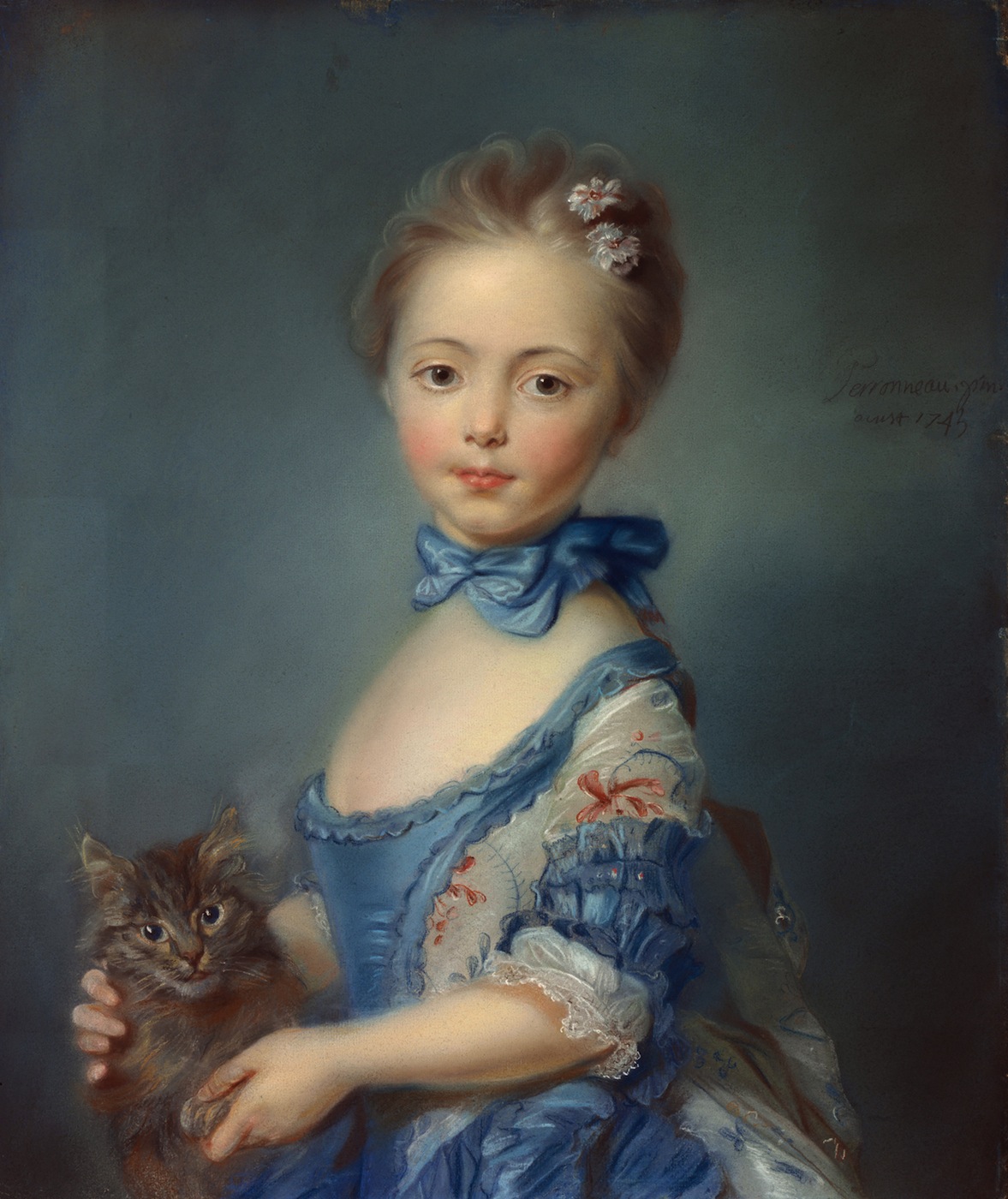
A Girl with a Kitten

Attributed to Jean-Baptiste Perronneau, 1745 [The National Gallery]

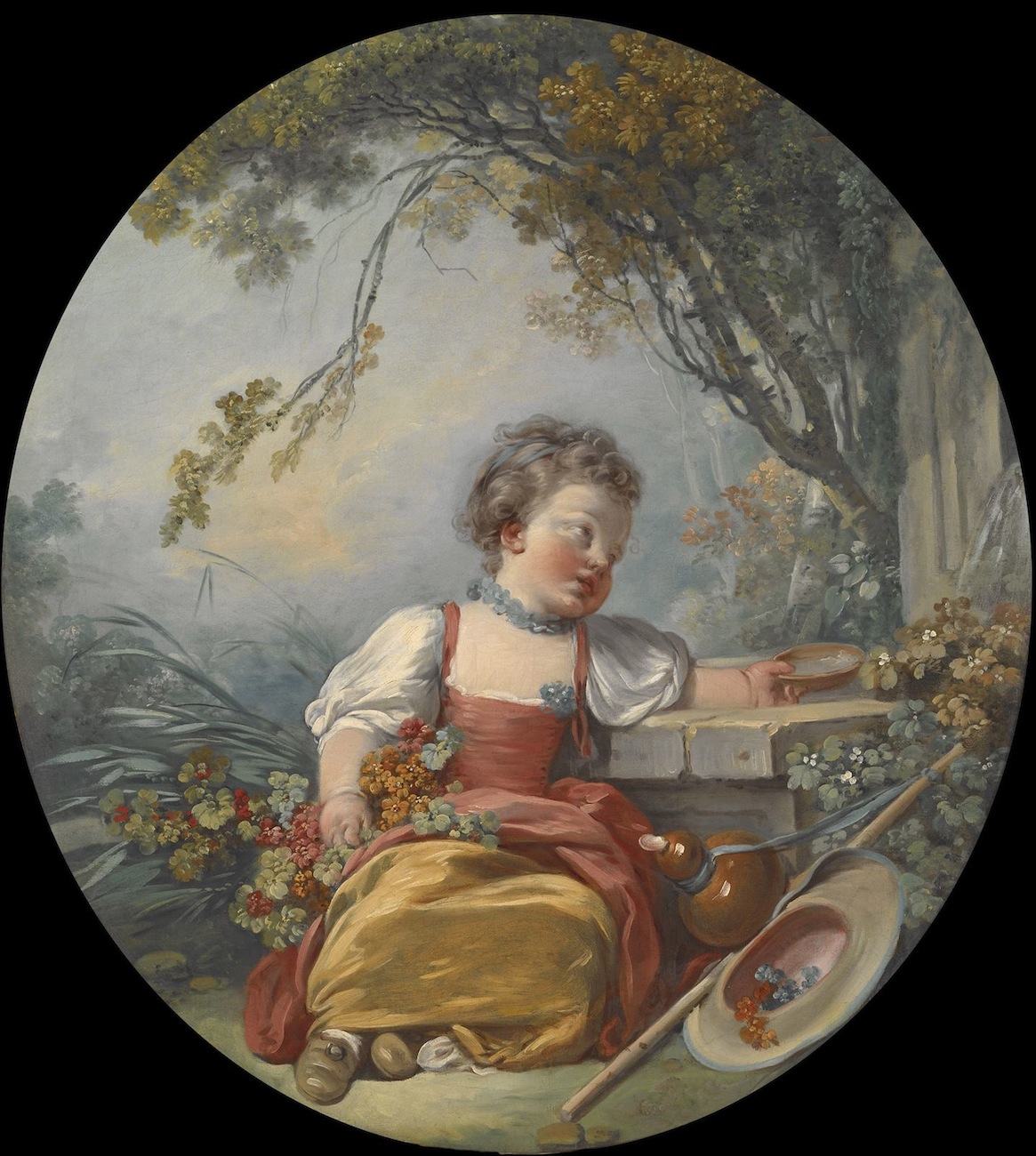
Le plus ancien portrait au pastel que nous connaissions de Perronneau se trouve à la Galerie nationale de Londres (n° 3588 ; il porte, en haut et à droite, la signature de l’artiste ainsi orthographiée: Perronneau, et la date: Aoust 1743. Il représente une petite fille tenant un chat ). Elle regarde de face, quoique tournée de droite à gauche ; elle est habillée d’une manière solennelle qui contraste, d’une façon piquante, avec l’ingénuité de son âge. Avec cette robe de damas bleu, brodée de chèvrefeuille rouge, largement décolletée, aux engageantes de dentelle, avec ce bras nu, avec ce ruban bleu noué autour du cou, avec ces petites fleurs roses et blanches passées dans les cheveux, avec ses yeux grands ouverts qui mangent la figure, on dirait une petite maîtresse ou de ces enfants qui parodient une tenue de cour
  Jean-Baptiste Perronneau ~ Sa Vie et son Oeuvre, 1923

"The hyacinth for constancy wi’ its unchanging blue" – Robert Burns

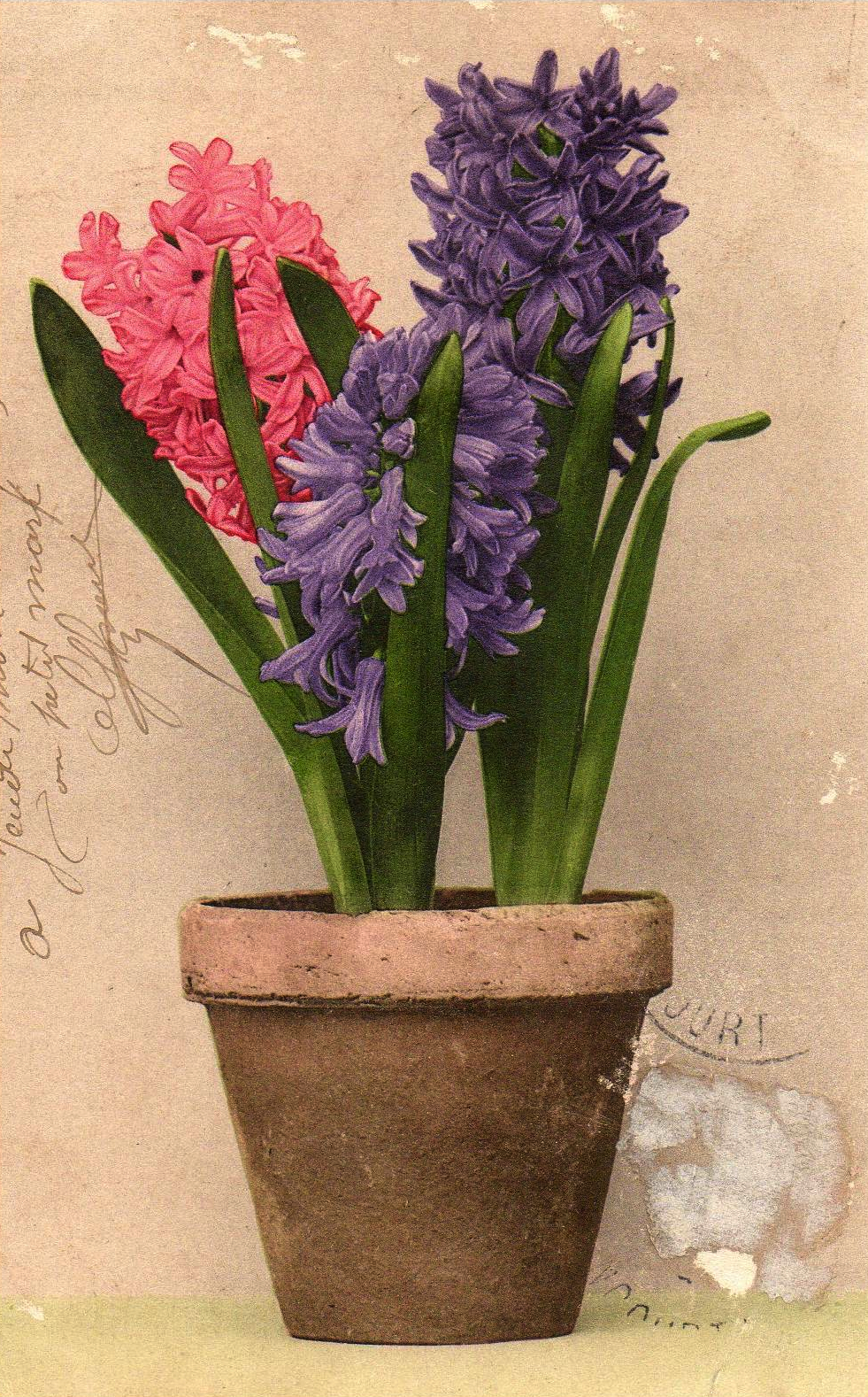
Hyacinths
For centuries, hyacinths have filled the spring air with sweet perfume, inspired poets to songs of praise and gardeners to feats of horticultural elegance.
In the mid-18th century, Madame de Pompadour ordered the gardens of Versailles filled with Dutch Hyacinths and had hundreds forced “on glasses” inside the palace in winter. The predominant fashion trend-setter of her age, the passion for these sweetly-scented Dutch bulb flowers sparked a national rage among the French elite.
Today, the hyacinth remains a symbol of style and elegance, with the grand tradition of large formal beds planted with hyacinths carried on in many of the world’s great public and private gardens.

Of humble origin
Dutch Hyacinths: But the lush hyacinth varieties that so enthused Madame de Pompadour and those which give us such pleasure today, are a far cry from the hyacinth which first caught the attention of our ancestors. Hyacinths, it is believed, were first cultivated in Europe by the ancient Greeks and Romans. Both Homer and Virgil described the plant’s fragrance. The hyacinth known to these men would have been Hyacinthus orientalis, a native of Turkey and the Middle East and the genetic ancestor of our modern cultivars.
This early hyacinth was a rather wan looking specimen. With only about 15 pale blue flowers in a loose raceme, or group of single flowers arranged along a central axis, on ten-inch stems, these plants were valued mainly for their scent. Whether due to their anemic appearance or other factors, the cultivation of hyacinths faded from Europe about the same time as the Romans did.

The Hyacinth goes Dutch
The plant reentered European gardens in the 1560’s, reintroduced from Turkey and Iran, eventually reaching the bulb-loving low countries of Holland.
It was there that the tiny Hyacinthus orientalis experienced a centuries-long “fashion make-over,” as skillful Dutch hybridizers transformed it into a full-flowered garden gem, earning the plant its popular name: the Dutch Hyacinth. 
Madame de Pompadour

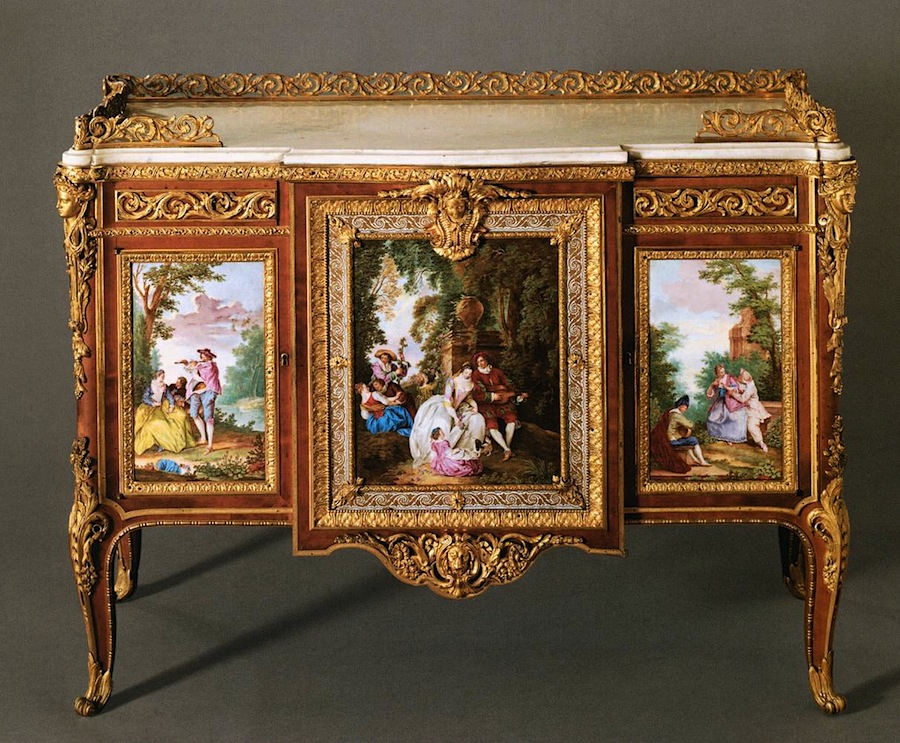
La commode de Mme. du Barry

Attributed to Martin Carlin, 1772 [Musee du Louvre, Paris]
Left plaque: after Nicolas Lancret ~ Par une Tendre Chansonnette  
Center plaque: after Jean-Baptiste Pater ~ L’Agréable Société 
Right plaque: after Nicolas Lancret ~ La Conversation Gallante
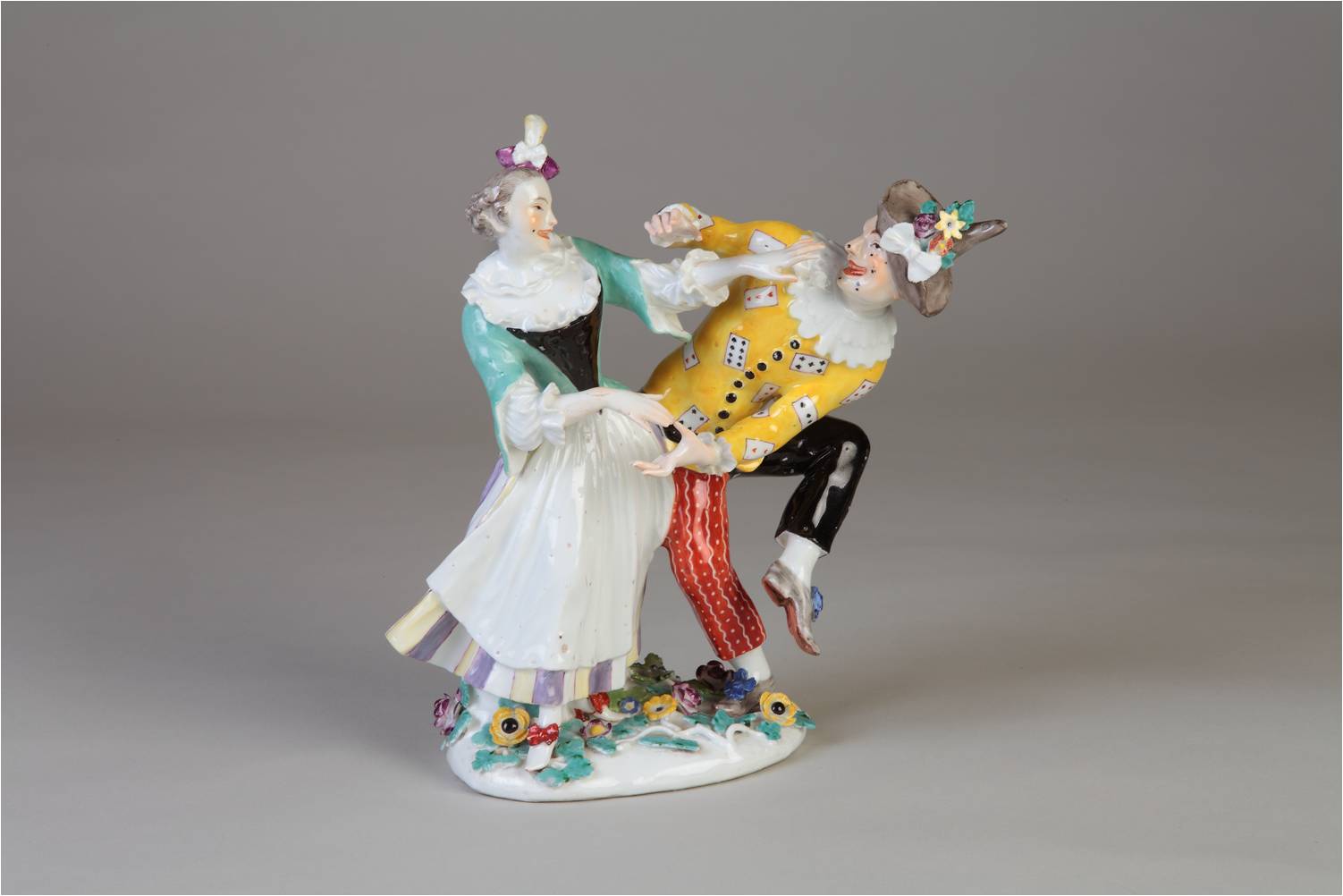
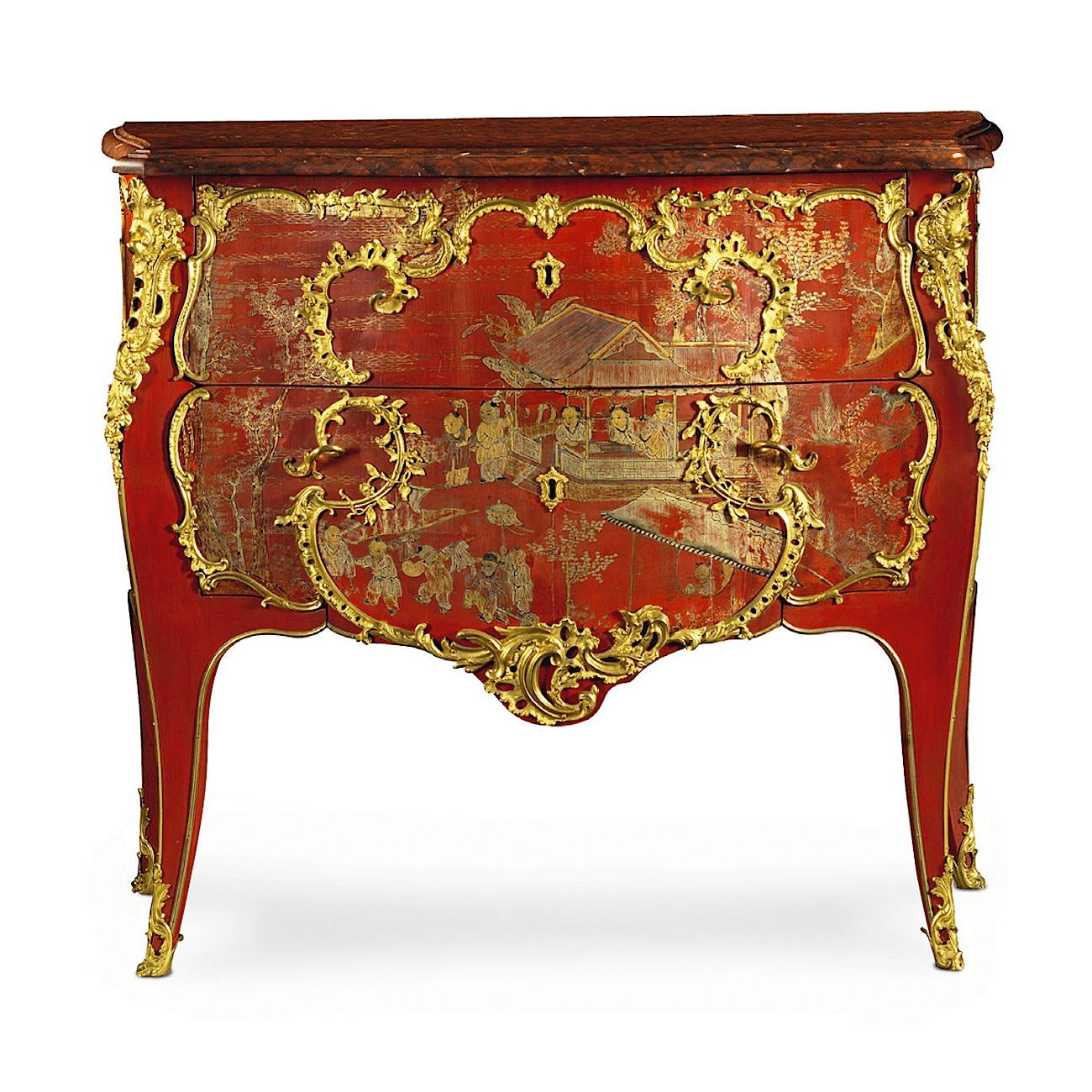
The apartments of the favorite at Versailles formed a series of boudoirs, each of which seemed to those who entered for the first time more elegant than another. The chimney-piece in the salon was adorned with a magnificent clock, “around which a world of porcelain figures disported themselves.” In the same room were two commodes of priceless lacquer, one relieved by figures in gold, the other decorated with fine porcelain plaques, which, we are told, had not their equals in Europe.  From the ceiling hung a lustre of rock-crystal, which had cost 16,000 livres, and in a a corner stood a beautiful piano, the work of the famous Clicot, the case of which was of rosewood, exquisitely inlaid and lavishly gilded. The cabinet contained a writing-table plated with porcelain, and an inkstand which was a masterpiece of the goldsmith’s art; while in the bedroom was a wonderful clock, which represented ” the Three Graces supporting the vase of Time,” and Love indicating the hour with his arrow. “The most exquisite objects of art, marvels of upholstery, bronzes, marbles, statuettes, abounded in this asylum of voluptuous pleasure. It was the last word of luxury.”! – Hugh Noel Williams Memoirs of Madame Du Barry, of the court of Louis XV, 1910

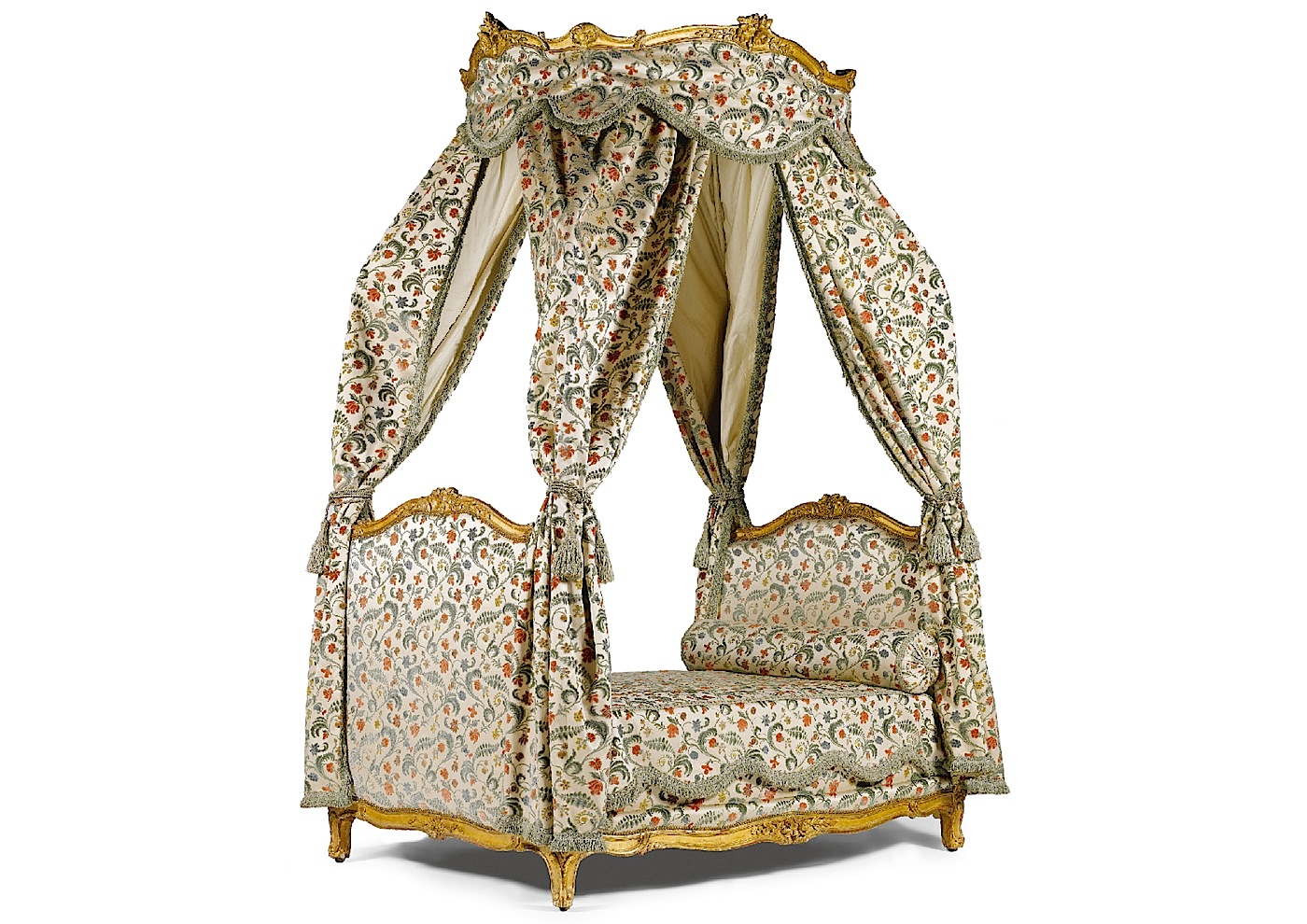
Lit à la Polonaise

The lit à la polonaise had four columns and a canopy. Sometimes the canopy was decorated with a little graceful carving. A “pomme,” or a bunch of feathers, ornamented the centre and each corner of the canopy. Hou-don, the sculptor, had a lit a la polonaise draped in yellow Indian damask trimmed with braid, the woodwork of which was carved and painted white. One of these beds, with a carved and gilt frame hung with crimson damask, was sold for 3,000 livres in 1770; another, for 2,500 livres in 1777; and a third for 1,100 livres in 1782. Sometimes the frames were made entirely of iron and draped.