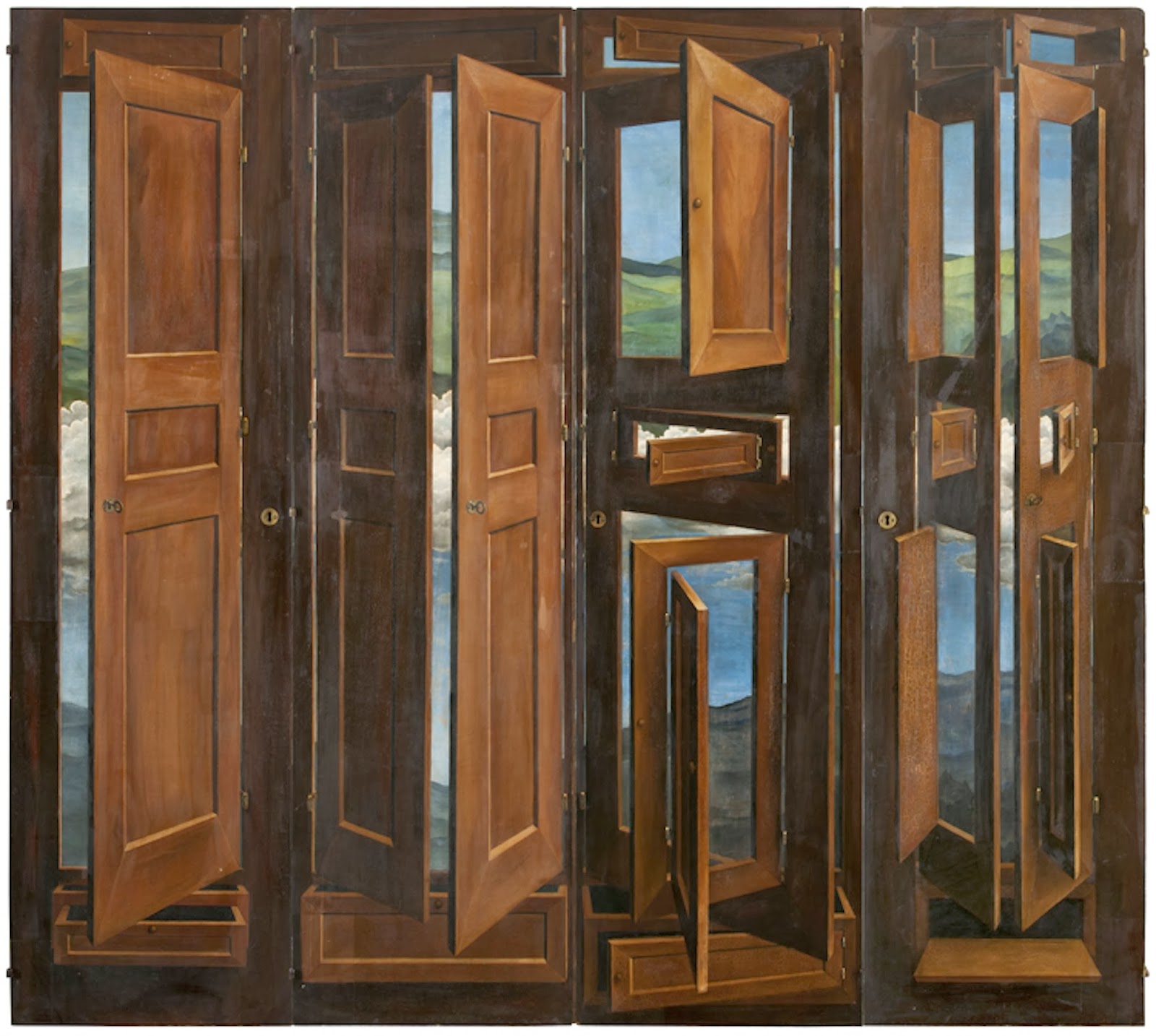
Marcel Jean

Armoire Surrealiste, 1941
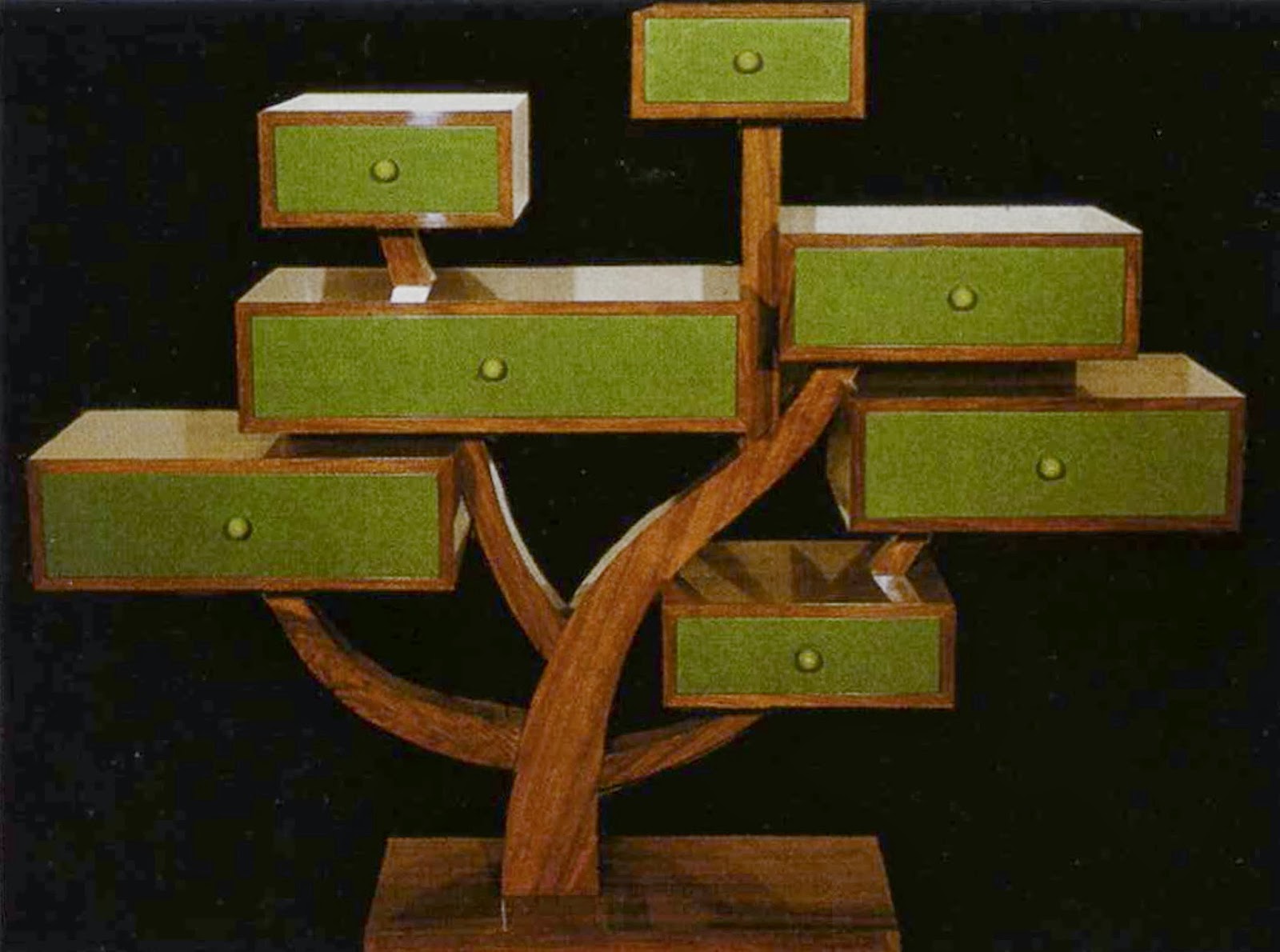
Meuble L’Arbre à tiroirs, 1941
Le peintre Marcel Jean réalise en 1941, à Budapest où il a fui pendant la guerre, des meubles, dont l’Arbre à tiroirs ou l’Armoire surréaliste. Ce dernier témoigne de l’influence des surréalistes qu’il a rencontrés en 1933. Proche de ce milieu, Marcel Jean sera un des premiers historiens de ce mouvement et écrira en 1959 une Histoire de la peinture surréaliste. Le monde de l’objet va beaucoup intéresser les surréalistes. Dans sa Tasse en fourrure, Meret Oppenheim détourne l’objet courant de son usage trivial pour en faire le support de rêves ou de fantasmes. Dans son célèbre Visage de Mae West, Dalí transforme le visage en décor de salon. Ici, Marcel Jean prend le prétexte d’une armoire pour en faire un objet insolite et onirique. Chaque porte est ornée de vantaux et tiroirs à ouvertures multiples dans l’embrasure desquels s’ouvre un paysage immobile.  Les Arts Décoratifs
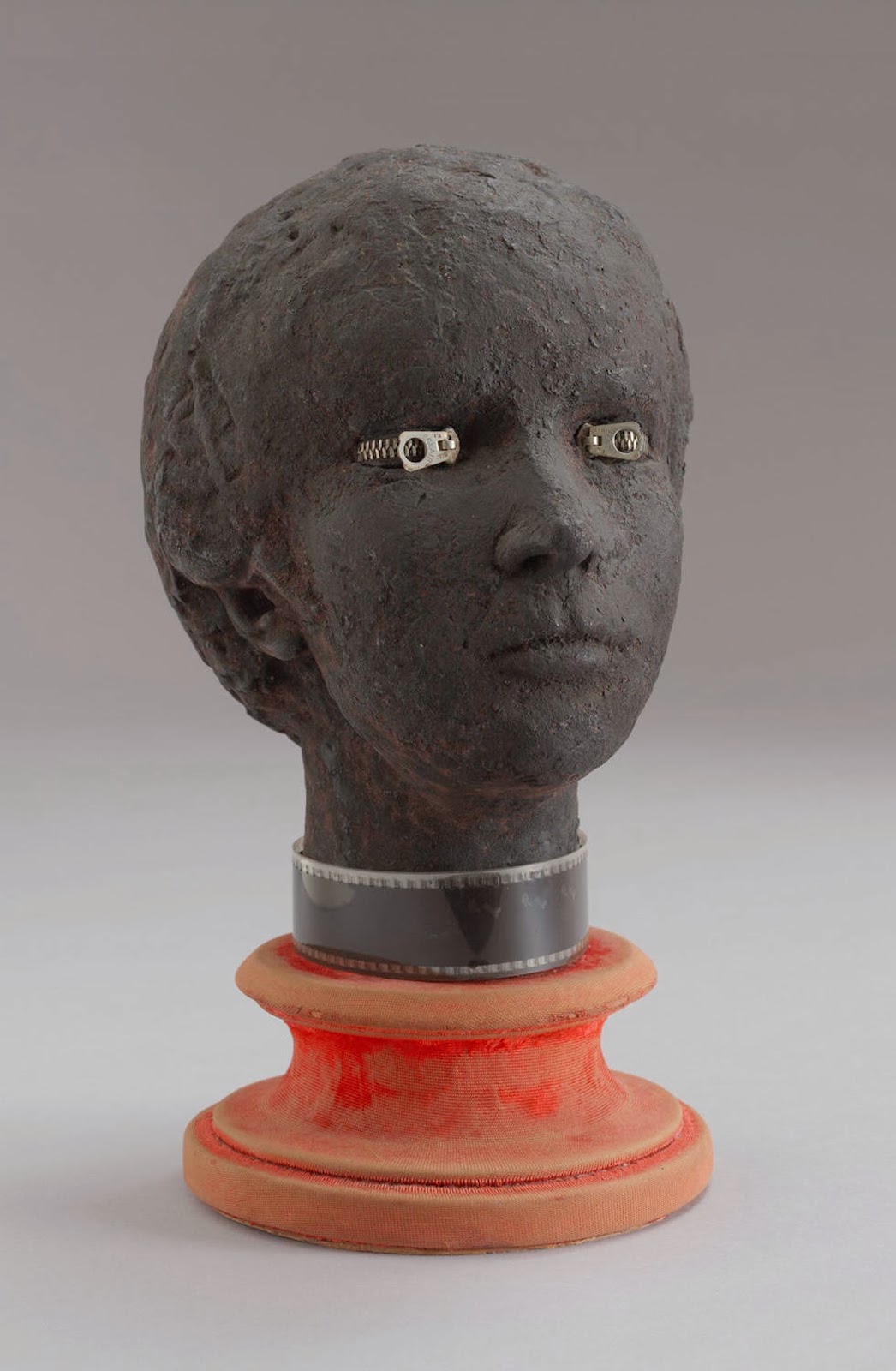
Specter of the Gardenia, 1936

This head of a woman, with zippers for eyes and a filmstrip collar encircling her neck, composes an anxious portrait. At the same time, its tactile surface of black cloth and red velvet is charged with the eroticism of imagined touch. Marcel Jean believed that everyday objects “possess a double meaning: all have a latent sexual content besides their practical role, and our dreams…do not fail to endow them with values we unconsciously gave them when they were created during the waking state.”

Jean originally called this work Secret of the Gardenia, after an old movie reel he discovered, along with the velvet stand, at a Paris flea market. Chance discoveries like these provided a trove of items for Surrealists to combine in making their uncanny work.  MOMA
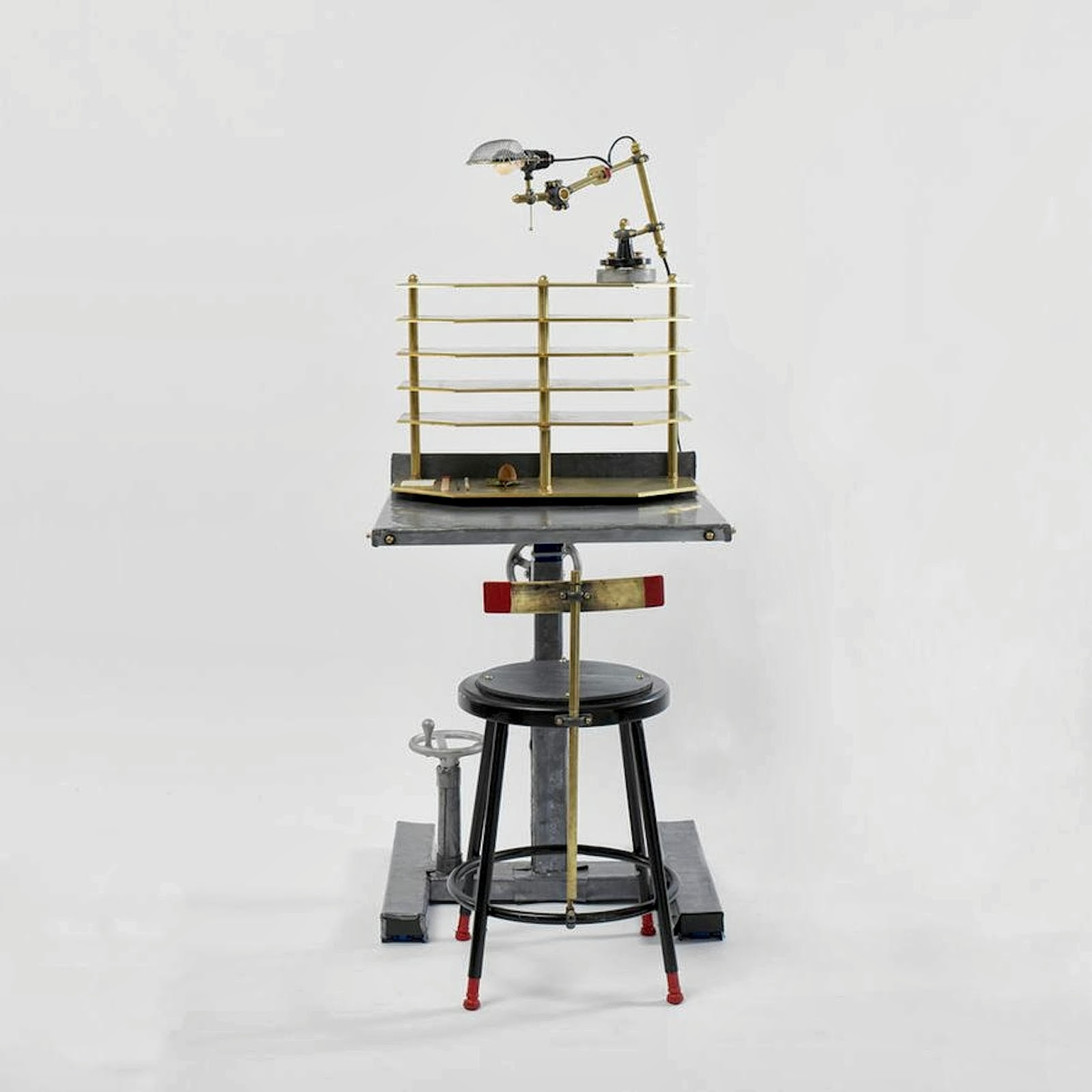
L’Harmonieuse Andrée

Andrée Putman
[23 December 1925 – 19 January 2013]
Un jour de 2006, Pleyel demande à Andrée Putman : « dessine moi le piano du XXIè siècle…» 


Studio Putman
Jean-Baptiste Huynh ~ Andrée Putman, 1992
➜  Pianos Pleyel

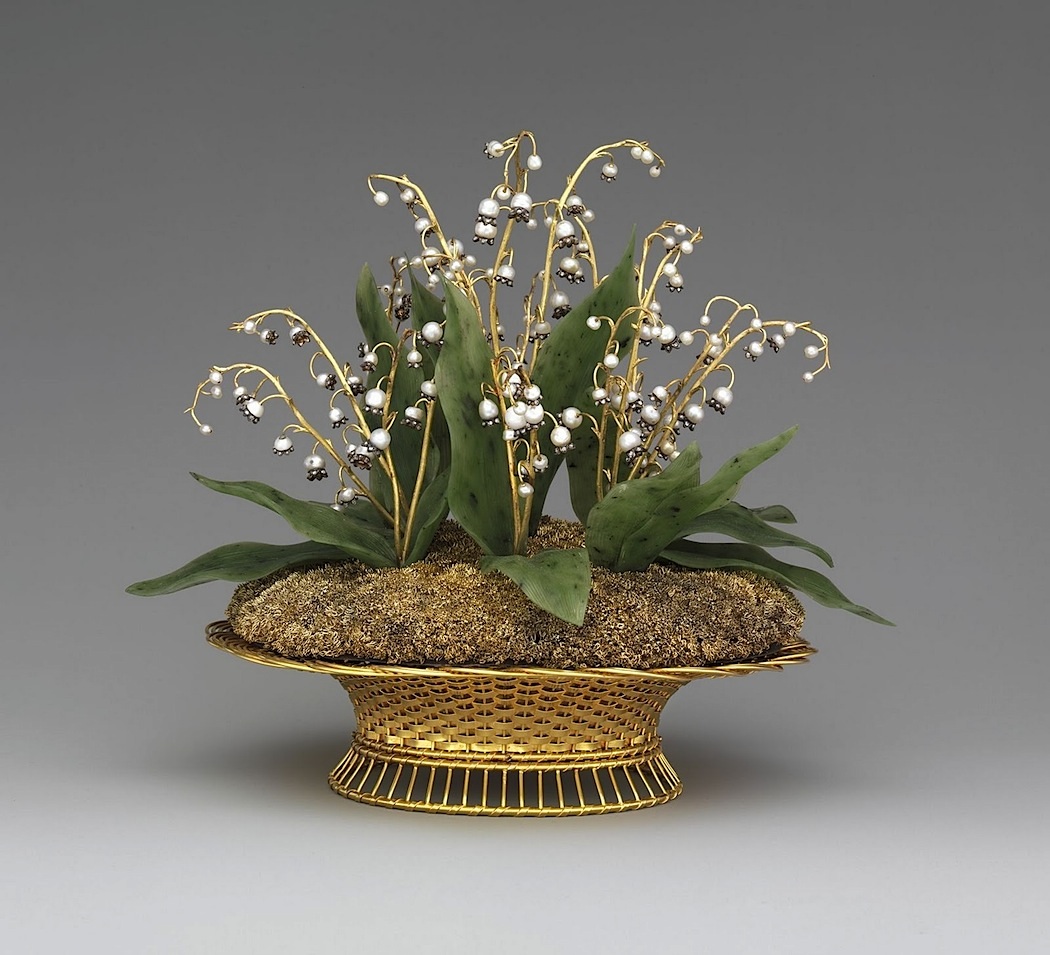
Lilies of the Valley Basket

August Wilhelm Holmström for the House of Fabergé, 1896
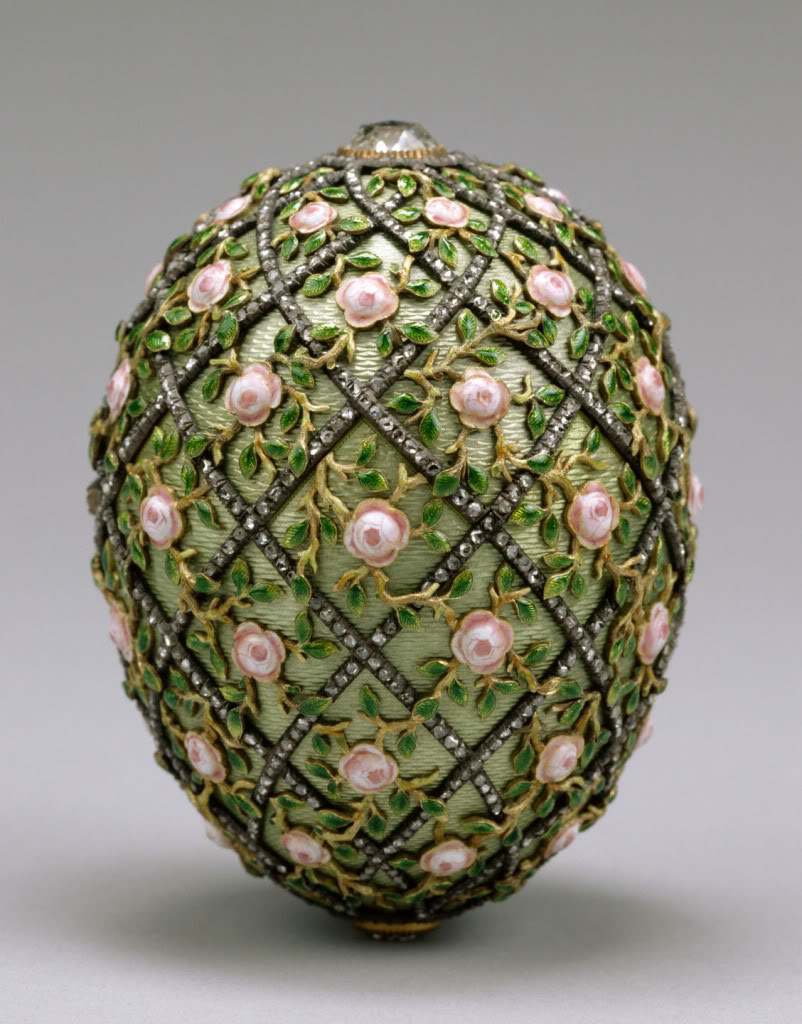
Born in Helsinki on October 2, 1829, Holmström was the son of a master bricklayer.  Apprenticed to the German jeweler Herold in St. Petersburg, he became a journeyman in 1850 and a master in 1857.  That same year he became principal jeweler for the Fabergé company when he bought the workshop of the master goldsmith Fredrick Johan Hammarström.  Birbaum says his workshop was among the first three in the House of Fabergé, the others being those of Reimer and Kollin.  Holmström worked exclusively for Fabergé.  Bainbridge says he made the gold miniature of the cruiser in Memory of the Azov that was the surprise in the 1891 Tsar Imperial Easter egg.  The 1892 Tsar Imperial Diamond Trellis Egg bears his mark.
Imperial Diamond Trellis Egg
 Memory of the Azov Egg
It was in Holmström’s workshop that the famous Fabergé miniature copies of the Imperial regalia were executed.  These one- to ten-scale miniatures were exhibited at the 1900 Exhibition Internationale Universelle in Paris and are now kept in the special treasury of the Hermitage Museum called the Gold Room.  In his memoirs, Birbaum observes:

“The workshop was famous for its great precision and exquisite technique, such faultless gem-setting is not to be found even in the works by the best Paris jewelers.  It should be noted that even if some of Holmström’s works are artistically somewhat inferior to those of Parisians masters, they always surpass them in technique, durability and finish.”  (Fabergé and Skurlov, History of the House of  Fabergé, 1992)
The noted Lilies of the Valley Basket presented to Alexandra Fedorovna in 1896 and now in the Matilda Geddings Gray Foundation Collection in New Orleans, Louisiana, was made in Holmström’s workshop.  It is illustrated as item number 76 in Hill et al., Fabergé and the Russian Master Goldsmith (1989).
Holmström had eight children.  His daughter Fanny married Knut Oskar Pihl, manager of Fabergé’s Moscow jewelry shop; his daughter Hilma alina married Vasilii Zverschinskii, bookkeeper to the firm, and she worked for the firm as a designer; and his son Albert headed the workshop after August Holmström’s death in 1903.  Holmström was burried in St. Petersurg, not far from the grave of Mikhail Perkhin.  Bainbridge rates him “on the very top rung of the Fabergé ladder” (Peter Carf Fabergé, 1949)
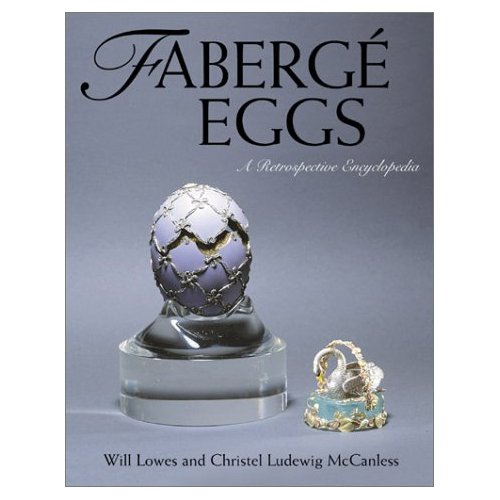
Will Lowes and Christel Ludewig McCanless   
Fabergé Eggs: A Retrospective Encyclopedia

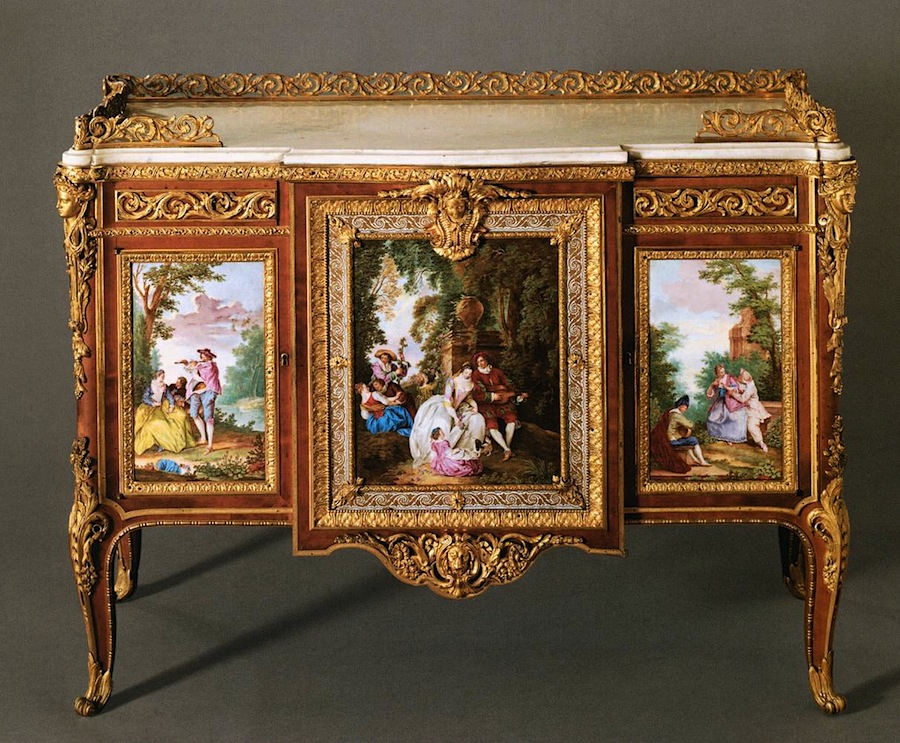
La commode de Mme. du Barry

Attributed to Martin Carlin, 1772 [Musee du Louvre, Paris]
Left plaque: after Nicolas Lancret ~ Par une Tendre Chansonnette  
Center plaque: after Jean-Baptiste Pater ~ L’Agréable Société 
Right plaque: after Nicolas Lancret ~ La Conversation Gallante
The apartments of the favorite at Versailles formed a series of boudoirs, each of which seemed to those who entered for the first time more elegant than another. The chimney-piece in the salon was adorned with a magnificent clock, “around which a world of porcelain figures disported themselves.” In the same room were two commodes of priceless lacquer, one relieved by figures in gold, the other decorated with fine porcelain plaques, which, we are told, had not their equals in Europe.  From the ceiling hung a lustre of rock-crystal, which had cost 16,000 livres, and in a a corner stood a beautiful piano, the work of the famous Clicot, the case of which was of rosewood, exquisitely inlaid and lavishly gilded. The cabinet contained a writing-table plated with porcelain, and an inkstand which was a masterpiece of the goldsmith’s art; while in the bedroom was a wonderful clock, which represented ” the Three Graces supporting the vase of Time,” and Love indicating the hour with his arrow. “The most exquisite objects of art, marvels of upholstery, bronzes, marbles, statuettes, abounded in this asylum of voluptuous pleasure. It was the last word of luxury.”! – Hugh Noel Williams Memoirs of Madame Du Barry, of the court of Louis XV, 1910