Little friends may prove great friends!

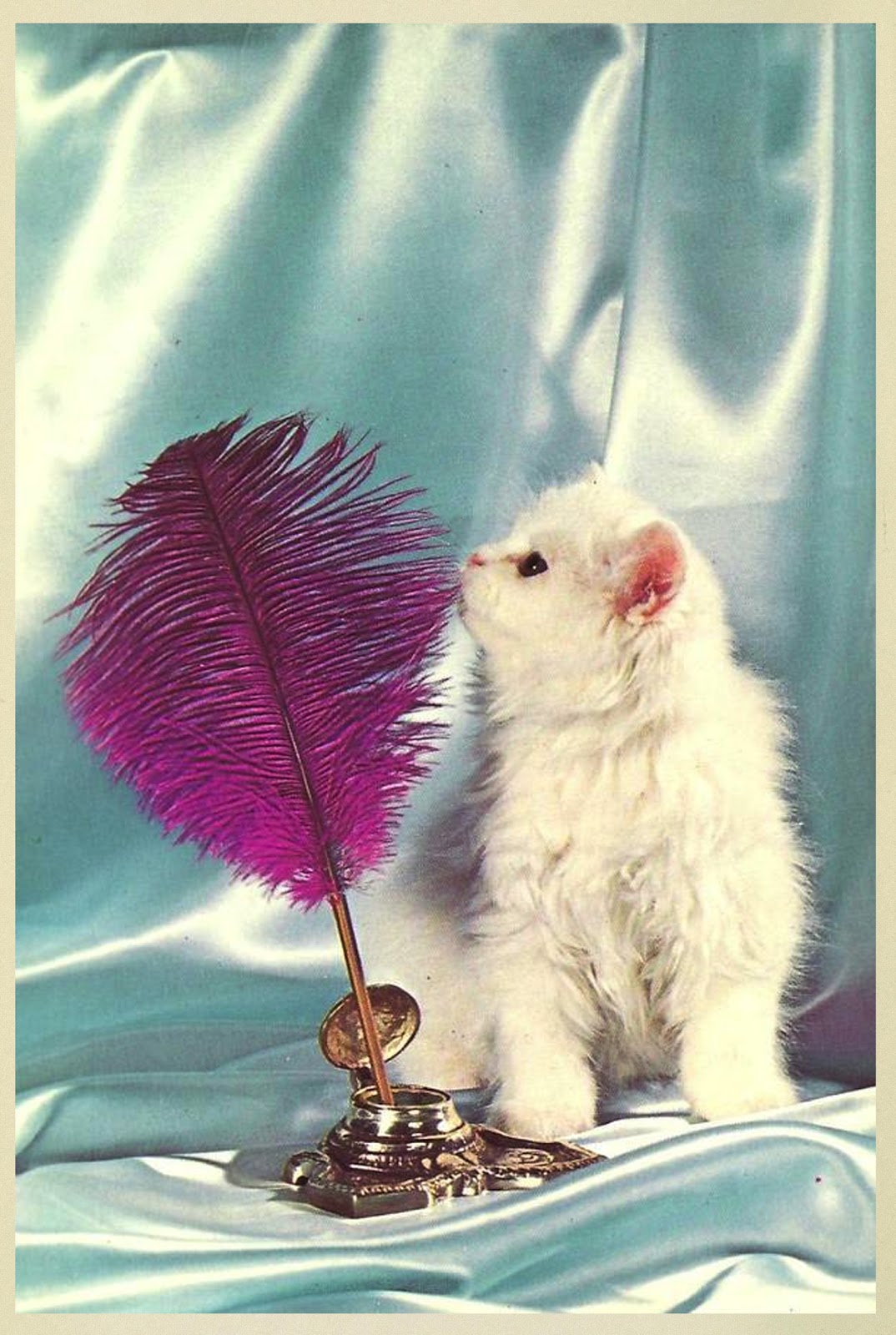
Fluffens, a four-year-old mixture of Persian and Angora cat, relaxes while a mother white mouse (lower left) and her brood of seven use her for a playground. [Bettmann Archives, 1955]
 “Aunt Louisa’s oft told tales” published by McLoughlin Bros., ca. 1870s
(click to view)


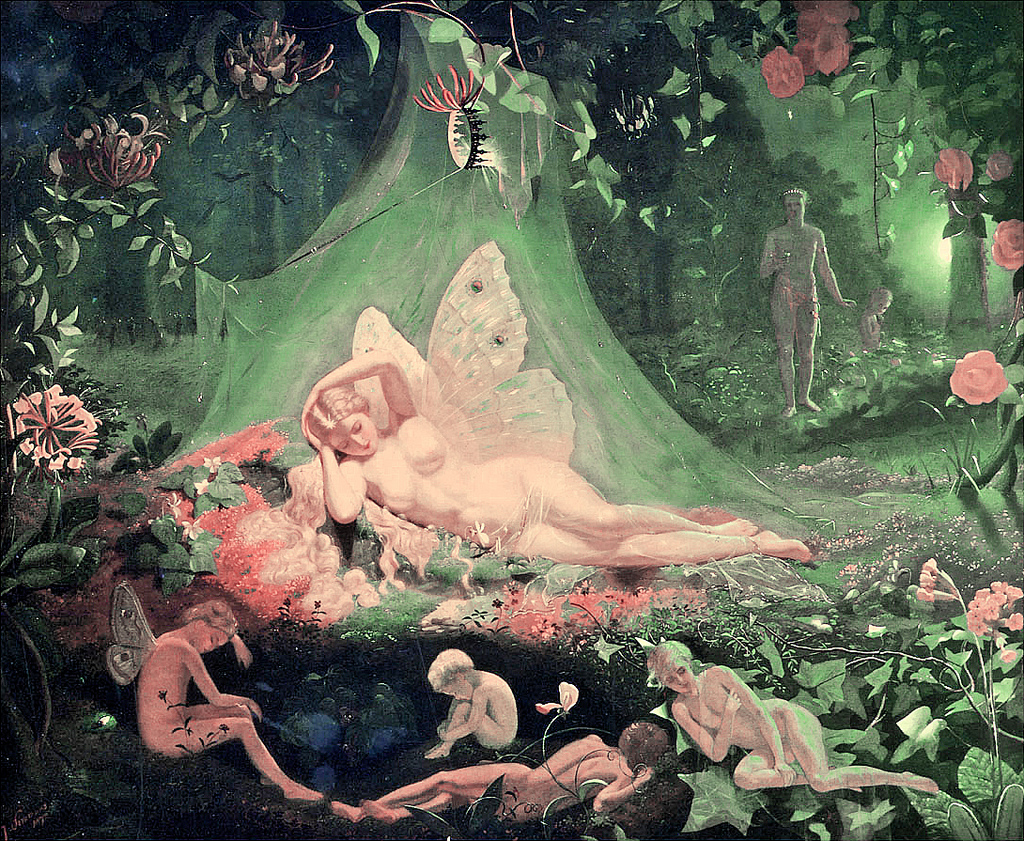
Titania

John Simmons ~ There Lies Titania, 1872
☀ ☀ ☀

I know a bank where the wild thyme blows,
Where oxlips and the nodding violet grows,
Quite over-canopied with luscious woodbine,
With sweet musk-roses and with eglantine:
There sleeps Titania sometime of the night,
Lull’d in these flowers with dances and delight;
And there the snake throws her enamell’d skin,
Weed wide enough to wrap a fairy in:
And with the juice of this I’ll streak her eyes,
And make her full of hateful fantasies.

Oberon
A Midsummer Night’s Dream Act 2, Scene 1
William Shakespeare
☀ ☀ ☀
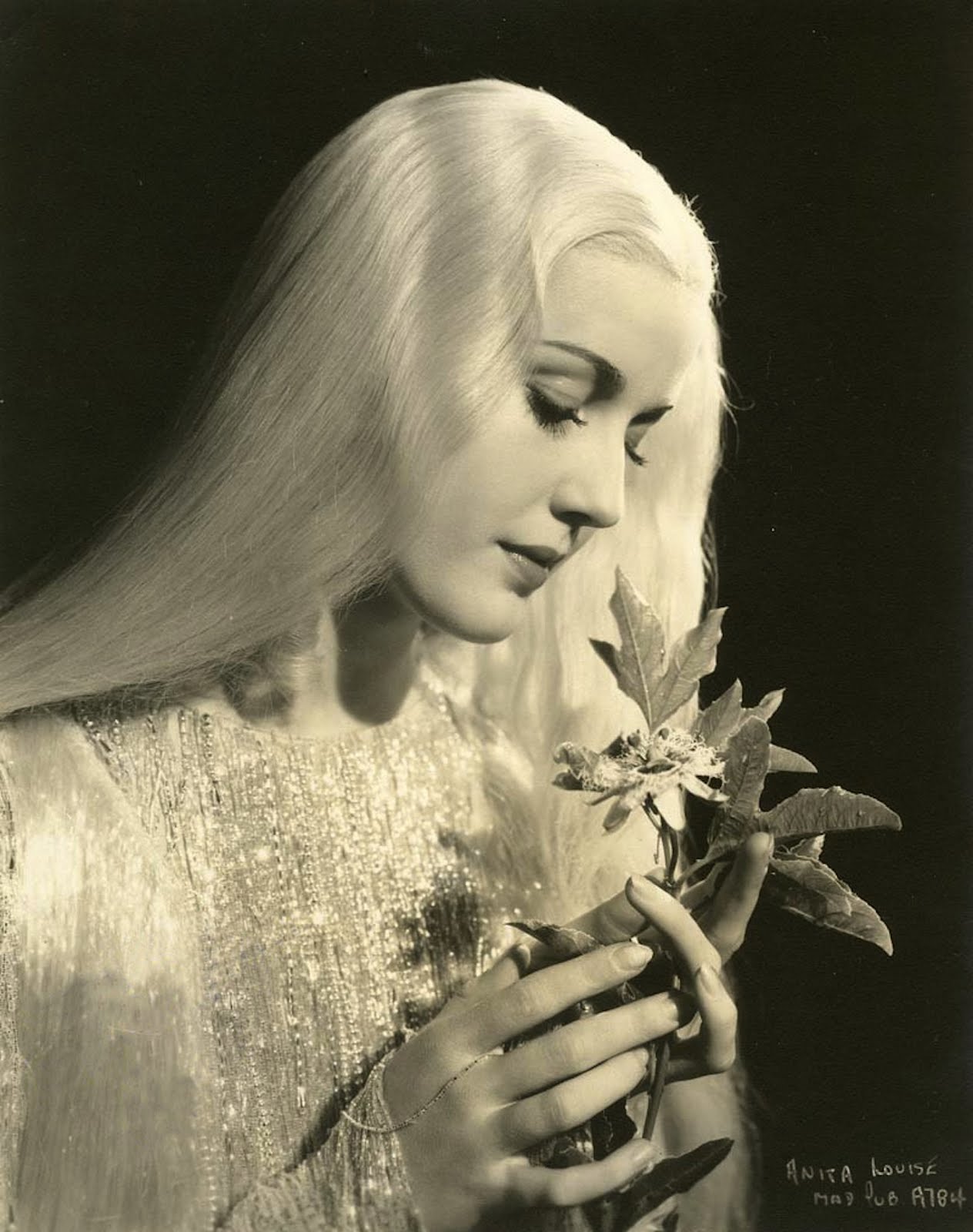
Anita Louise as Titania, Queen of the Fairies

 Bottom and Titania, James Cagney and Anita Louise

Featurette on the making of Max Reinhardt‘s and William Dieterle‘s 1935 film version of A Midsummer Night’s Dream  ➔  Turner Classic Movies

The White Cat

➔   La Chatte Blanche
Contes Nouveaux ou Les Fées à la Mode (New Tales, or Fairies in Fashion) 1698


❈ ❈ ❈ 
 Once upon a time there was a king who had three brave and handsome sons. He feared they might be seized with the desire of reigning before his death. Certain rumours were abroad that they were trying to gain adherents to assist them in depriving him of his kingdom. The king was old, but as vigorous in mind as ever, and had no desire to yield them a position he filled so worthily. He thought, therefore, the best way of living in peace was to divert them by promises he could always escape fulfilling… 
 ❈ ❈ ❈ 

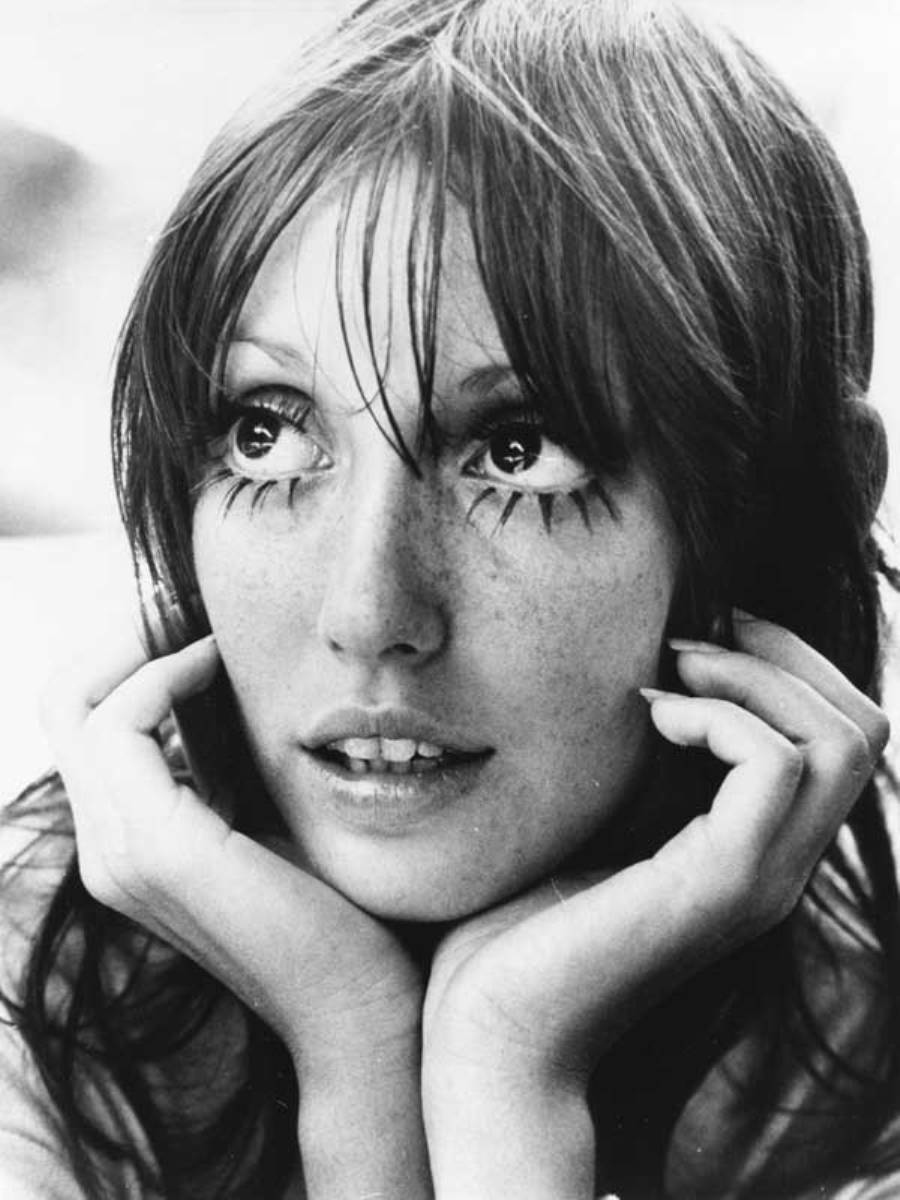
Shelley Duvall’s Faerie Tale Theatre *****

***

The Tale of the Frog Prince
Rumpelstilskin
Rapunzel
The Nightingale
Sleeping Beauty

Jack and the Beanstalk
Little Red Riding Hood
Hansel and Gretel
Goldilocks and the Three Bears
The Princess and the Pea
Pinocchio
Thumbelina
Snow White and the Seven Dwarfs
Beauty and the Beast
The Boy Who Left Home to Find Out About the Shivers
The Three Little Pigs
The Snow Queen
The Pied Piper of Hamelin
Cinderella
Puss ‘n Boots
The Emperor’s New Clothes
Aladdin and His Wonderful Lamp
The Princess Who Had Never Laughed

Rip Van Winkle
The Little Mermaid
The Dancing Princesses

***

One of the first gems of the cable TV age, Faerie Tale Theatre brings 26 classic tales to life. Produced over a five-year span (1982-87) for Showtime, FTT brought together creative dramatics and whimsical writing with some of the top talents of the day. Executive producer/host Shelley Duvall (who was coming off her breakout role in The Shining) shepherds this mix of theatrical simplicity and grand storytelling for these oft-told tales (“Goldilocks and the Three Bears,” “Little Red Riding Hood,” “Hansel and Gretel,” “Sleeping Beauty,” and the like) for kids and their parents. Since they are not elaborately produced, FTT may be a hard sell for some smaller members of the family at first, but most should be hooked, even older kids who may pooh-pooh fairy tales. There’s always a slight twist that makes these productions fresh.
The cast is amazing, especially when you think how lightly cable television was thought of in the ’80s: Jeff Bridges, Bud Cort, Liza Minnelli, James Coburn, Susan Sarandon, Christopher Reeve, Klaus Kinski, Billy Crystal, Matthew Broderick, Gregory Hines, Eric Idle, Robin Williams, and Mick Jagger are some of the talented–and varied–actors appearing. Crystal’s take on the smart “Little Pig” (with Jeff Goldblum as the wolf) and Williams’s “Frog Prince” are two comic gems. Malcolm McDowell, right in the middle of his career high-point of playing baddies, brings flair to the Big Bad Wolf, while his then-real-life wife Mary Steenburgen beautifully counterpoints as Red Riding Hood. The casting of Vincent Price and Vanessa Redgrave in “Snow White” is inspired. Also impressive are the directors Duvall pooled: Tim Burton (“Aladdin and His Wonderful Lamp”), Francis Ford Coppola (“Rip Van Winkle”) Peter Medak (three episodes), Nicholas Meyer (“Pied Piper”), and Roger Vadim (“Beauty and the Beast”). You can go on for days about these wonderful tales, most totaling around the 45-minute mark, but it’s better just to get the set and start wherever you’d like; you will get to the end sooner than you think. –Doug Thomas

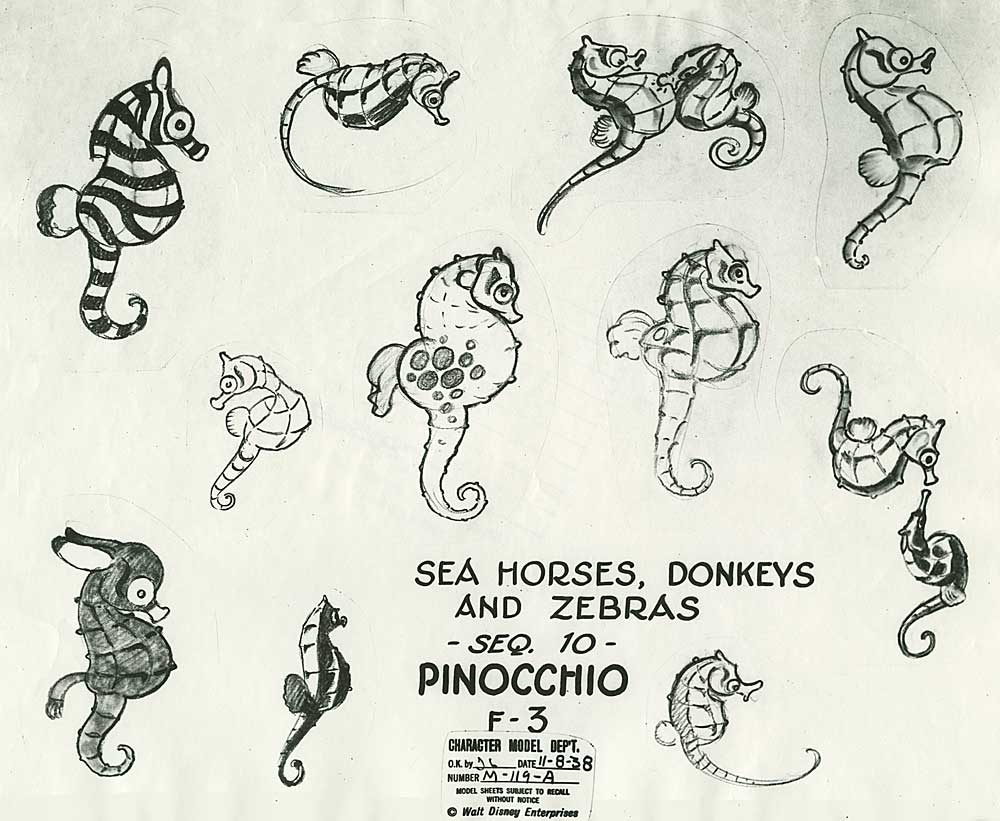
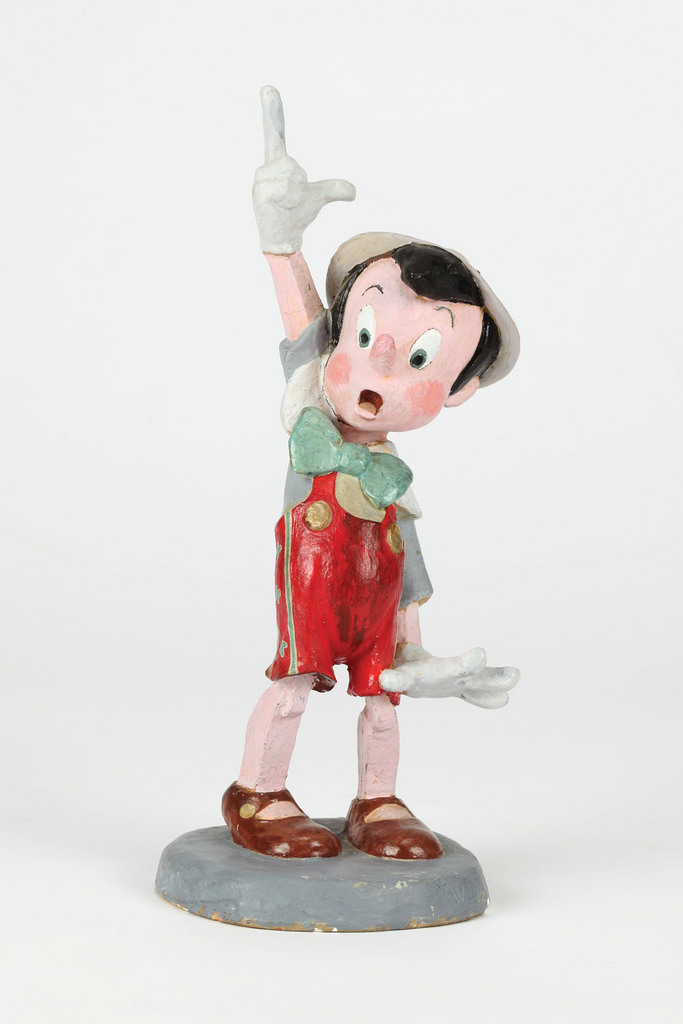
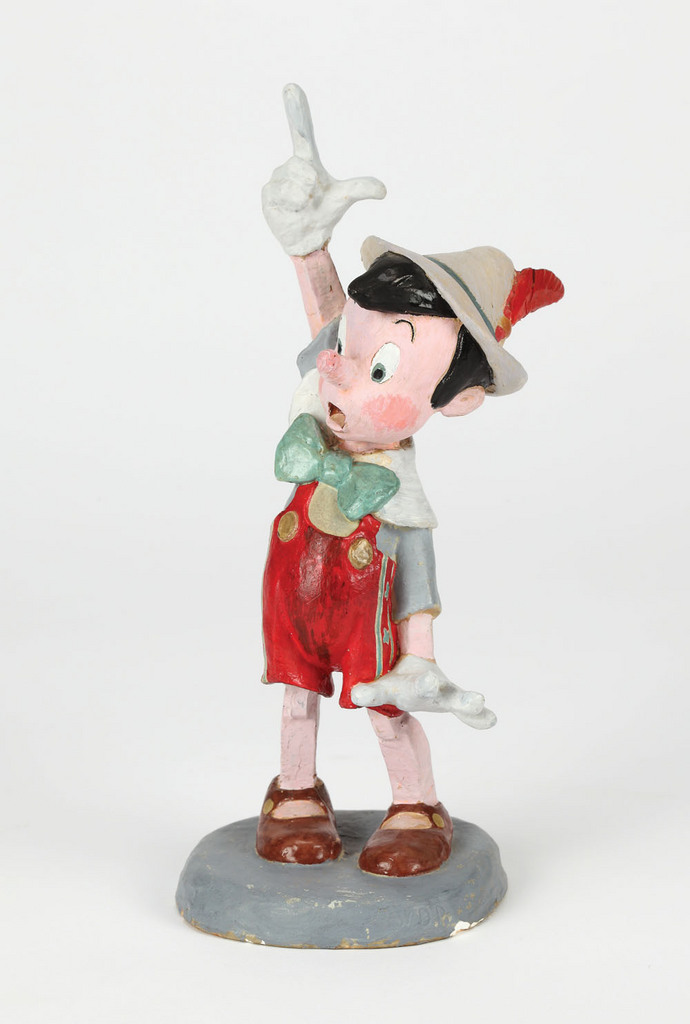
Pinocchio

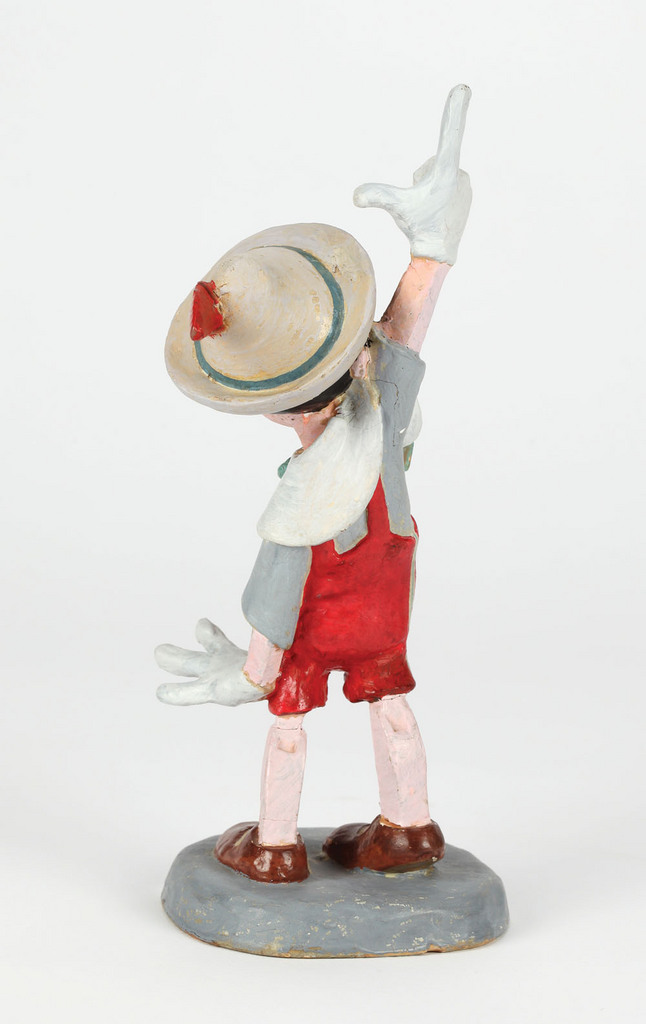
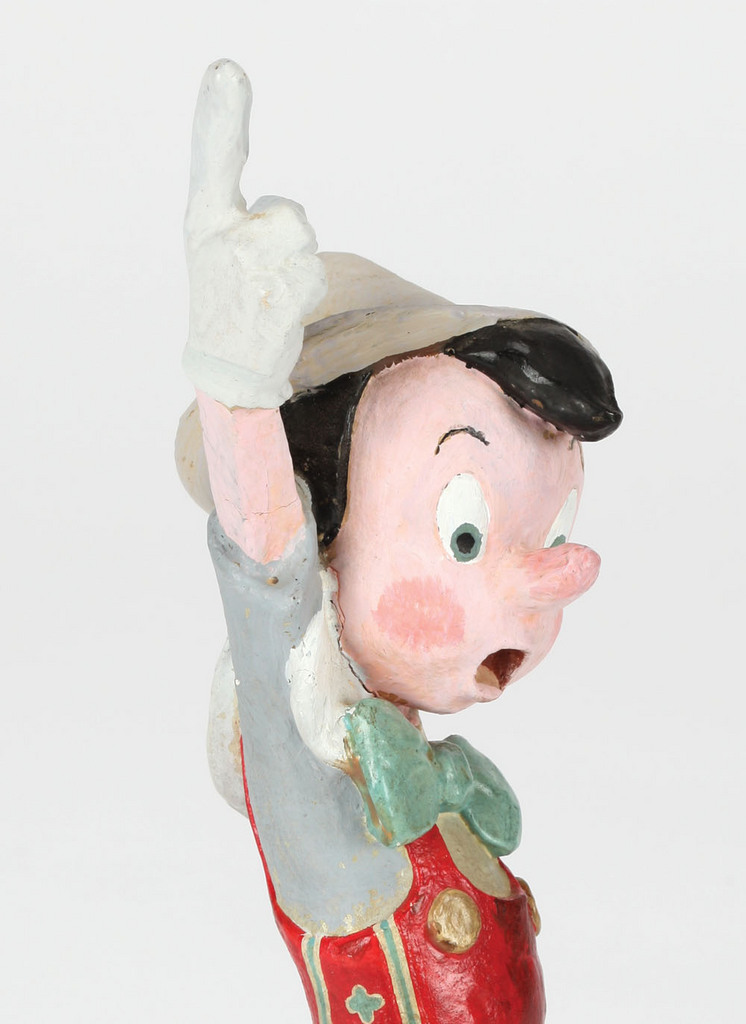
Original Walt Disney Studio maquette of Pinocchio measuring 8 ½ in. tall, constructed of plaster over wire with hand-painted details. The maquette dates from approximately 1938 (prior to the release of the film) and is marked on the edge of the base “© WDP” and stamped on the bottom with “Return to character model department #22”. The animators would refer to these three dimensional plaster maquettes during production for visual continuity. 

LiveAuctioneers

The most beautiful film in the world

An original artist is unable to copy. So he has only to copy in order to be original.” -Jean Cocteau

Beauty and the Beast, the first film of Cocteau’s own since The Blood of a Poet, is by general consent one of the most enchanting pictures ever made, and its production was one of those undertakings that with a kind of general benevolence shed luster on all its participants. It brought new accolades to Madame Leprince de Beaumont, the eighteenth-century author of the fairy tale. Jean Marais suggested the film: For him, his face masked by the fur and fangs of the Beast, his body padded and swathed in velvet, his hands made into claws, it was a triumph of acting over physique. Lovely Josette Day plays Beauty, the good country girl, with an intelligence and a dancer’s grace that Cocteau praised without reserve. She, the actresses who play her wicked sisters, and the rest of the cast are outstanding in the way they speak, move, wear their clothes, and form tableaux à la Vermeer and Le Nain.

The Gustave Doré sumptuousness of Christian Bérard’s costumes and decor is reminiscent not in style, but in spirit and success, of Bakst’s lavishness in ballet. In Bérard, Cocteau had found a new fellow master of fantasy, an anti-modern, neo-baroque successor to the Picasso of Parade; and the high style of his famous perspective of human arms emerging from draperies to grasp lighted candelabra that materialize in the air, the moving eyes of his dusky, smoke-breathing caryatids, his pair of Louis XIV marble busts of Turks, lend fantastic cinema a nobility that had been previously hinted at—one can only mention the earlier film again—in The Blood of the Poet.

Henri Alekan gave the photography the tone Cocteau wanted, the “soft gleam of hand-polished old silver,” particularly exquisite in the swaying, sheer white curtains, in Beauty’s tear that turns into a pearl. The most haunting feature is Marais’ beast mask, a remarkable creation, so appealingly beastlike as to be more “becoming” than his lover’s-postcard transfiguration as Prince Charming at the end of the film.

The idea of the film was hard to sell to a producer, and although it became a professional and commercial undertaking, with well-paid stars, jealous unions, watchful insurance companies and budgeted financing by Gaumont, Beauty and the Beast nevertheless represented a triumph over primary difficulties. Like most of the combatant countries, France emerged from the war stripped; Cocteau himself was receiving food packages from Jean-Pierre Aumont in California, and when he fell ill he was treated with American penicillin; everything was in short supply. Old cameras jammed, old lenses developed flaws, no two batches of film were alike, electric current failed or was bureaucratically cut off; there was small choice of fabrics for costumes, sheets without patches were sought everywhere for the farmyard laundry scene, the curtains of Beauty’s bed were stolen from the set.

The filming of Beauty and the Beast brought Cocteau an enchantment reminiscent of his days with the Diaghilev troupe, the sensation of being part of a hard-working family of sacred monsters; moving from manor to château to Paris film studio they were like mountebanks. Cocteau’s journal celebrates the camaraderie and good will of the company—the actors’ professional tolerance of each other’s crises de nerfs, their busy shuttling between the film studio and the legitimate theaters where some of them were simultaneously appearing in plays, the combination of familiarity and respect shown by the grips, their never failing improvisation when rescue was needed, the studio sweepers’ praise after the first rushes, the Vouvray wine with the picnic meals, cast and crew playing cards during rests.

After cutting, after the synchronization of Auric’s music—Auric was the only veteran of The Blood of the Poet to collaborate on Beauty and the Beast—the first showing of the film for an audience of any size was for the technicians in the Joinville studio. The invitation was written on the studio blackboard; schedules were changed to leave everyone free. Cocteau wrote in his journal, “The welcome the picture received from that audience of workers was unforgettable. It was my greatest reward. Whatever happens, nothing will ever equal the grace of that ceremony organized very simply by a little village of workmen whose trade is the packaging of dreams.”

From Cocteau: A Biography by Francis Steegmuller

The Criterion Collection