dum·my

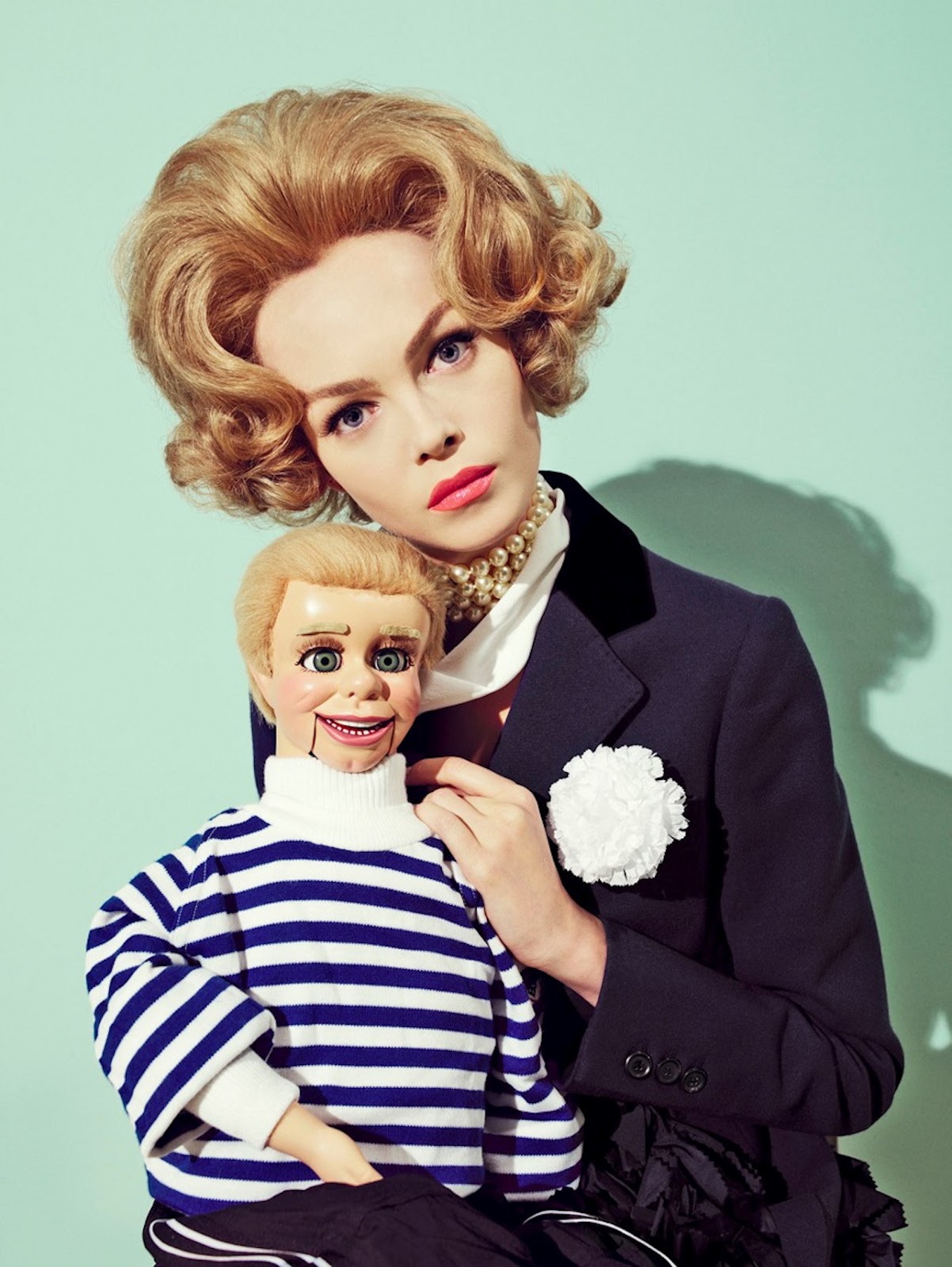
Sofia Sanchez and Mauro Mongiello ~ Siri and the puppet, 2008

Pronunciation: \ˈdə-mē\
Function: noun
Inflected Form(s): plural dummies
Etymology: dumb + -y
Date: 1598
1 a : a person who is incapable of speaking b : a person who is habitually silent c : a stupid person
2 a : the exposed hand in bridge played by the declarer in addition to his or her own hand b : a bridge player whose hand is a dummy
3 : an imitation, copy, or likeness of something used as a substitute: as a : mannequin  b : a stuffed figure or cylindrical bag used by football players for tackling and blocking practice c : a large puppet usually having movable features (as mouth and arms) manipulated by a ventriloquist d chiefly British : pacifier
4 : one seeming to act independently but in reality controlled by another
5 a : a mock-up of a proposed publication (as a book or magazine) b : a set of pages (as for a newspaper or magazine) with the position of text and artwork indicated for the printer

http://www.merriam-webster.com/

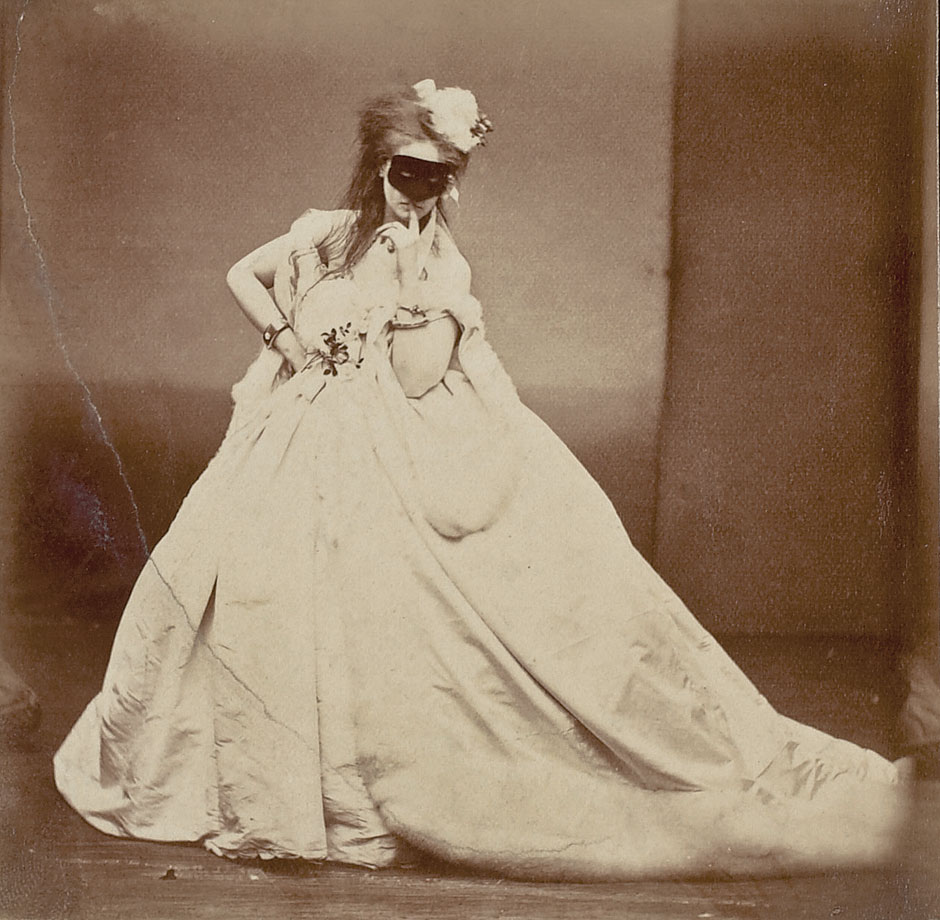
La Comtesse de Castiglione

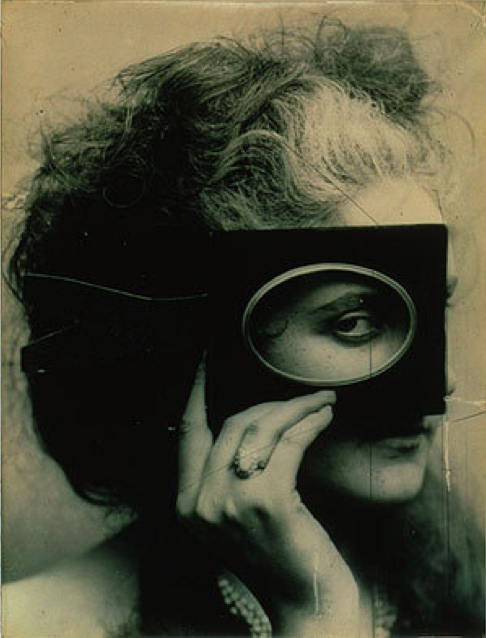
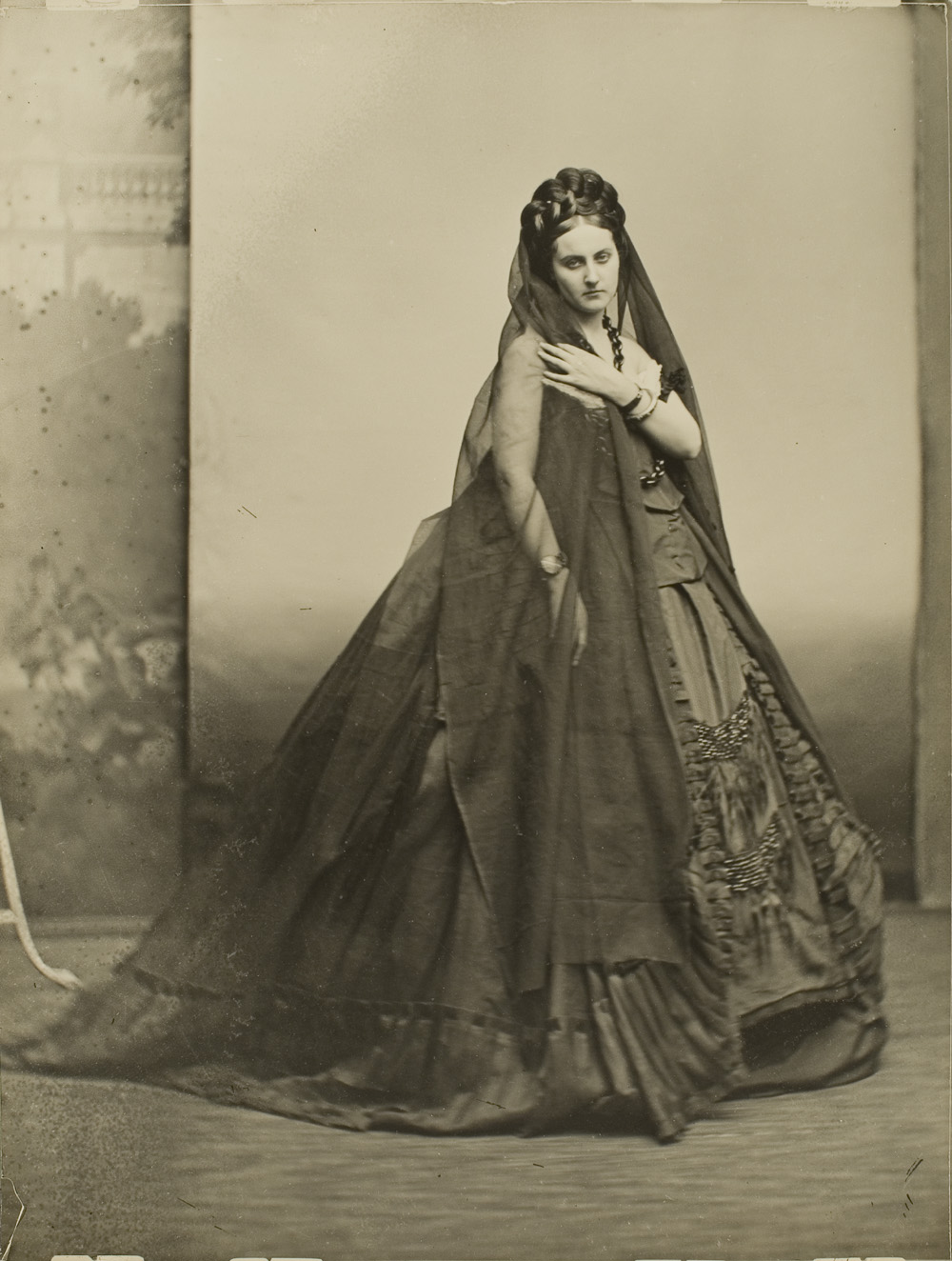
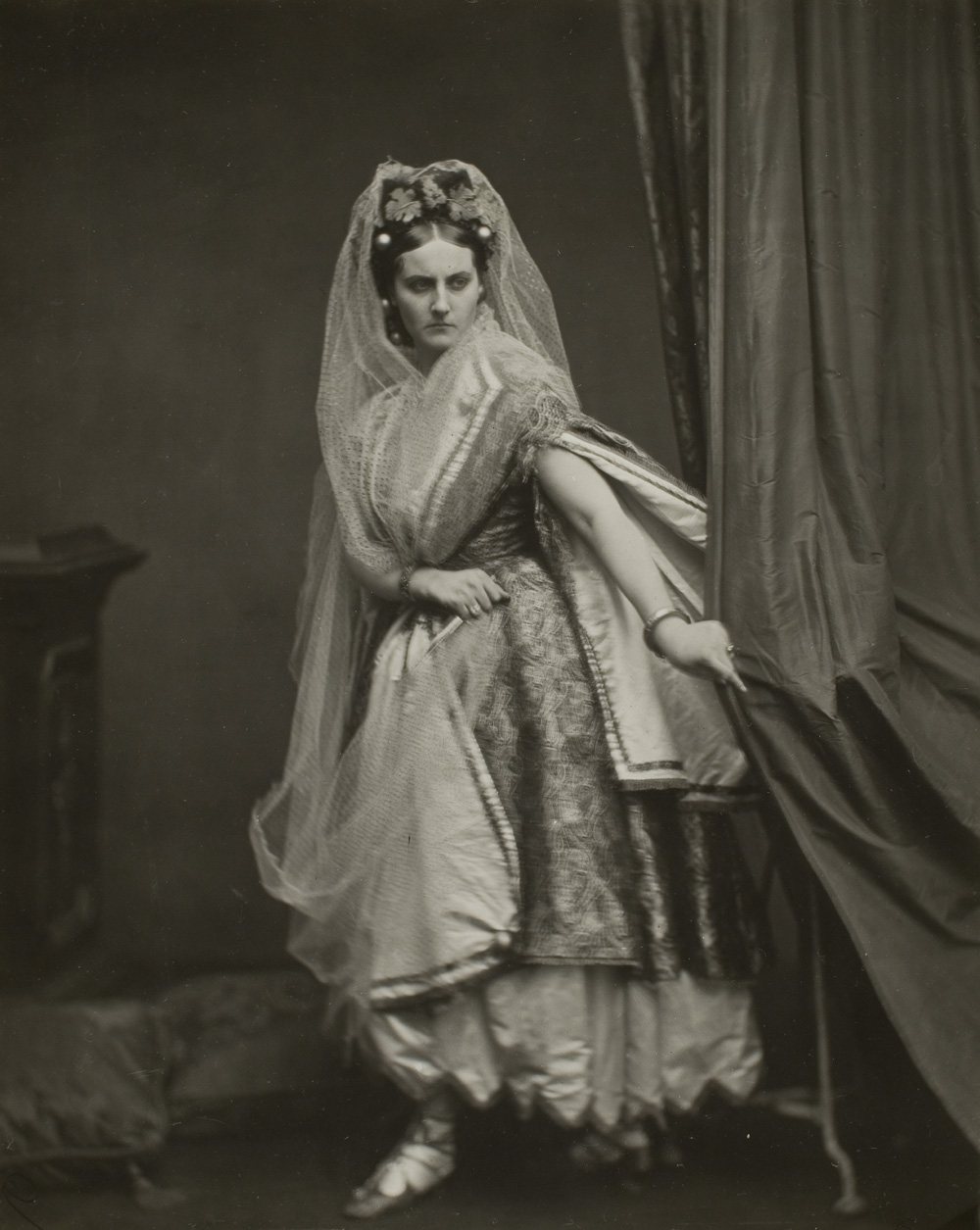
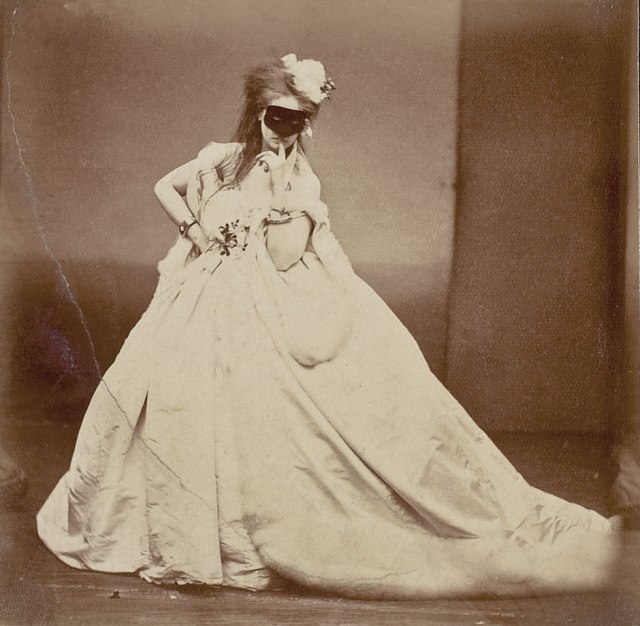
Robert de Montesquiou was entranced by this character who was not unlike him. An Italian aristocrat living in Paris, glittering lioness of the Second Empire, Napoleon III’s mistress, the divine comtesse lived afterwards as a recluse, going out only by night, veiled in black. With Pierre Louis Pierson’s help, she was her own photographer : some five hundred shots celebrate her image, her costumes, her body, her attitudes, according to a ritual she entirely determined, with a surprizingly modern formal invention. 
The name of Virginia Oldoini, Countess of Castiglione, is linked to Second Empire political and courtly intrigues, to the glamour of the Court at the Tuileries and to the splendour of a cosmopolitan Paris, the world capital of fashion and pleasure.
Born in Florence in 1837, Virginia Oldoini married the Count Verasis de Castiglione very young. A cousin of Cavour and a close relation of Victor Emmanuel of Savoy, king of Piedmont, she was sent to Paris in 1856 to plead the cause of Italian unity with Napoleon III. 
Her arrogant beauty was a sensation at court. During the same year, she became the emperor’s mistress. In 1857, after a heart-breaking rupture, she went back to Italy. She was not to come back to France to settle there permanently before 1861. Separated from her husband, she then had many liaisons in the world of finance, aristocracy and politics.
After the fall of the Empire in 1870, she lived more and more secluded from the world, keeping around her an atmosphere of mystery, exciting the curiosity of Robert de Montesquiou who developed a real fascination on her. They were never to meet, but he collected numerous objects previously belonging to her. In 1913, he published a book entitled La Divine Comtesse. La Castiglione died in 1899, aged 62. 

Virginia de Castiglione left a real imprint on her epoch: photographs of her regularly illustrated publications of the time. She was behind some five hundred photographs made during a forty-year collaboration (1856-1895) with the photographer of the Imperial Court, Pierre-Louis Pierson (1822-1913). 
Contrarily to common use, the countess chose her costumes, expressions, gestures and even the angle of the shot. She also defined the end product: portrait, calling card or painted print. She named each shot, sometimes after characters or scenes of contemporary theatre or opera: Scherzo di Folia after Verdi’s opera, Un ballo in maschera, for instance. 
Pierre-Louis Pierson

Je suis l’inventeur de la pin-up

“Les femmes ne trouvent leur portrait ressemblant que lorsqu’il ressemble à ce qu’elles voudraient être.” J.-G. Domergue.


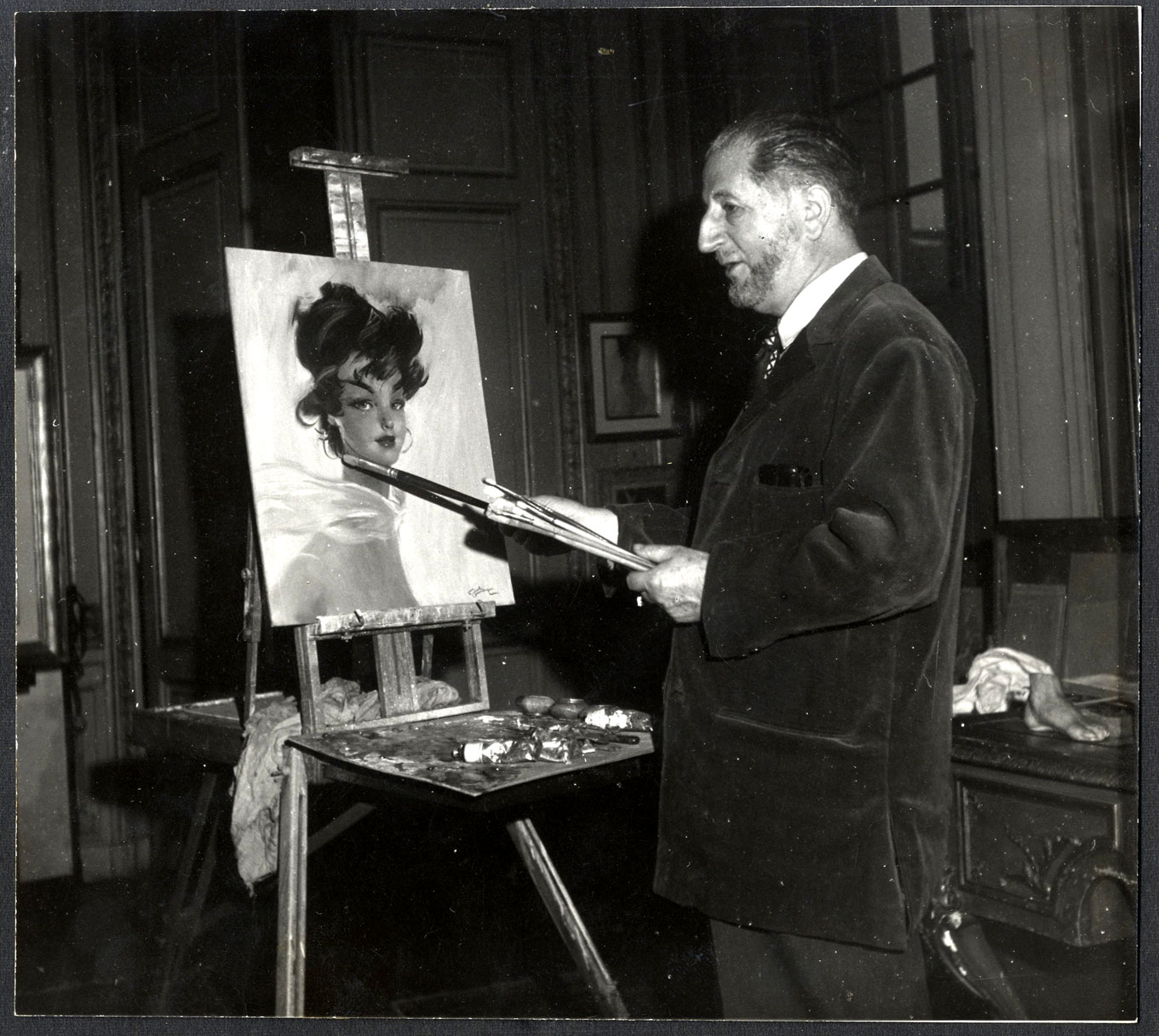
Peintre français, né à Bordeaux le 4 mars 1889. Mort en 1962 à Paris.
Il fut élève à l’école des Beaux-Arts de Paris, d’une quantité impressionnante de sommités professorales de l’époque. Petit cousin de Toulouse-Lautrec, qu’enfant il rencontra, fils d’une famille aisée, il affirmait avoir reçu tout jeune des leçons de Degas. Il débuta au Salon des Artistes Français en 1906, à l’age de 17 ans, ce qui laisse supposer une grande habileté précoce, que l’oeuvre à venir n’a pas démentie. Il obtint une mention honorable en 1908, finalement une médaille d’or en 1920, puis déclaré hors-concours. En 1911, Domergue reçut le Prix de Rome et, par la suite, choisit en fait une carrière de peintre mondain. Boldini fut son réel inspirateur. En 1927, il s’installa dans une villa de Cannes, la Villa Fiesole, que la rumeur a dite fastueuse, et qu’il légua à la ville. Il fut élu membre de l’Institut et , en 1955, nommé conservateur du musée Jacquemart-André où, jusqu’en 1962, il sut organiser de très importantes expositions (Toulous-Lautrec, Van Gogh, Berthe Morisot, Goya, …). Intelligent et cultivé, un tantinet cynique, il fit de cette maison du boulevard Haussmann, quasiment abandonnée, un centre actif de la vie artistique de Paris.
C’est dans la rue d’Argenson, en quittant le Musée, qu’il mourut subitement, au début de la soirée.

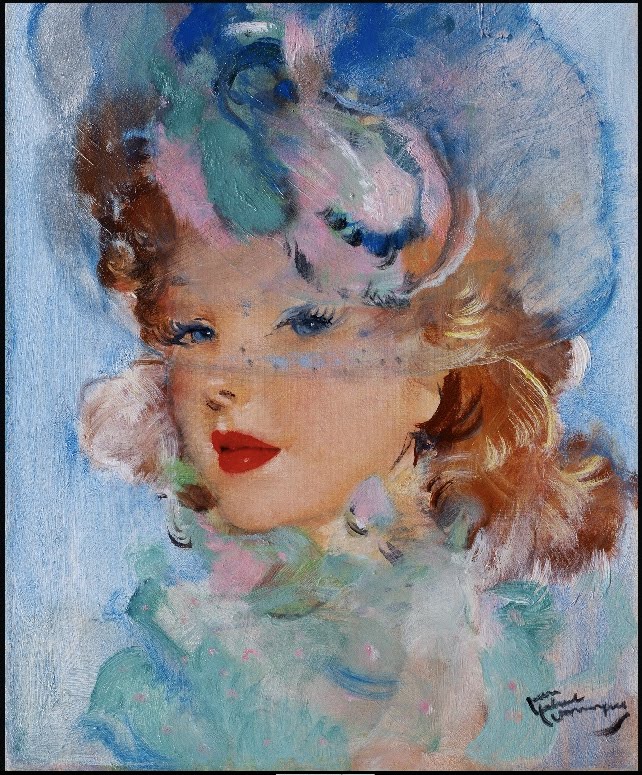
Quant à son oeuvre propre, bien que semblant promis à ses débuts à une carrière de paysagiste, il devint rapidement le peintre de nus et demi-nus, d’une coquetterie malicieuse, qui firent sa réputation et sa fortune auprès d’une riche clientèle polissonne et libérée.

Réputé pour ses silhouettes au long cou, peintre et affichiste prolifique, Domergue a consacré son art à l’image de la femme sensuelle, espiègle et coquette.