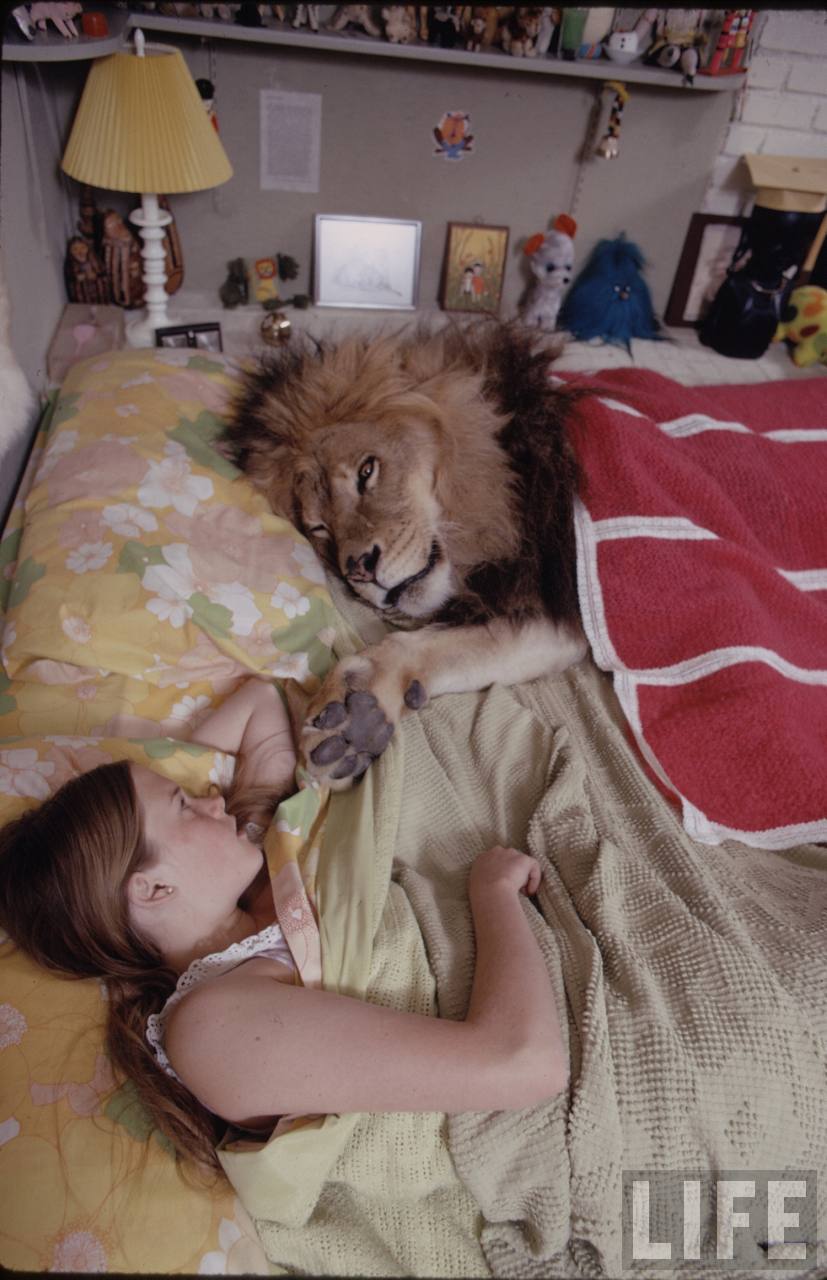
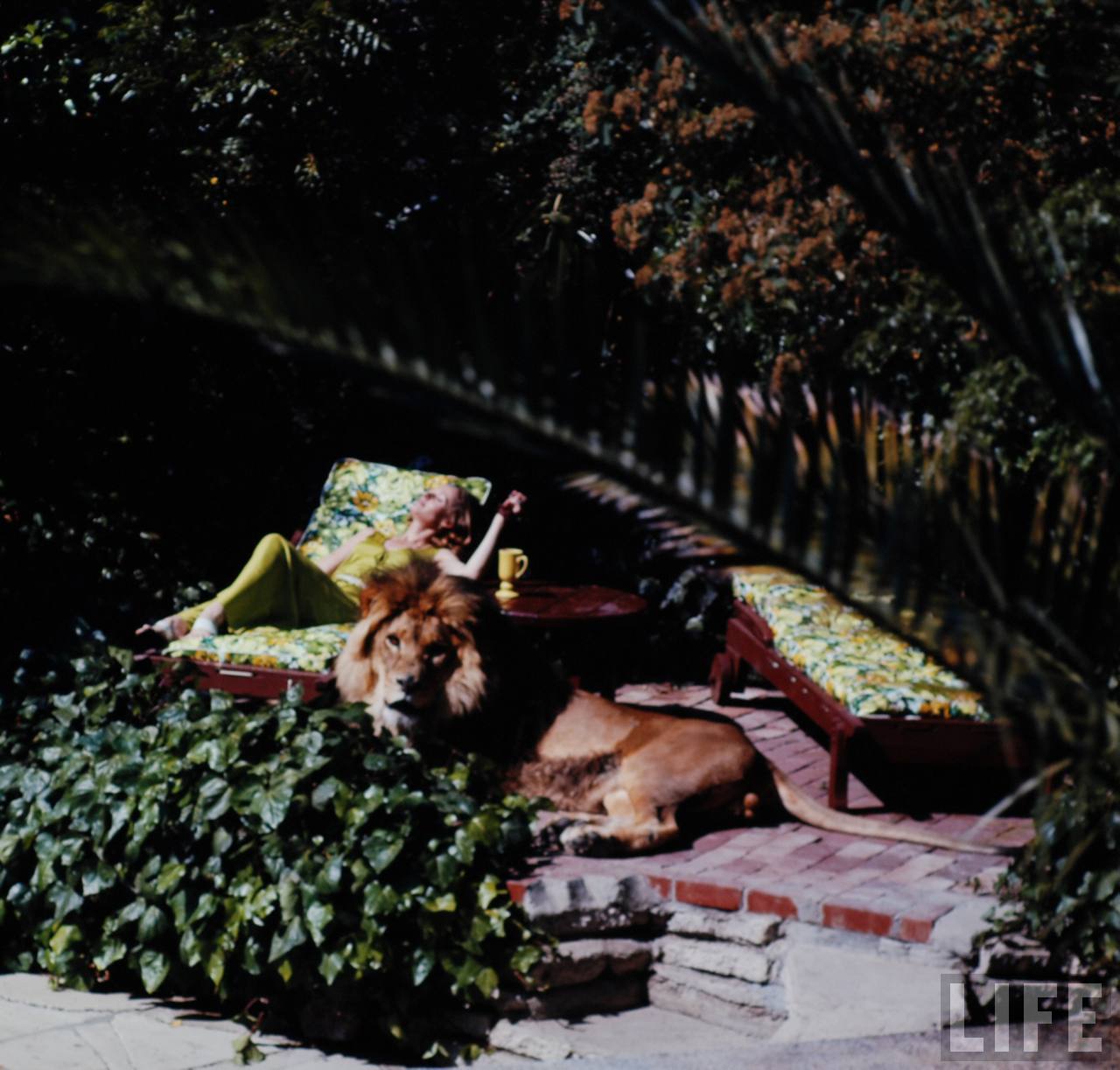
Michael Rougier, ca. 1970s [LIFE Magazine]
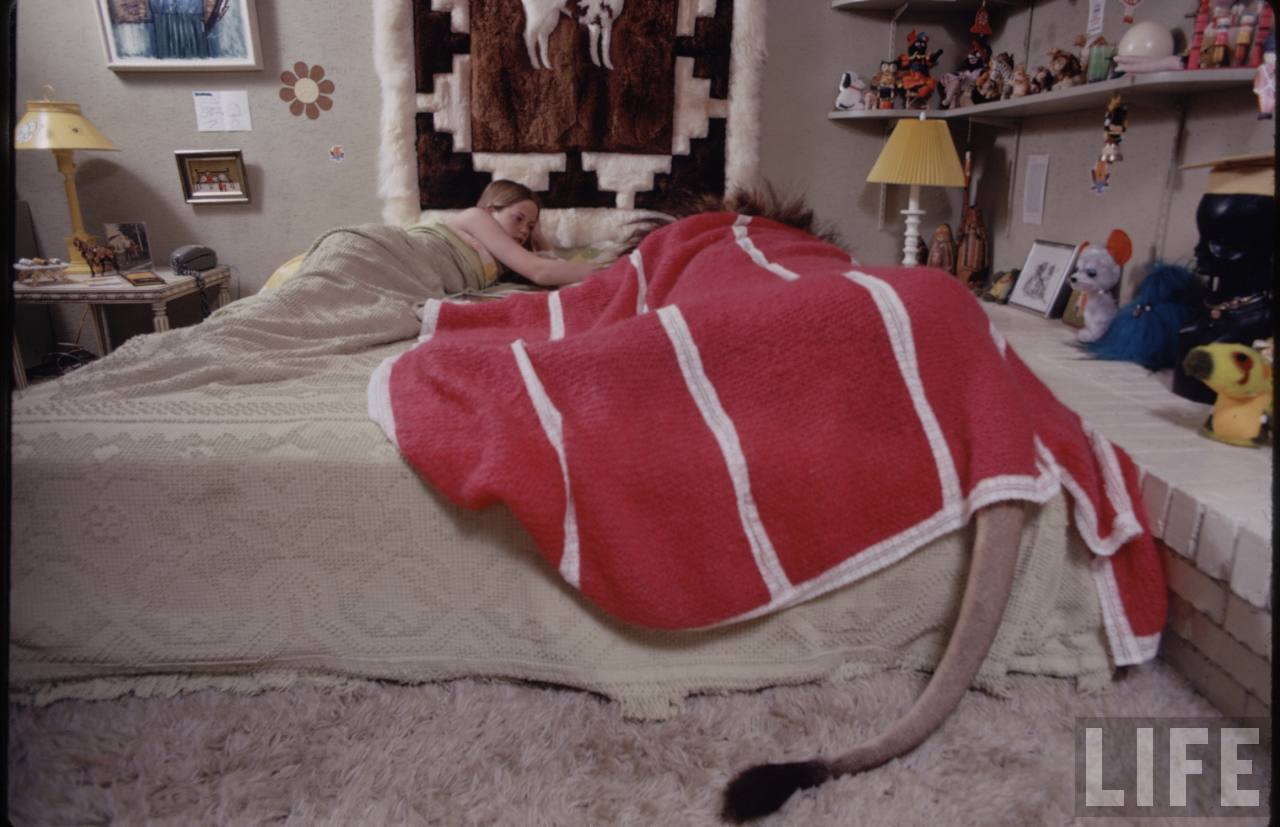
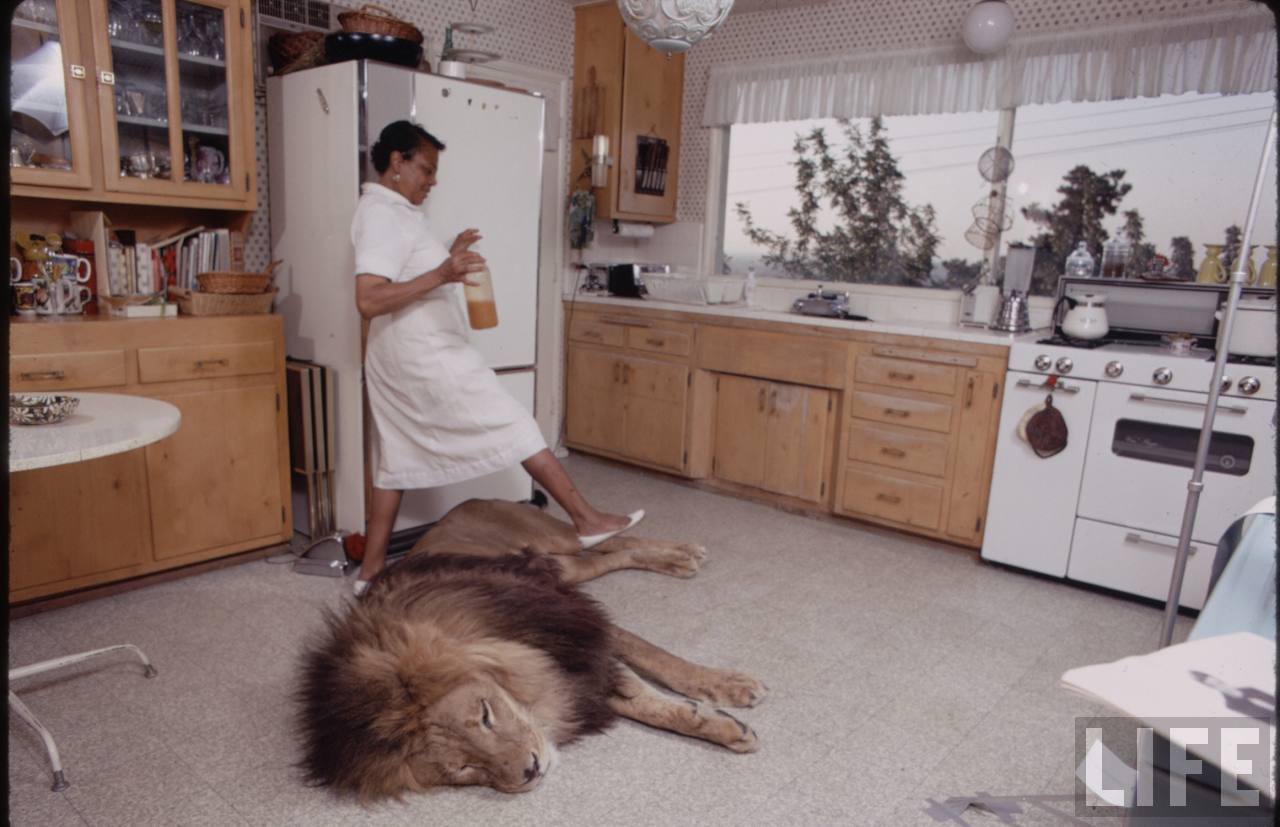
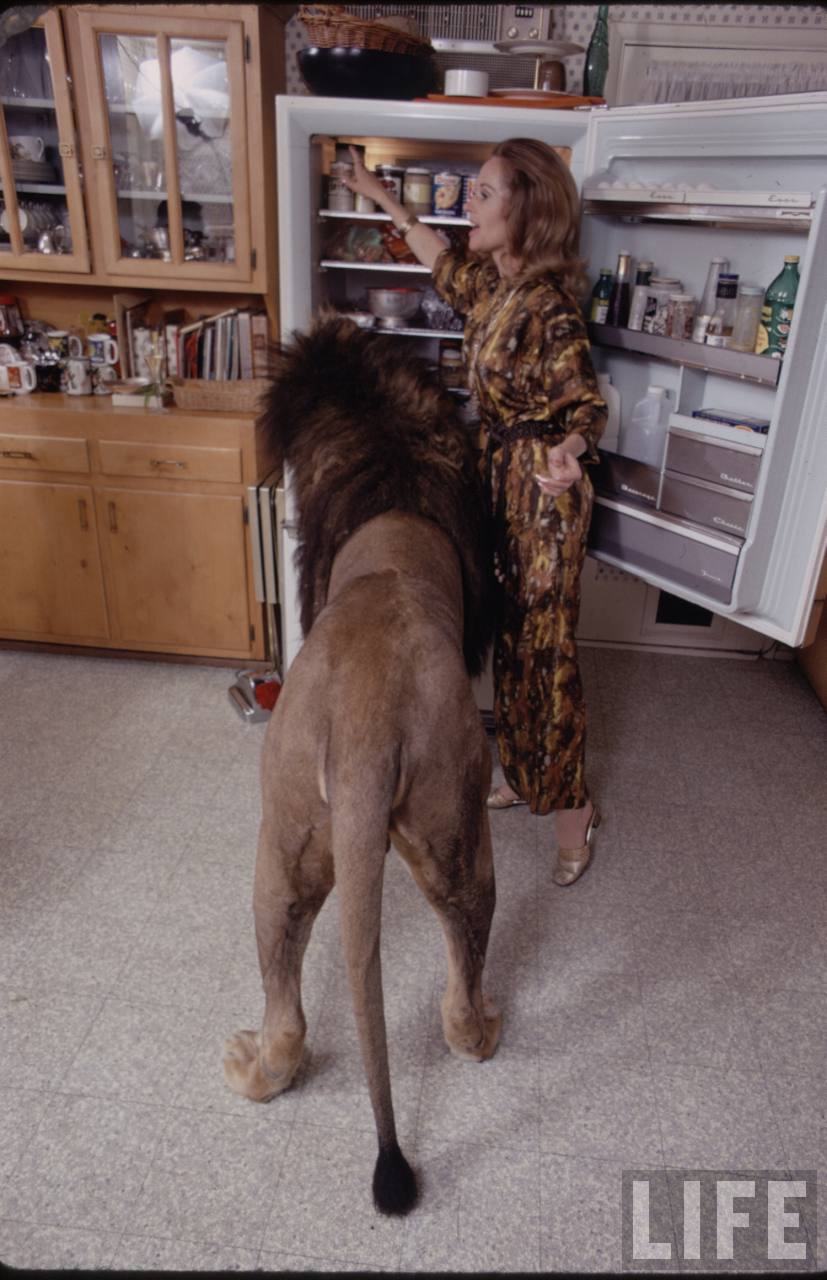
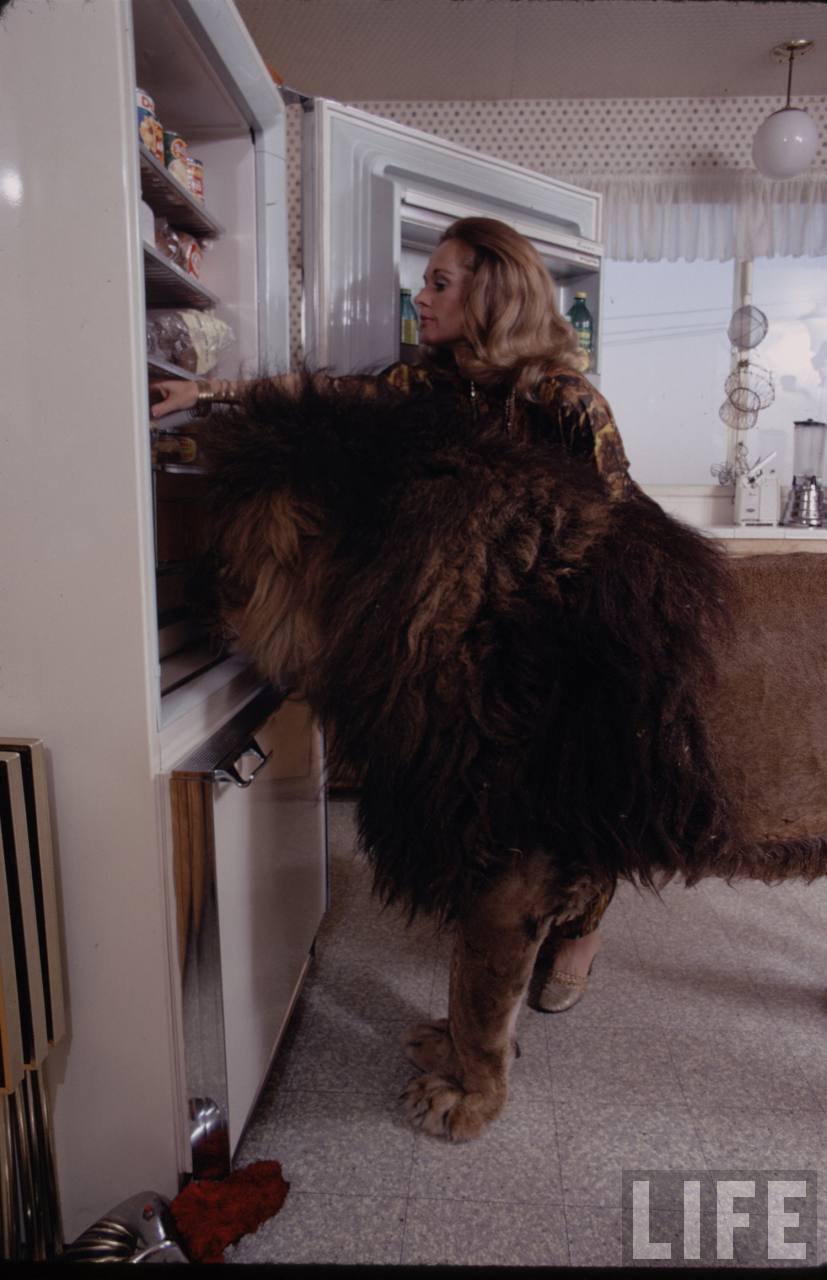
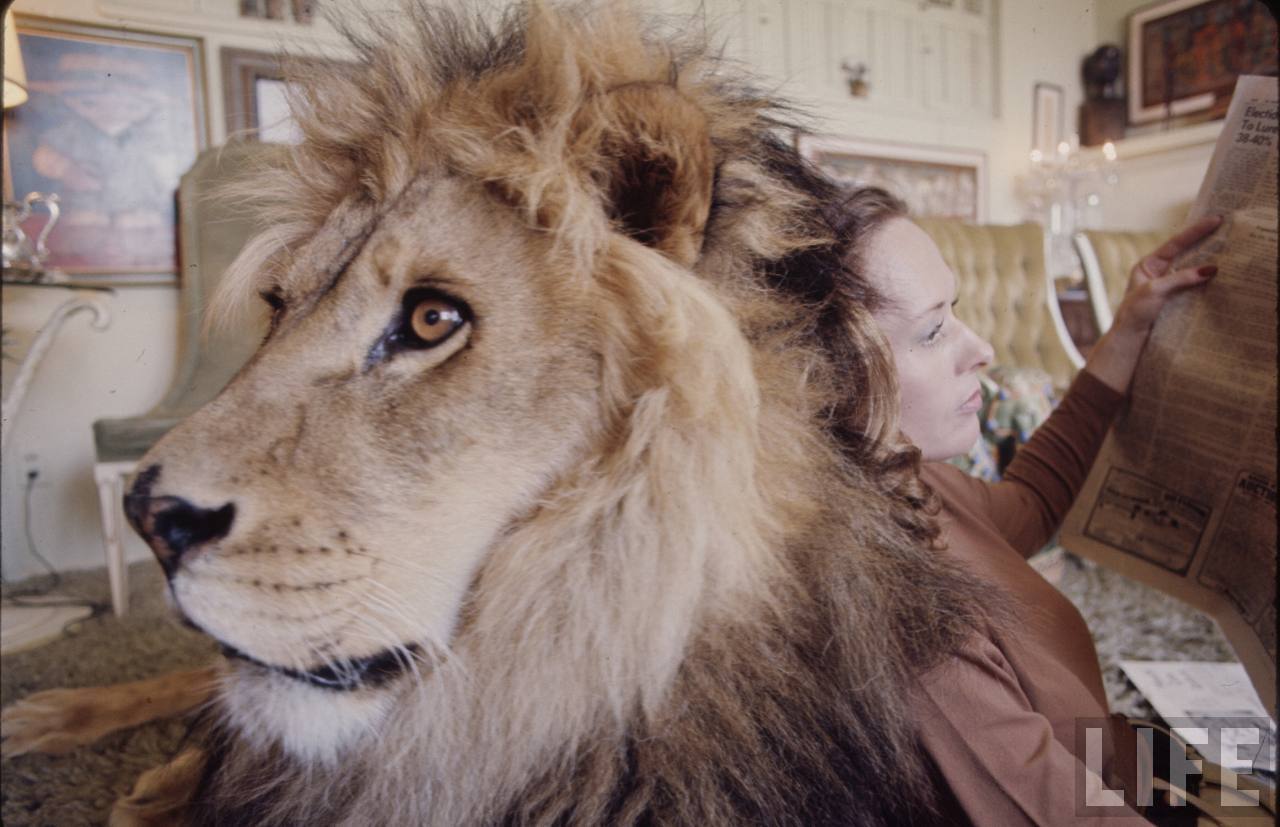
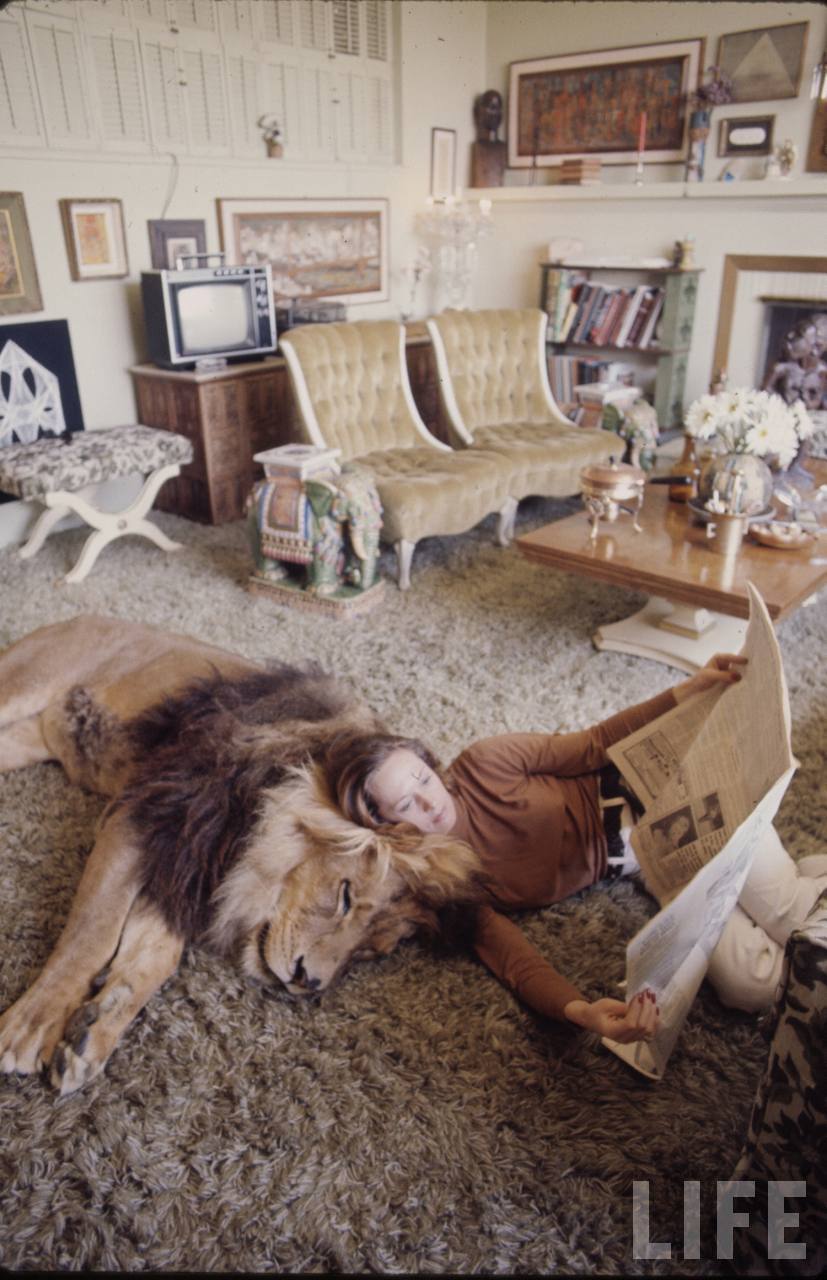
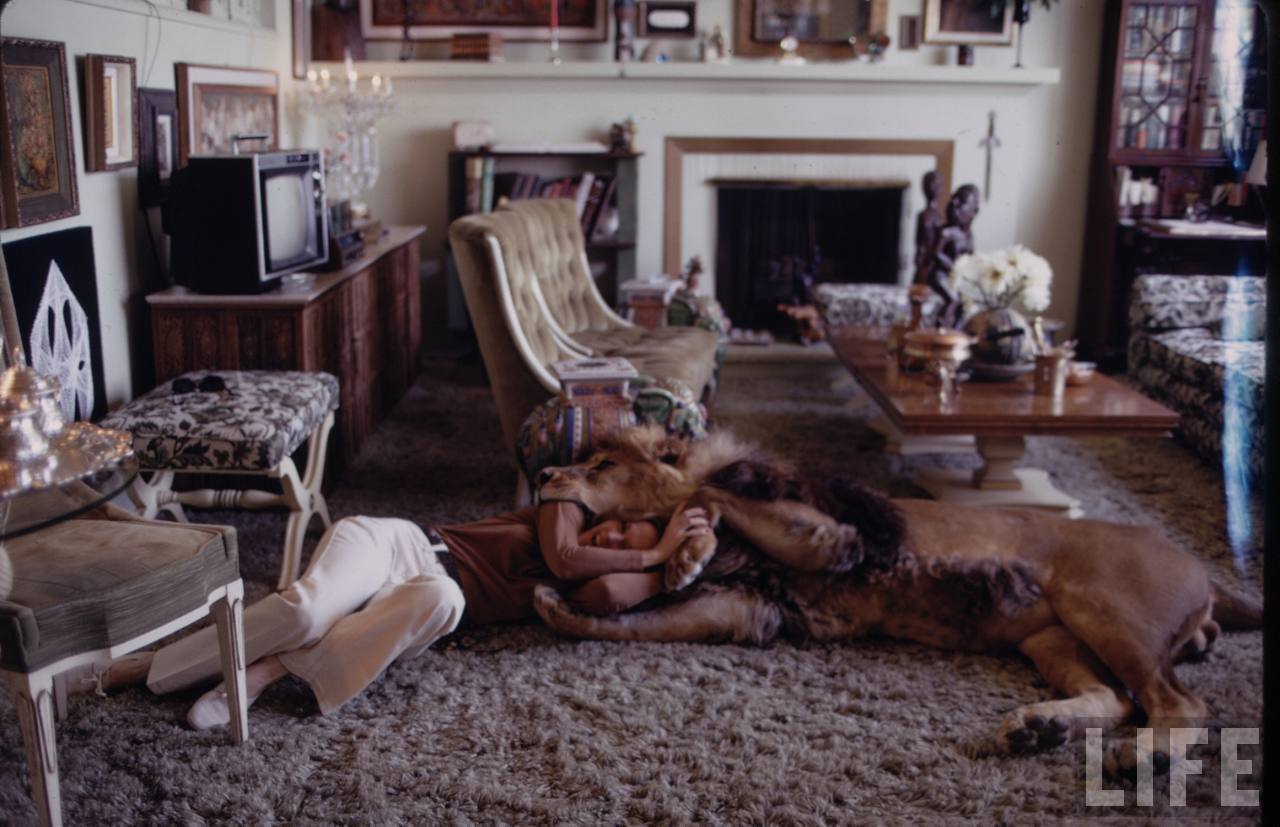
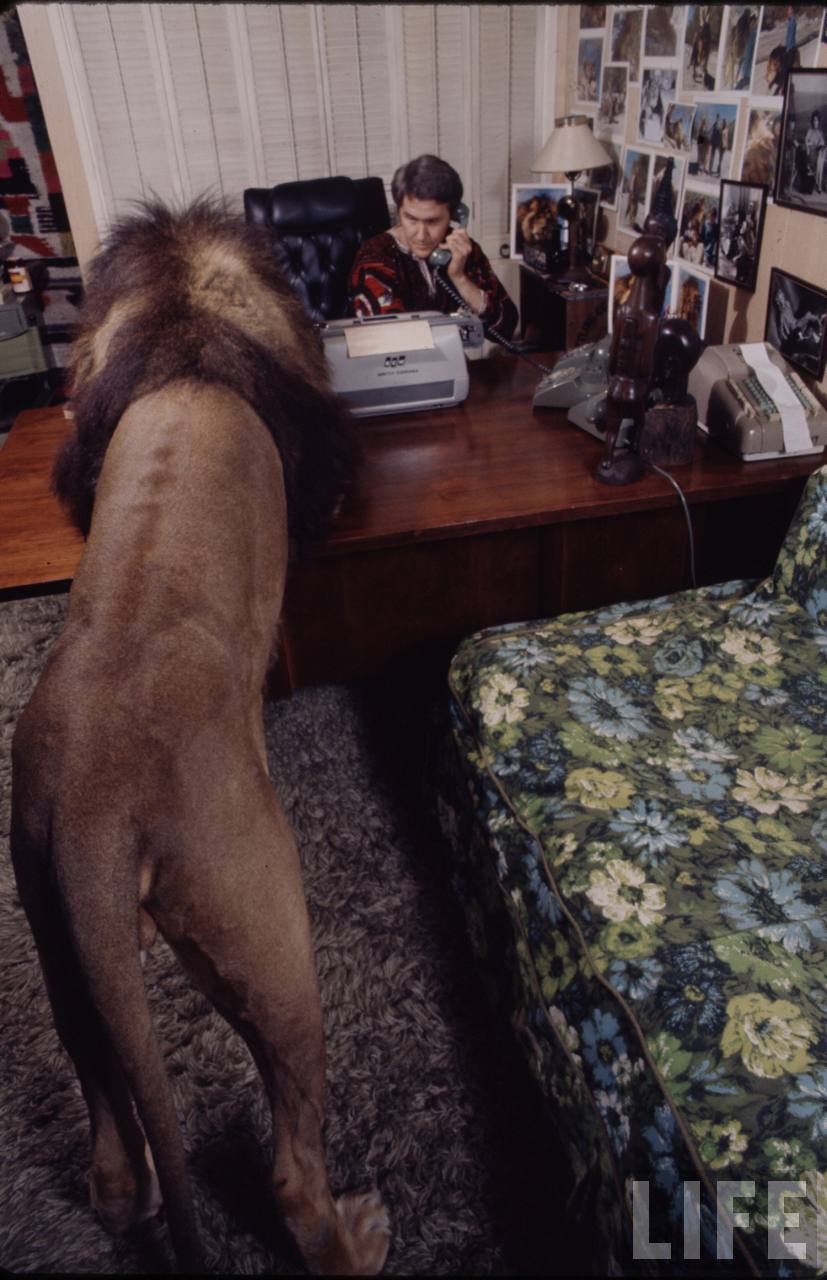
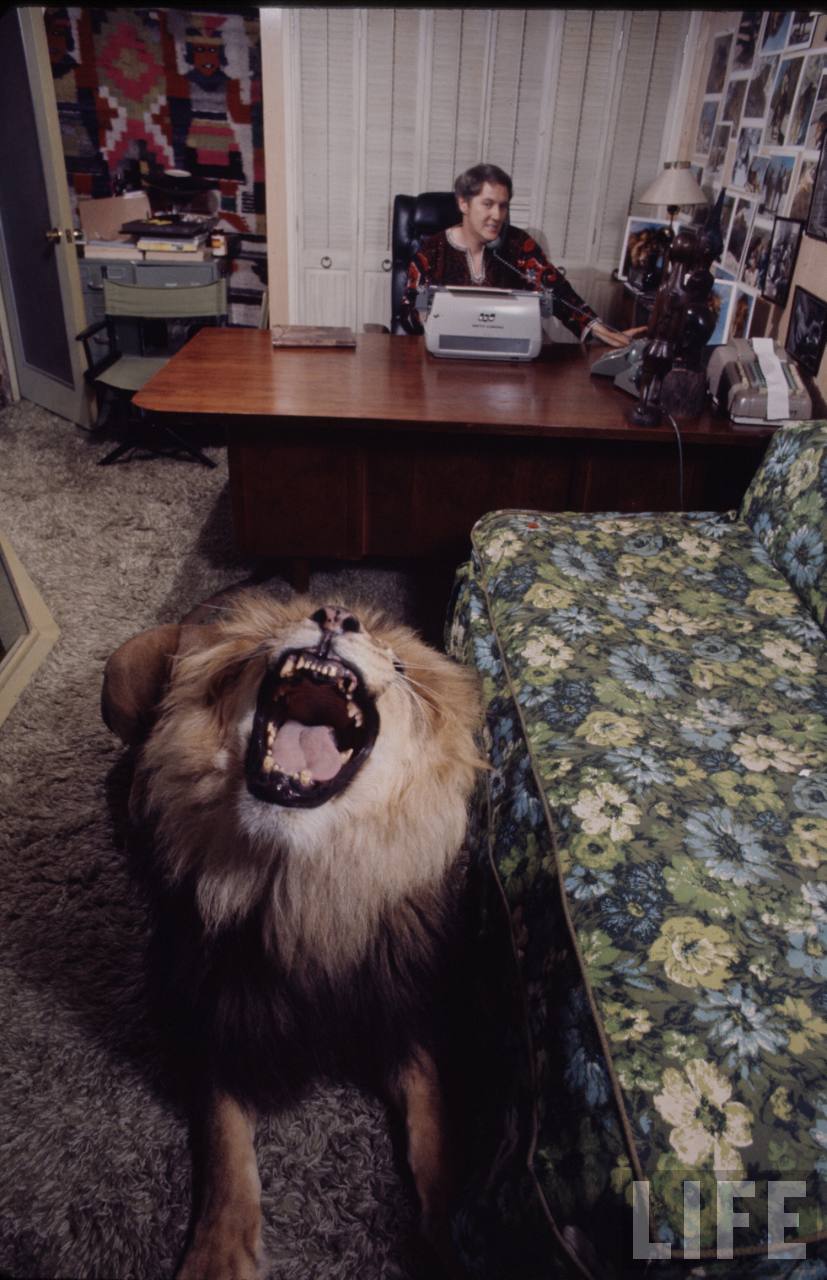
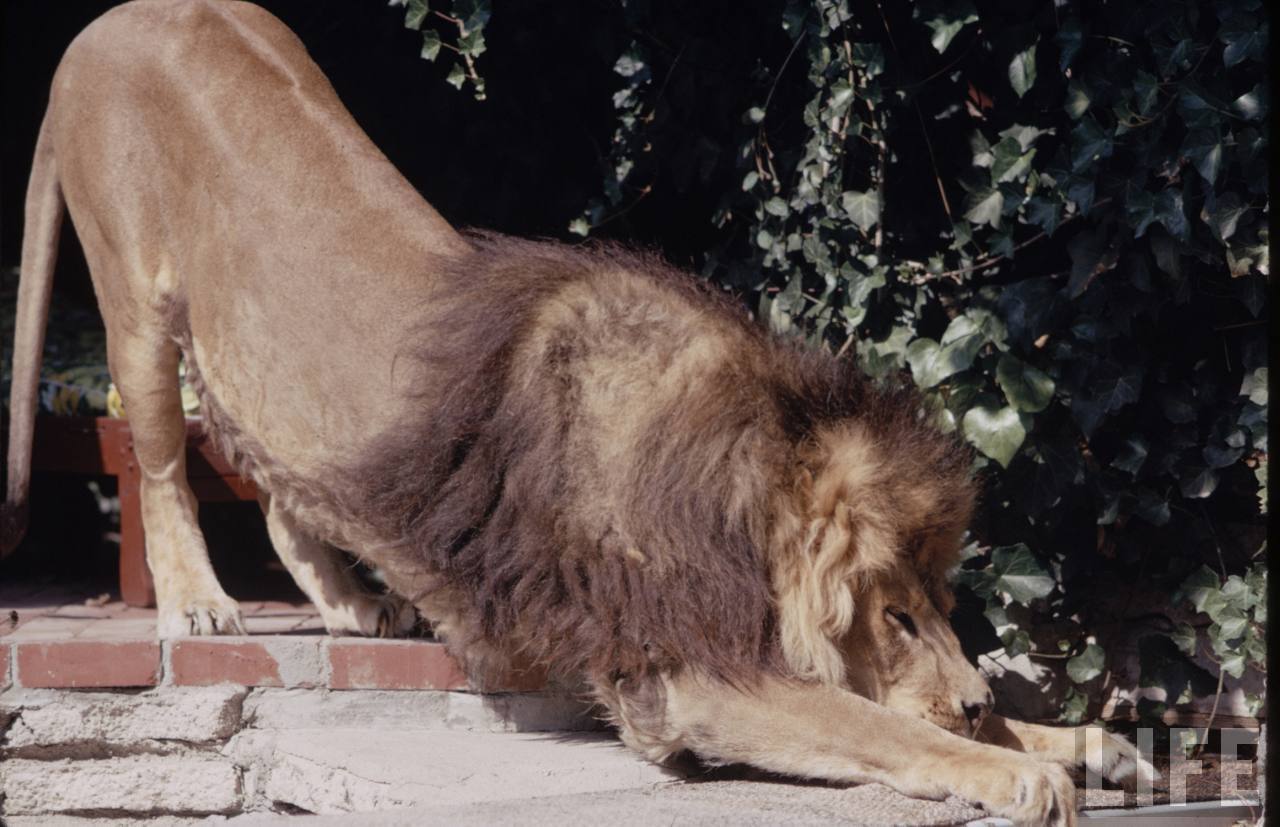
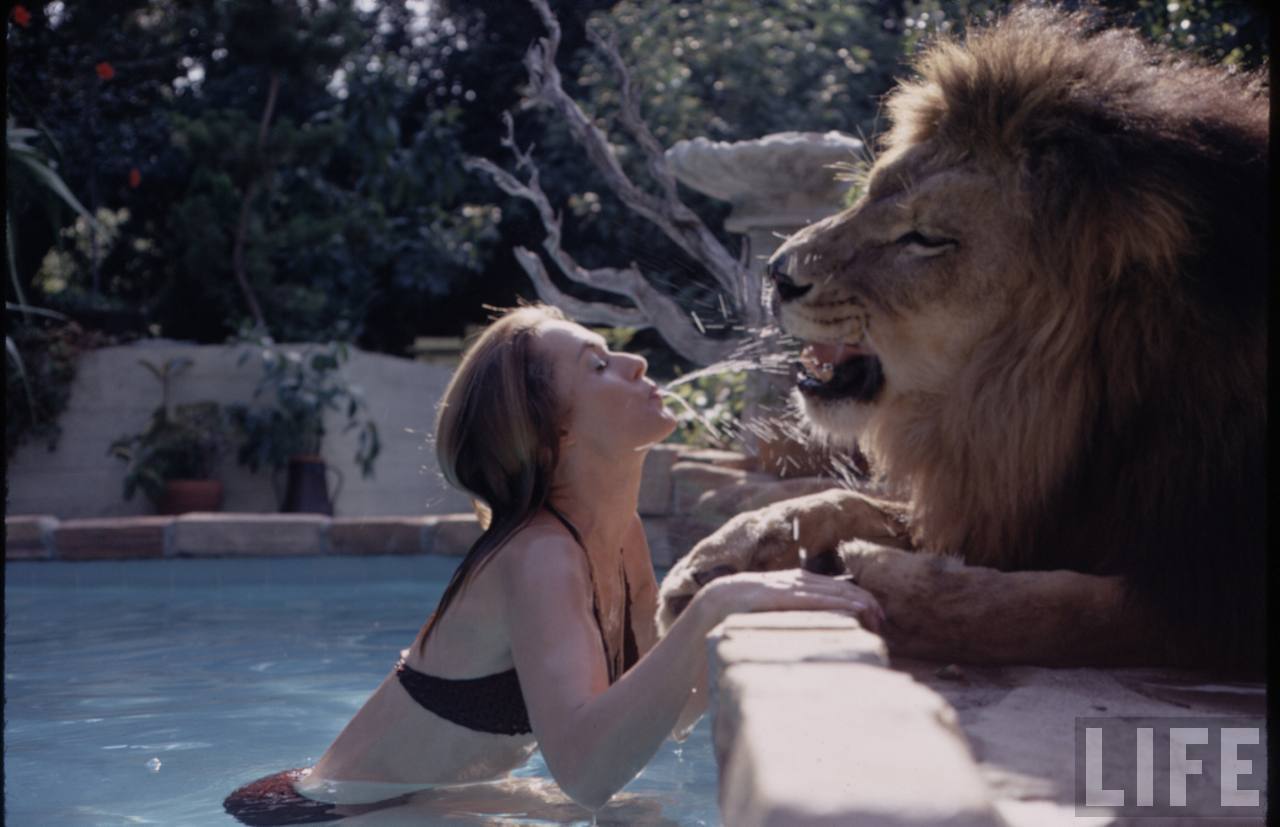
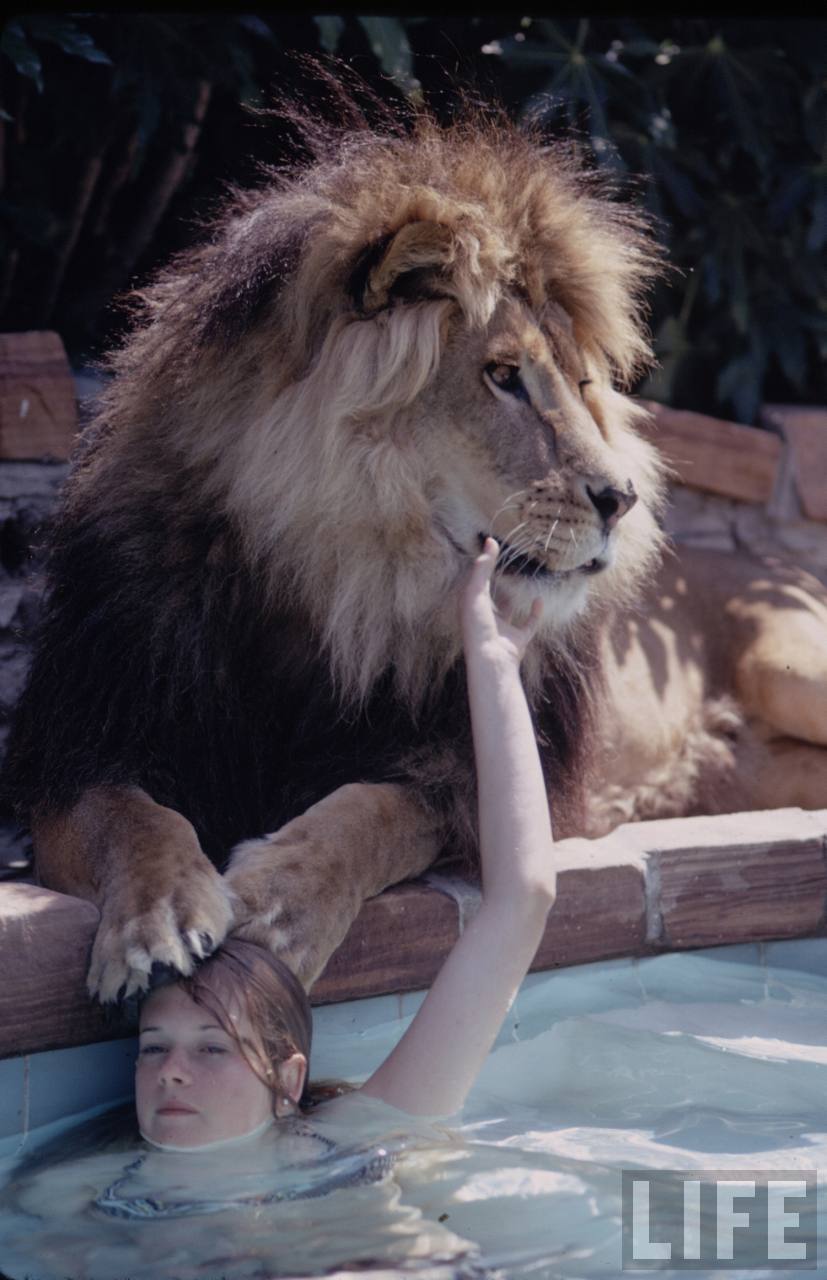
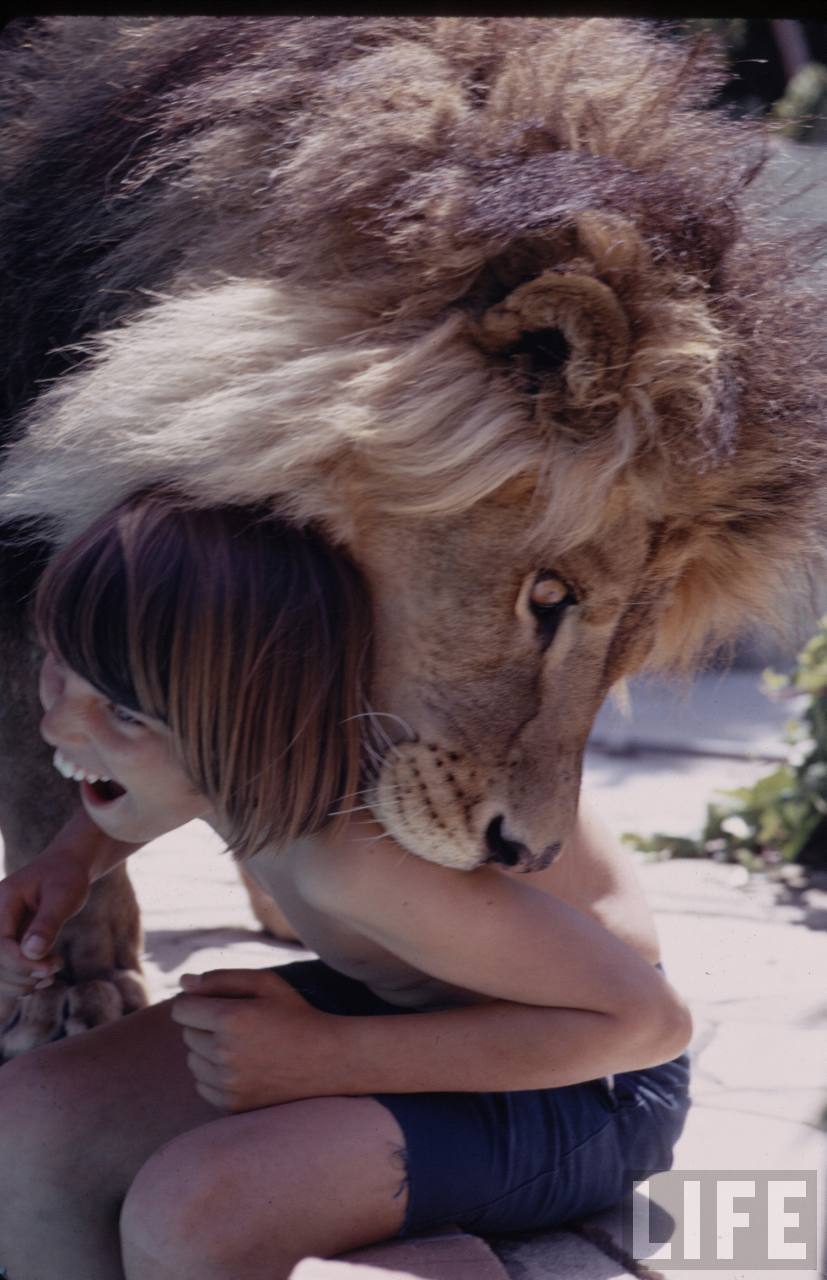
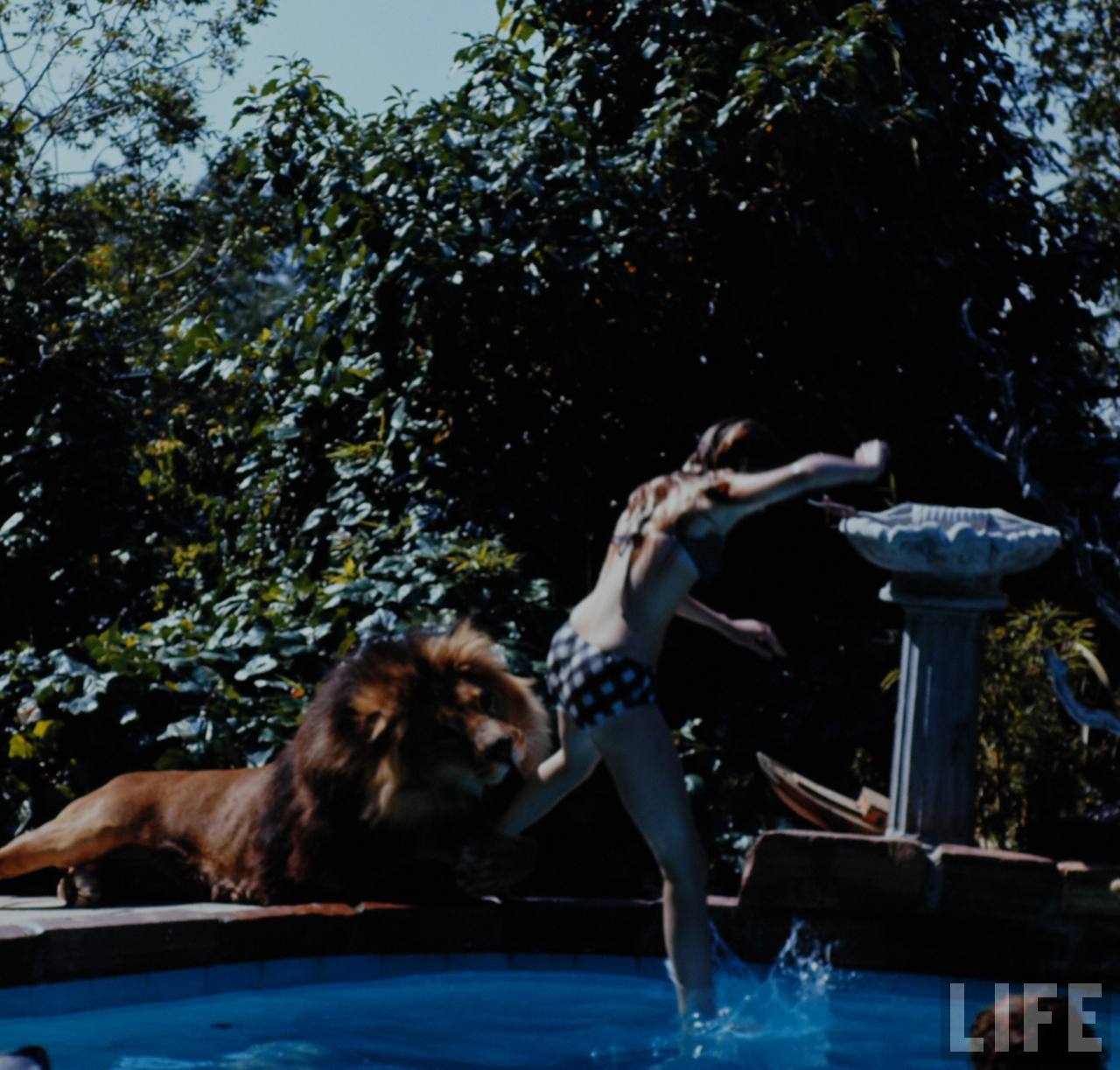
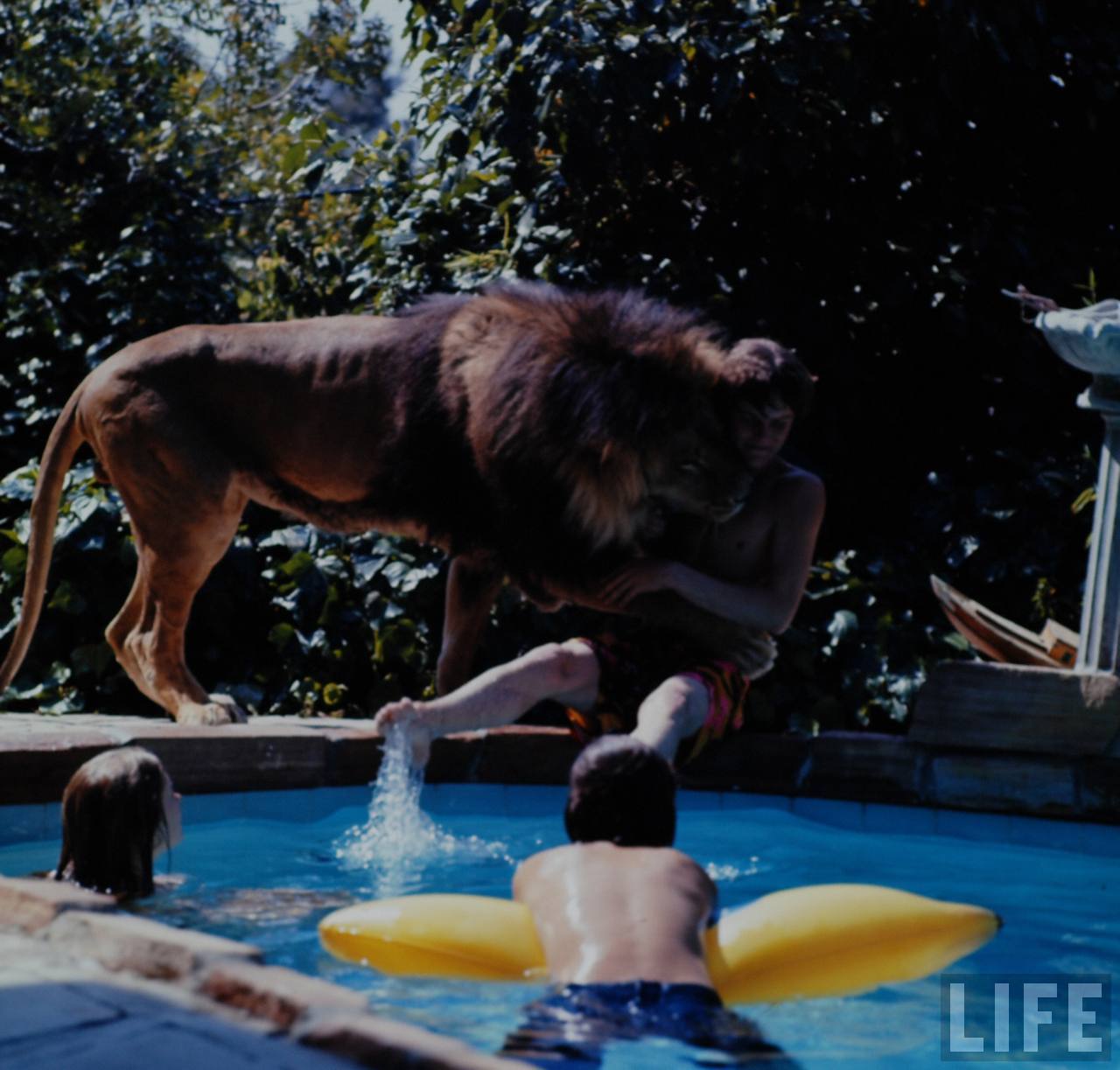
In the 1970′s, actress and model Tippi Hedren (mother of actress Melanie Griffith) created the Shambala Preserve after producing the film Roar. The preserve rescued exotic big cats living in captivity that had been abused or were in need of help, one of which the family created a close bond with. Neil the lion lived with the family in their home, and played an active role in the day to day activities of the preserve.
A lion comes calling
The most exasperating aspect of working in the Los Angeles bureau of LIFE — BevEdit, it was called, for its Beverly Hills location — was the constant besiegment by people who had stories to tell. Stories they were sure were the stuff of LIFE magazine. They were there when we arrived for work in the morning and they’d be there all day long, imploring and beseeching. Some were criers – women and men — who told me their careers were kaput if LIFE didn’t give them a minute — just a minute — to tell their stories. One of the “regulars” was convinced Jesus was being held prisoner under the Polar icecap and was eager to mount a submarine expedition (LIFE’’s money) to free Him. Another guy came in more than once with a contraption made of inner tube and slaps of plywood, He’d wriggle into it and flail around on the floor. He was sure — with some refinement (LIFE’s money again) — he could make it to Catalina Island.
I think the most enterprising of them was a kid who flew in from Hawaii on the redeye. There he was in the anteroom when I strolled in. He was wearing shorts, a singlet, and flip-flops. He’d come across the Pacific that way. He’d come to tell me a story about how he’d smuggled a load of marijuana over the Mexican border onto the campus of Chico State. It was quite a yarn. A clever bit of subterfuge. Not right for LIFE, but I enjoyed the telling.
Then there were the public relations people. Everyone in Los Angeles, it seems, who had celebrity standing — real or otherwise – had a PR representative. Of flack, as we called them.
I can no longer remember the name of the flack who represented the actress Tippi Hedren but he held the record for being insistent. I learned from this PR representative that Miss Hedren was a great lover of animals. She was not just a photo-op animal lover such as we see on our television screens holding some squirmy, fuzzy little thing while begging for a few bucks for the SPCA. No, she was the genuine article. She cared mightily about animals.
So?
So she’s got this script — this screenplay — about an old African adventurer who dies and leaves his property to his niece. His niece being Miss Hedren. She goes to Africa and discovers a pride of lions has moved onto the house.
So?
So you gotta come out to her house in Sherman Oaks. She’s given over her house to a family of lions. They’re living out there in the San Fernando Valley with Tippi, her husband Noel and their three kids. They’re getting used to one another before shooting starts. Big lions and little lions. The real thing.
I was just short of thunderstruck but it’d been a long time since Tippi Hedren had made news — Alfred Hitchcock’s “The Birds” in 1963 was her only big picture.
Ms. Hedren’s flack told me all this and I told him it would be a hard sell for me because Ms. Hedren was hardly a household word. Save for “The Birds” — and that was a long time ago — she’d pretty much dropped out of sight.
Let me think about it,
He continued to call. A new angle, a new wrinkle, a bit of progress on the screenplay, a show of interest on the part of a studio.
No, no, no, no.
One afternoon shortly after lunch I am sitting in my corner office and I hear the goddamndest shrieking and carrying on. Top of the lungs. The switchboard operator, Lois Martin, had been around forever and seen one of everything walk through the door but her voice was right up there with the rest of them. This was real caterwauling.
My secretary gets up and runs to take a look. She’s back in seconds, white-faced and up on her desk.
“Hello, John.”
I look up and here’s this guy — this flack — who has been driving me crazy with his constant calls about Tippi Hedren and the movie she’s going to make in the African Veldt. And standing behind him because it’s almost too big to get through the door is a lion, a huge, black-maned African lion. Its mouth is open. Its teeth are on display.
The man lets go of the leash and the lion pushes forward into the room. In one bound — I mean one bound — it is up on my desk. This immense animal with its foul-smelling breath puts its face inches from mine. Fixes those yellow eyes on me and I go over backward in my chair.
It was a terrible idea when you think about it. The PR guy driving in from the Valley, a lion in the backseat. He parks in our underground garage and brings the lion up to the third floor in the passenger elevator.
Anyway, that’s how we came to do a story about Tippi Hedren getting ready to do her movie about a woman who goes to Africa to set up housekeeping only to discover a pride if lions has beaten her to it.
Photographer Michael Rougier and I made many visits. The two big lions never really liked us. I could tell. Threatening eyes. Teeth like broken glass. A look of red lightning.
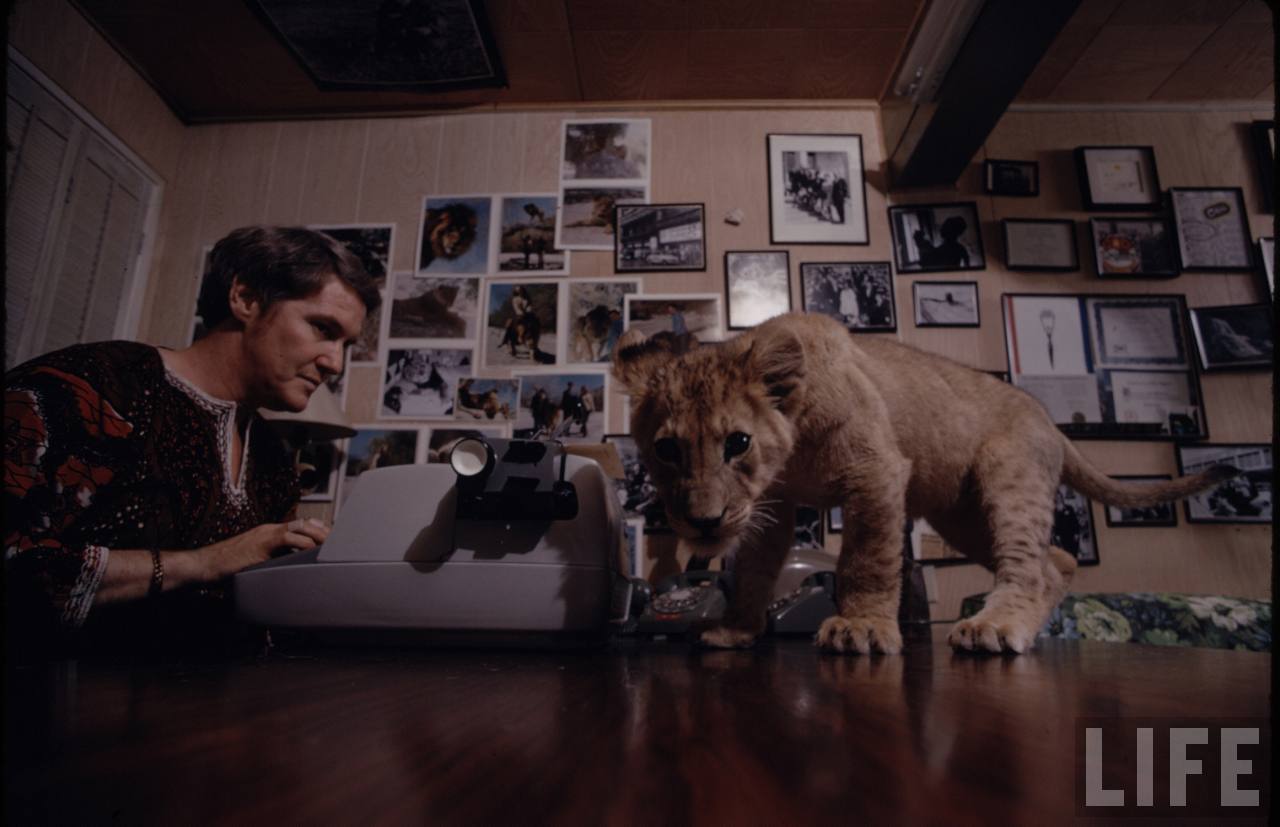
The cubs, on the other hand, were all over us. They were everywhere and into everything. Crawling up my neck to perch on top of my head. Tiptoeing along the window railing. Rooting through Michael’s equipment cases. They couldn’t have been more cuddly and playful. .
The Marshalls had three children. Melanie would be about 11, and two stepsons, They were as comfortable with these wild creatures as they would have been with Beagles. We made a charming photograph of Melanie (today Mrs, Antonio Banderas) sound asleep curled up with one of the big lions. We photographed the kids swimming with the cubs, the pool full of them and every one dog-paddling (or should it be cat-paddling?) to beat the band.
We needed what we called a closer. A final photograph to bring the story to an end. Thanksgiving was a week away and someone suggested grand family feast — crystal, china, silver and everyone dressed to the nines. And up here on the landing overlooking the sumptuously laden table we’ll have the two big lions.
It couldn’t have been staged any better by a set designer. Everything was perfect. And now in marches a serving person carrying a huge silver tureen. She places it in the middle of the table and lifts the cover. The bird! The turkey trussed and browned to a turn.
And the two big lions sitting on the landing get their back legs under them and in perfect unison they jump the railing and land squarely on the turkey. The table collapses, glass flies, and the Marshalls – all five — go backward, legs in the air.
CLICK!
We have our closer.





 tout ceci est magnifique