 |
|
Actress, Film producer
1888-1960
|
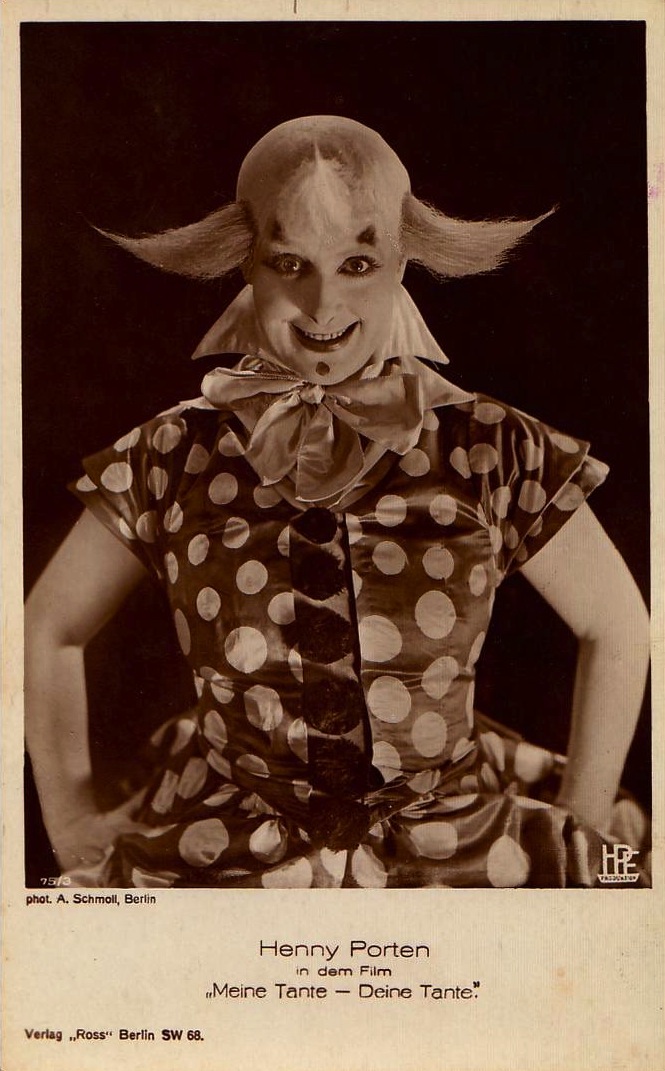
“Sturdy and blond, she reminded you of the Valkyries and the bronze statues in German town squares,” wrote the French critic Georges Sadoul of Henny Porten, the preeminent German screen actress of her generation. The daughter of Franz Porten (1859-1932), a baritone and an actor-director with the Stadtheater of Magdeburg, Porten had come to films without any prior theatrical experience in 1906. By 1910 audiences were clamoring to know the name of the blonde (and blind) girl in Das Liebesgluck der Blinden, a melodrama written for her by her sister Rosa, and by 1912 she had become a true star, millions of moviegoers flocking to the so-called “Henny-Porten-Filme.” Although she worked most frequently for the rather mediocre but popular Gustav Frölich, Porten reached the height of her screen career under the gentle guidance of Ernst Lubitsch, who cast her as the title characters in Anne Boleyn (1920; British title Deception) and Kohlhiesel’s Daughter (1920), both opposite Emil Jannings. By the late ’20s, Porten, still a major star, had become the quintessence of German womanhood, ladylike yet kindhearted and a not a little petit bourgeois. All this, however, was about to change. The Nazi takeover of Germany in 1933 brought Henny Porten’s career to an almost standstill. The wife of a Jewish doctor, the star had become a thorn in the eye of propaganda minister Josef Goebbels, who not only attempted to ban her from working but denied her an exit visa to join Lubitsch in Hollywood. Yet the public still clamored for her and Porten was permitted to work in such Austrian-made films as the comedy Der Optimist and the crime drama War es der im Dritten Stock (both 1938). Old friend G.W. Pabst hired her to play the duchess in The Comedians (1941) and she was reunited with Frölich for the homey comedy Familie Buchholz (1944). An allied air raid left her homeless for a time (allegedly no one would offer shelter to the wife of a Jew) but she survived the fall of the Third Reich and spent the remainder of her life as a living legend. Hans J. Wollstein, Rovi ➔ Henny Porten Biography
 |
| Growing up with Henny Porten |
“I am now keeping a very tight rein on myself”, Marlene Dietrich confided to her diary on January 30, 1914. Admonishment to do so became her maxim for both private and professional life. “I had to learn very early to have a firm hold on things”, she later wrote in her memoirs with a clearly different emphasis.
Henny Porten remained her heartthrob, the fixed star of her youth. She wrote three film treatments for this Messter Production star; they were all kindly rejected. She gained experience on the stage in school performances, established amorous contacts with actors and actresses, and revealed to her diary: “I will definitely go on the stage. Something in me is afire, so to speak, for Henny Porten.” (Oct. 19, 1917). Politically, on the other hand, she was naive, if not ignorant. On November 9, 1918, the day on which Emperor Wilhelm II abdicated the throne and the Republic of Germany was proclaimed, Marlene Dietrich had other concerns: “Why do I have to live through these dreadful times. After all, I had wanted a golden, happy childhood. And now it has turned into this. I feel so sorry for the Emperor and everybody else. Terrible things are supposed to happen tonight. We’d invited a few ladies over for tea, not a one could get through. Except Countess Gersdorff. Although on the Kurfürstendamm, armed soldiers tore off her husband’s cockade. Wherever one looks – red flags. What do the people want. (…) That nothing happens (to Henny), they are especially out for those who are finely dressed.” It would still take some time for Marlene Dietrich to liberate herself from the gilded cage of her childhood. ➔ MARLENE PLUS
 tout ceci est magnifique