Bonheur du jour

Martin Carlin, ca. 1766    Les Arts Décoratifs: Musée Nissim de Camondo

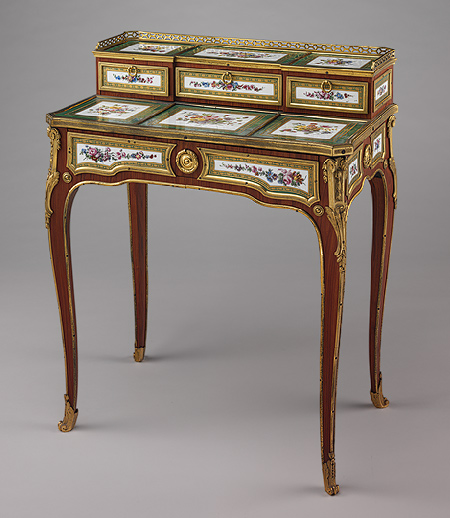
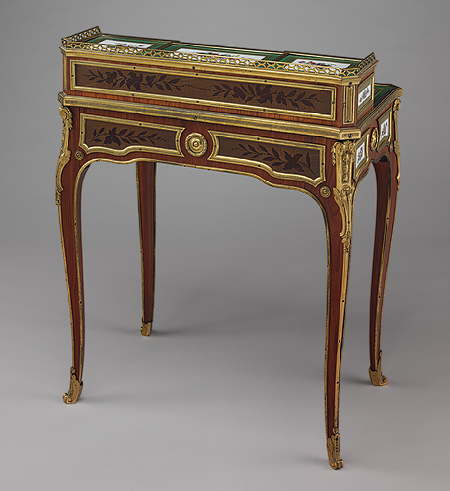
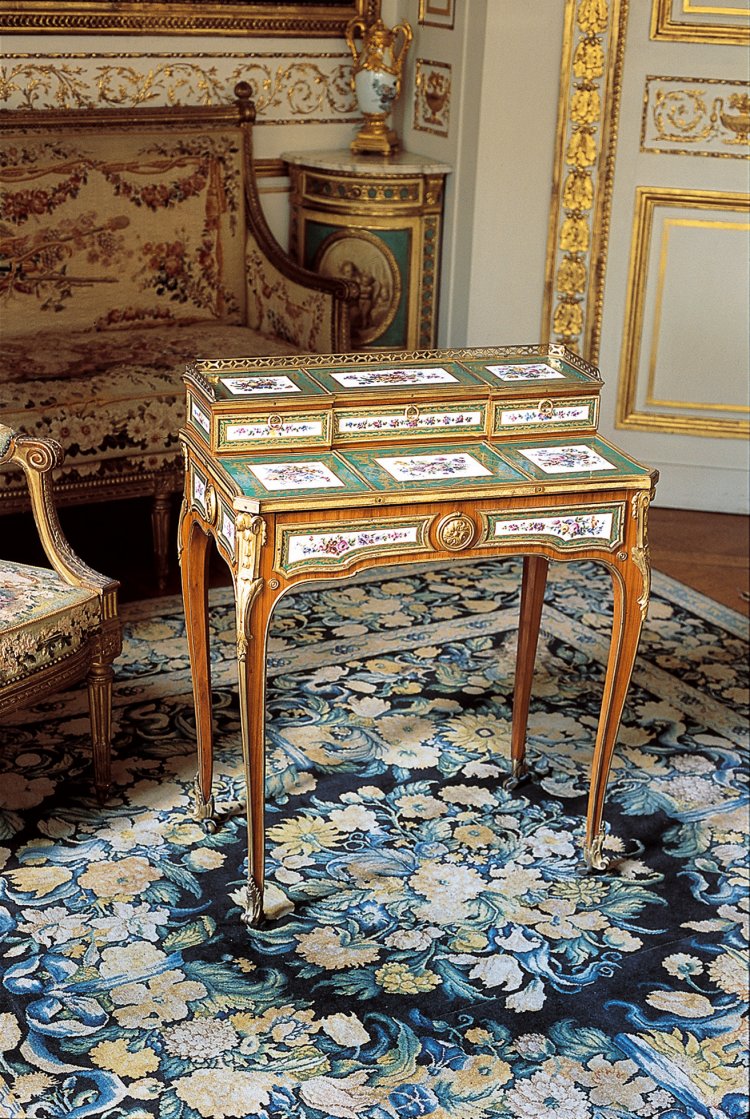
La ceinture, le plateau et le gradin de ce meuble sont ornés de dix-sept plaques de porcelaine à bouquets de fleurs sur fond blanc dans des encadrements verts et or enchâssés dans des montures de bronze. Neuf plaques portent la lettre date n de l’année 1766 et certaines sont signées des peintres de fleurs Xhrouet, Catrice et Pierre jeune. L’arrière du meuble est marqueté de branches de fleurs en sycomore et amarante. Le tiroir plaqué de bois de rose forme écritoire. C’est le marchand mercier Simon-Philippe Poirier qui fit appel à Carlin pour lui confier la fabrication de ce type de meubles agrémentés de plaques de porcelaine de Sèvres qu’il commandait à la manufacture. Onze tables de même modèle dont les plaques sont datées entre 1765 et 1774 sont répertoriées, notamment deux dans la collection Rothschild à Waddesdon Manor, et deux autres au Metropolitan Museum de New York. C’est l’antiquaire Seligmann qui vendit ce meuble à Moïse de Camondo, provenant des collections du comte d’Aubigny et du général baron de Charrette. Poirier avait livré une table semblable à Madame Du Barry et la comtesse d’Artois, belle-sœur du roi Louis XVI, en possédait également une. 
Martin Carlin, 1768  ➔  The Metropolitan Museum of Art
Martin Carlin is known to have made at least eleven such bonheurs-du-jour, seven of which were signed by him. Raised on four slender curving legs, these tables are mounted with seventeen Sèvres plaques painted with delicate floral ornament, specially ordered for this purpose. Twelve of the plaques on this table bear the date-letter for 1768, the year that Madame du Barry, mistress of Louis XV, bought hers from the marchand-mercier Simon-Philippe Poirier. It is possible that this desk was the one that belonged to her.   
➔  Heilbrunn Timeline of Art History | The Metropolitan Museum of Art

“Bonheur du jour”

The name for a lady’s writing-desk, so called because, when it was introduced in France about 1760, it speedily became intensely fashionable. [1] The bonheur du jour is always very light and graceful; its special characteristic is a raised back, which may form a little cabinet or a nest of drawers, or may simply be fitted with a mirror.  The top often surrounded with a chased and gilded bronze gallery, serves for placing small ornaments.  Beneath the writing surface there is usually a single drawer, often neatly fitted for toiletries or writing supplies.  The details vary greatly, but the general characteristics are always traceable.  The bonheur du jour has never been so delicate, so charming, so coquettish as in the quarter of a century which followed its introduction.  Early examples were raised on slender cabriole legs; under the influence of neoclassicism, examples made after about 1775 had straight, tapering legs.  The marchand-mercier Simon-Philippe Poirier had the idea of mounting bonheurs du jour with specially-made plaques of Sèvres porcelain that he commissioned and for which he had a monopoly; the earliest Sèvres-mounted bonheur du jours are datable from the marks under their plaques to 1766-67.[2] The choicer examples of the time are inlaid with marqueterie, edged with exotic woods, set in gilded bronze, or enriched with panels of Oriental lacquer.  

 
[1] F.J.B. Watson once suggested that “its somewhat obscure name perhaps refers to its sudden and astonishing success.” (Watson, Louis XVI Furniure [London: Tiranti] 1960:23, note 8); the first appearance of the term bonheur du jour that he identified was in 1770, in an inventory of the duc de Villars’ property at Marseille.
[2]Svend Eriksen, Early Neo-Classicism in France (London: Faber & Faber) 1974, plate 111, bonheur du jour stamped by Martin Carlin in the Musée Nissim de Camondo, Paris; another with plaques dated for 1766 is in the James A. de Rothschild collection, Waddesdon Manor.

Hot Dog [glazed clay]

Betty Spindler, 2000
Hot Dog, typical of Betty Spindler’s food imagery, is presented without ketchup because that is the way the artist likes her own prepared. Before Spindler begins to sculpt her objects she cuts out a paper model, which helps her to keep the right proportions while working in clay. The end product results from shaping slabs of clay around crushed newspaper that roughly suggest the form.Smithsonian Institution

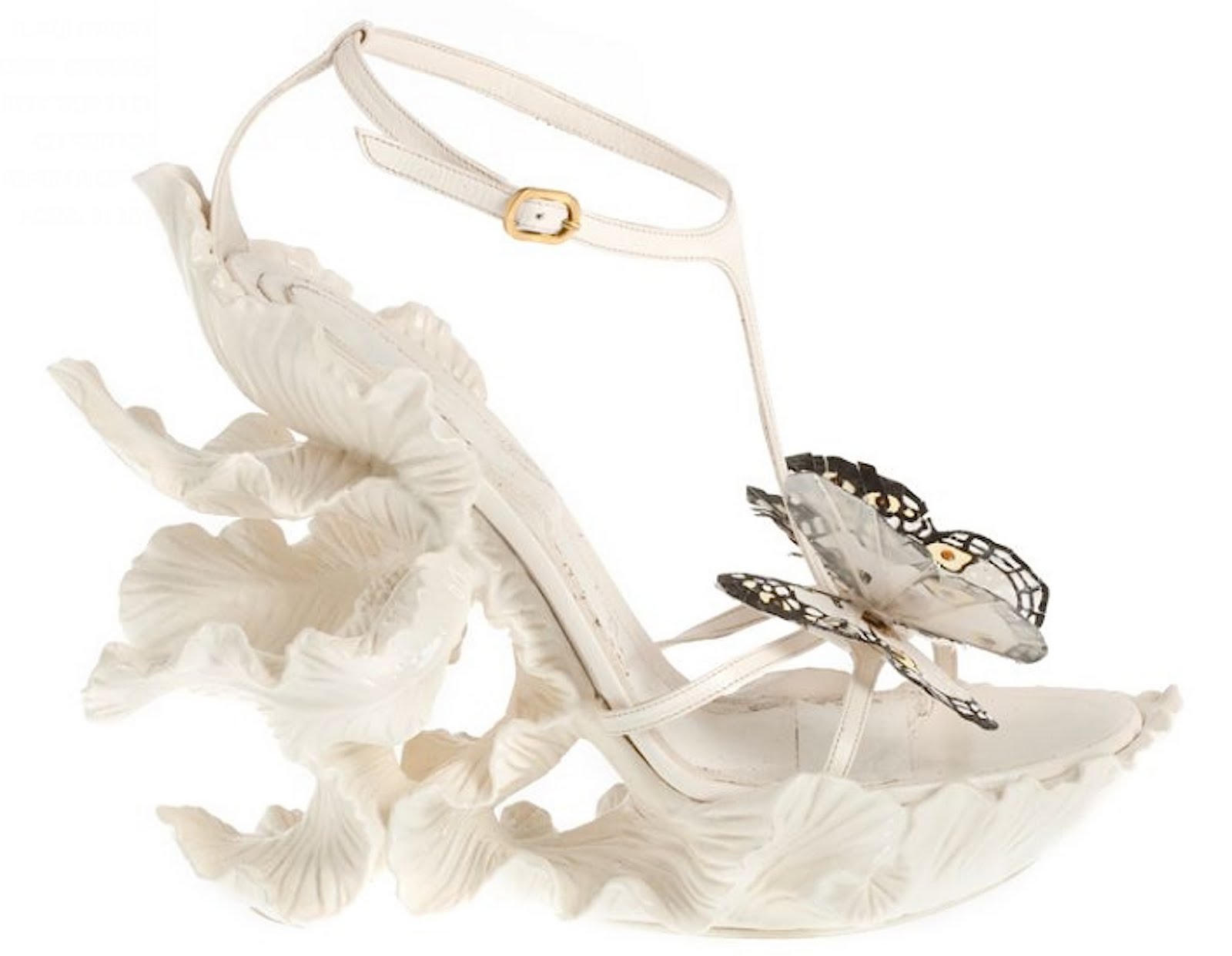
Butterfly Shoe

Spring/Summer 2011

Alexander McQueen: Savage Beauty [May 4, 2011–July 31, 2011] The exhibition, organized by The Costume Institute, will celebrate the late Alexander McQueen’s extraordinary contributions to fashion. From his postgraduate collection of 1992 to his final runway presentation which took place after his death in February 2010, Mr. McQueen challenged and expanded the understanding of fashion beyond utility to a conceptual expression of culture, politics, and identity. His iconic designs constitute the work of an artist whose medium of expression was fashion. Approximately one hundred examples will be on view, including signature designs such as the bumster trouser, the kimono jacket, and the Origami frock coat, as well as pieces reflecting the exaggerated silhouettes of the 1860s, 1880s, 1890s, and 1950s that he crafted into contemporary silhouettes transmitting romantic narratives. Technical ingenuity imbued his designs with an innovative sensibility that kept him at fashion’s vanguard.  ➔  The Metropolitan Museum of Art

Young woman warming her hands over a brazier

Cesar Boëtius van Everdingen, ca. 1650 [Rijksmuseum Amsterdam]

A young woman is warming herself by a brazier, a pot containing glowing coals. Her dress forms a screen above the fire trapping and spreading the heat. She is clearly engrossed in what she is doing and her eyes are cast downwards. The painter, Caesar van Everdingen, probably did not intend a portrait of a particular person in this picture. In this work, painted around 1650, he has represented an idea: winter. The woman is a personification of winter. The artist has placed his monogram at the bottom, in the middle of the table’s edge.

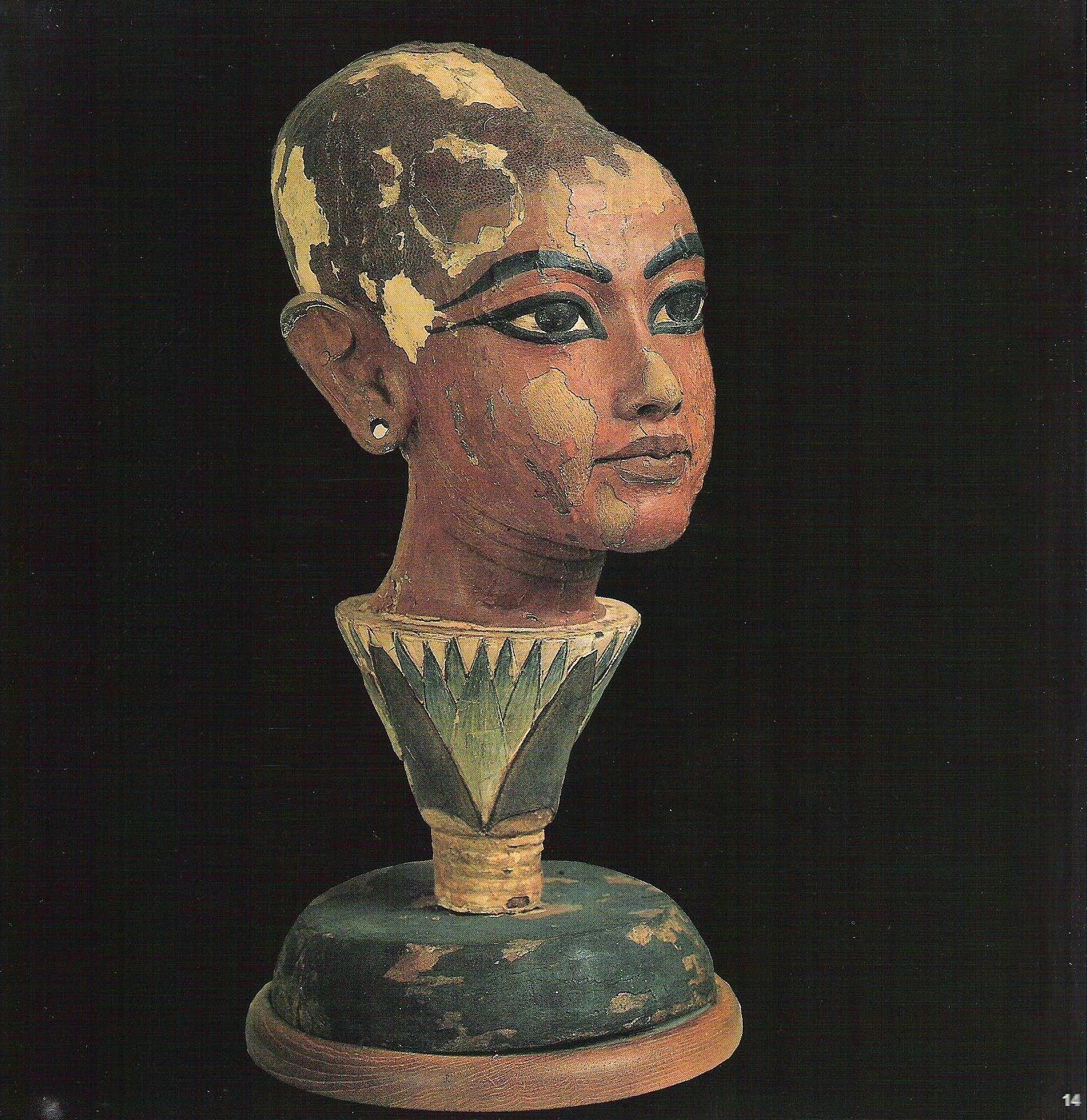
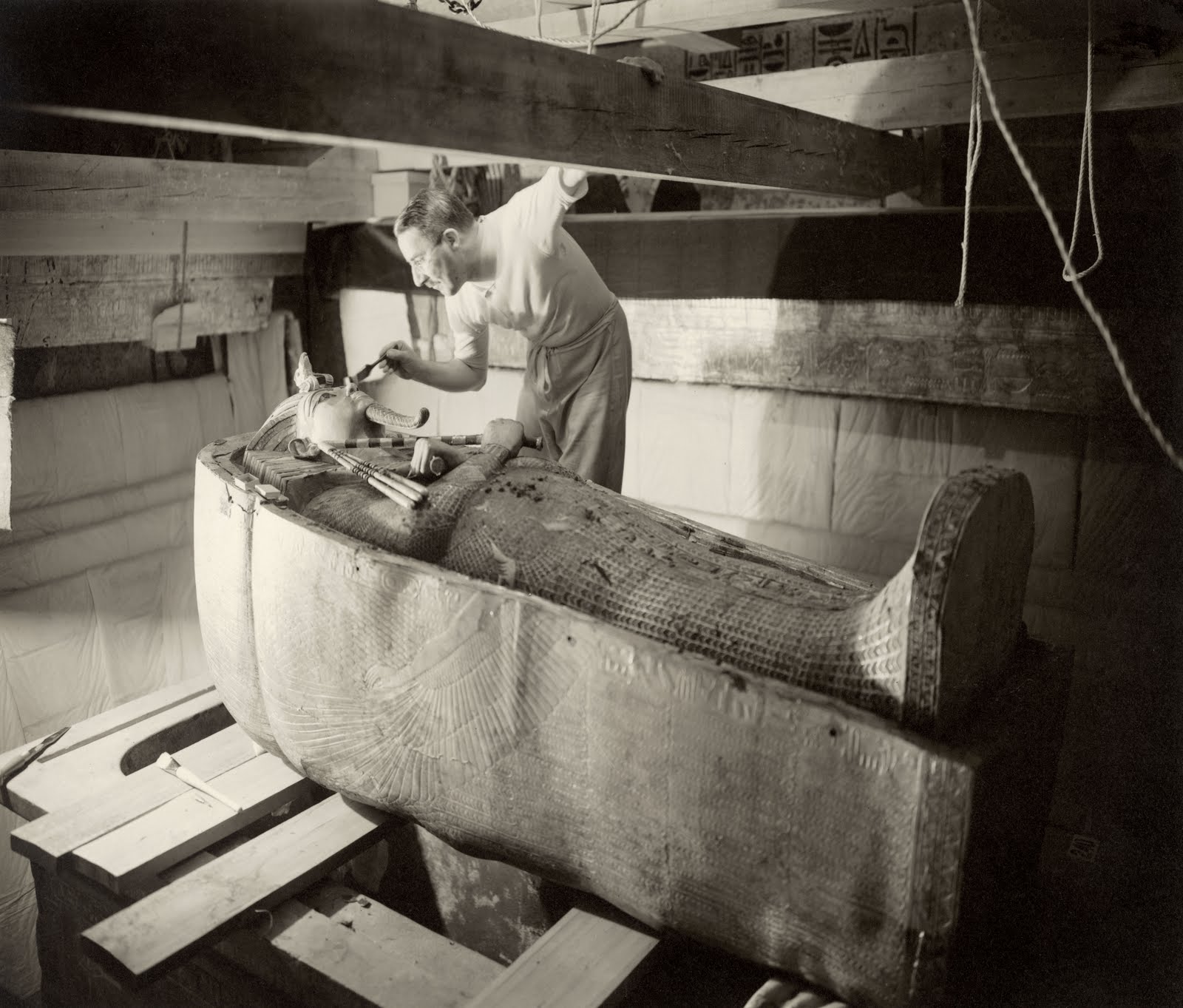
Head of young King Tut rising from a lotus flower

“At first I could see nothing, the hot air escaping from the chamber causing the candle flames to flicker, but presently, as my eyes grew accustomed to the light, details of the room within emerged slowly from the mist, strange animals, statues and gold – everywhere the glint of gold. For the moment – an eternity it must have seemed to the others standing by – I was dumb with amazement, and when Lord Carnarvon, unable to stand the suspense any longer, inquired anxiously, ‘Can you see anything?’ it was all I could do to get out the words, “Yes, wonderful things.”

ca. 1354 BC
Did King Tut’s Discoverer Steal from the Tomb?

Howard Carter, the British explorer who opened the tomb of Tutankhamun in 1922, will forever be associated with the greatest trove of artifacts from ancient Egypt. But was he also a thief?

Dawn was breaking as Howard Carter took up a crowbar to pry open the sealed tomb door in Egypt’s Valley of the Kings. With shaking hands, he held a candle to the fissure, now wafting out 3,300-year-old air. What did he see, those behind him wanted to know. The archaeologist could do no more than stammer, “Wonderful things!”

This scene from Thebes in November, 1922, is considered archaeology’s finest hour. Howard Carter, renowned as the “last, greatest treasure seeker of the modern age,” had arrived at his goal.

Carter obtained about 5,000 objects from the four burial chambers, including furniture, jars of perfume, flyswatters, and ostrich feathers — the whole place was a dream of jasper, lapis lazuli, and turquoise. He even discovered a ceremonial staff adorned with beetles’ wings.

The “unexpected treasures,” as Carter described them, suddenly brought to light an Egyptian king previously almost unknown — Tutankhamun, born approximately 1340 B.C., who ascended the throne as a child. A statue shows the boy king with chubby cheeks and a delicate face. Tutankhamun later married his older sister and conceived two children with her, both born prematurely. The fetuses were found in small but magnificent coffins.

The king died at the age of 18. An ardent racer — six of his chariots were also discovered in the tomb — who often went ostrich hunting in the Eastern Desert with his dog, Tutankhamun may have suffered a chariot accident and died of subsequent blood poisoning. 

 Keep reading The Legacy of Howard Carter by Matthias Schulz; translated from the German by Ella Ornstein  ➔  Spiegel


Howard Carter examins the inner coffin [The Metropolitan Museum of Art]

Tutankhamun tomb photographs: a photographic record in 5 albums containing 490 original photographic prints ; representing the excavations of the tomb of Tutankhamun and its contents     
➔  Harry Burton

Volume 1, [S.l.], [ca. 1922]
Volume 2, [S.l.], [ca. 1922]
Volume 3, [S.l.], [ca. 1923]
Volume 4, [S.l.], [ca. 1923]
Volume 5, [S.l.], [ca. 1924] 

The Sick Child

J. Bond Francisco, 1893 
➔  Smithsonian American Art Museum, Washington, DC
A few years ago when the Smithsonian American Art Museum considered buying this painting, called The Sick Child by J. Bond Francisco, some people thought the subject was just too sentimental, too Victorian and schmaltzy. We acquired it anyway because in the early 20th century, it was one of the most famous American paintings anywhere. The artist kept it in his studio until he died, in 1931, but thousands of reproductions had been made of it and displayed in doctors’ offices all across the country. The Sick Child was familiar to every parent who ever had a desperately ill child.
And that was pretty much everyone. In the 19th century, most parents had the upsetting experience of watching all night long by the bed of a child flushed with fever, unsure what tomorrow would bring. Thanks to antibiotics, most parents don’t have this experience anymore. In this picture, the artist leaves us in doubt about whether the feverish boy will survive or not. He looks ruddy, but that’s probably just the high fever. The title only says that the boy is sick; decades later, the painting was called The Convalescent, but the artist didn’t give it that title, and it certainly takes the suspense out of this subject. What can we tell about how this situation will turn out?

The Sick Child, 1893 J. Bond Francisco Part 1
The Sick Child, 1893 J. Bond Francisco Part 2
The Sick Child, 1893 J. Bond Francisco Part 3

Poupées de Cire

Louis XV and Mozart at the home of the Marquise de Pompadour

Le Musée Grévin is a waxwork museum in Paris located on the Grands Boulevards in the IXe arrondissement on the right bank of the Seine, at 10, Boulevard Montmartre, Paris, France. It is open daily; an admission fee is charged.
The museum was founded in 1882 by Arthur Meyer, a journalist for Le Gaulois, and named for its first artistic director, caricaturist Alfred Grévin. It is one of the oldest wax museums in Europe. Its baroque architecture includes a mirrored mirage room based on the principle of a catoptric cistula and a theater for magic shows.
Le Musée Grévin now contains some 300 characters arranged in scenes from the history of France and modern life, including a panorama of French history from Charlemagne to Napoleon III, bloody scenes of the French Revolution, movie stars, and international figures such as Albert Einstein, Mahatma Gandhi, and Pope John Paul II. The tableau of Charlotte Corday murdering Jean-Paul Marat includes the actual knife and bathtub used.
Louis Aragon wrote poems under the name of Le Musée Grévin (using the pseudonym of François la Colère), published during the Vichy regime by the Éditions de Minuit underground editor.

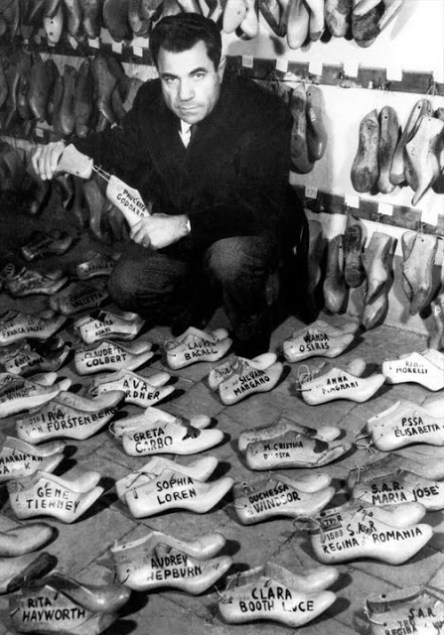
Shoemaker to the stars

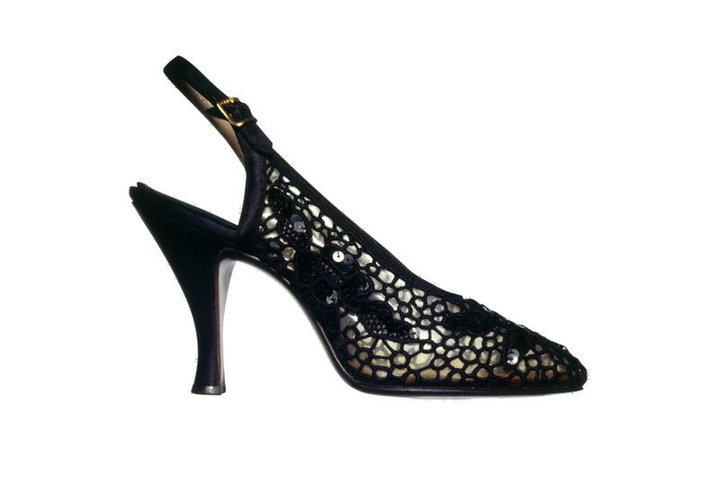
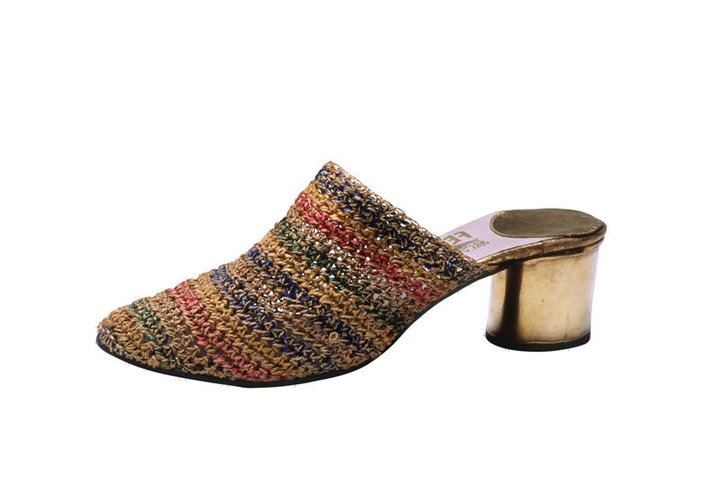
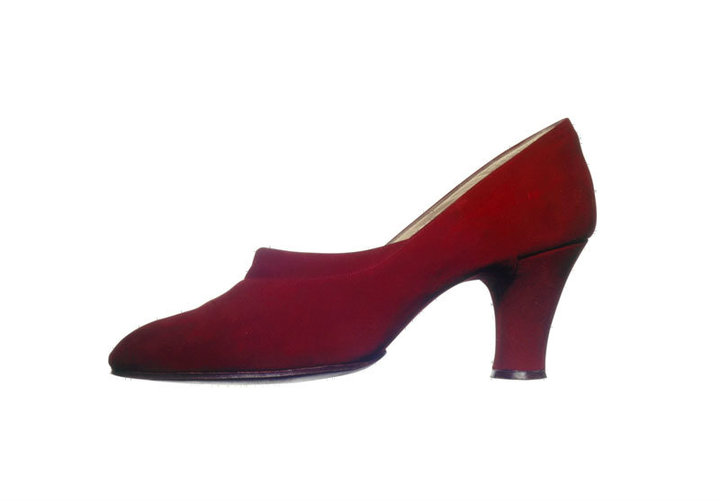
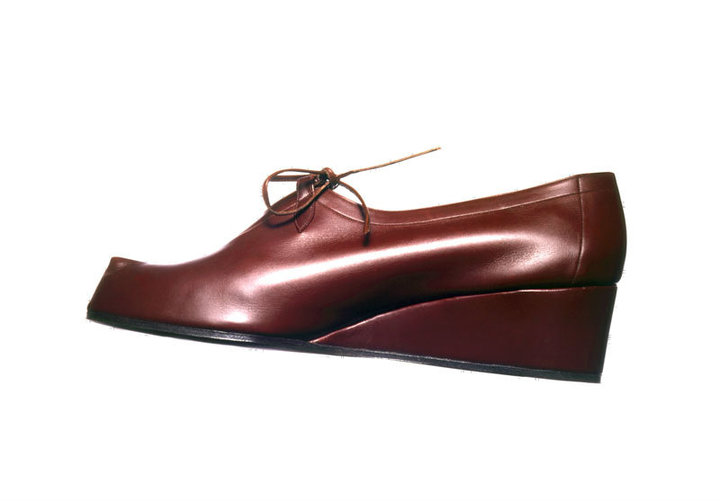
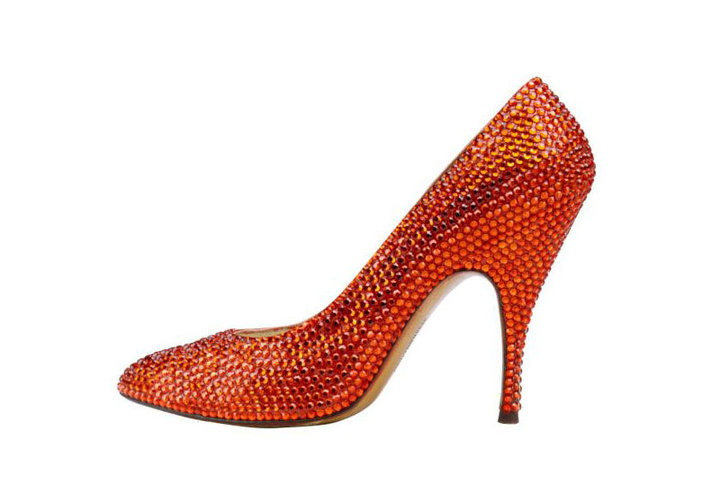
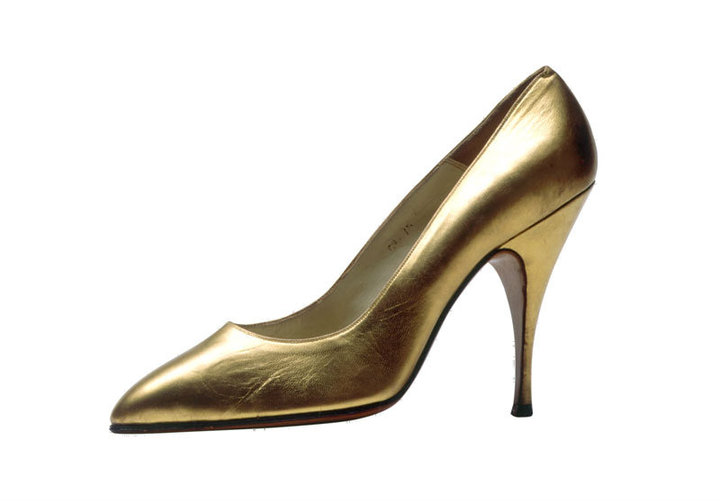
In the basement of Palazzo Spini Feroni, the Salvatore Ferragamo Museum contains over 13,000 models, including the rainbow sandal created for Judy Garland in 1938…
Judy Garland, 1938
Anna Magnani, 1955
Marilyn Monroe, 1958-1959

Joan Crawford, 1927

Audrey Hepburn, 1954

Lauren Bacall, 1947

Loretta Young, 1940
Marilyn Monroe, 1960 Lets make Love

Marilyn Monroe, 1956 Bus Stop

George Condo: Mental States

The Cloudmaker, 1984
on view at the New Museum from January 26 through May 8, 2011


Text by Ralph Rugoff, Laura Hoptman, Will Self, David Means, and Salman Rushdie.
Painter and sculptor George Condo (born 1957) has inhabited a broad swath of cultural contexts over his three-decade career, from the early-1980s East Village scene to a collaboration with William Burroughs to making album cover art for Phish and, most recently, Kanye West. Early in his career, Condo was friendly with Jean-Michel Basquiat and Keith Haring and briefly worked at Andy Warhol’s Factory. Having been included in the Whitney Biennial in 1987, by 2010 he was once again judged so original that a bronze sculpture of his was placed in that year’s Biennial. Condo’s loose, imaginative approach to portraiture has distinguished him throughout the decades: “There was a time when I realized that the central focal point of portraiture did not have to be representational in any way,” he said in 1992. “You don’t need to paint the body to show the truth about a character. All you need is the head and the hands.” George Condo: Mental States surveys the artist’s career from 1982 to the present day, focusing on his portrait paintings but also including a selection of sculptural busts made in materials such as gold and bronze. Organized by theme, and including 100 images of artworks in addition to writings by Will Self, David Means, Ralph Rugoff and Laura Hoptman, this volume explores Condo’s relationship to art history, popular culture and contemporary society.

This catalogue is publish in conjunction with the exhibition, “George Condo: Mental States.”


A Mind Where Picasso Meets Looney Tunes By HOLLAND COTTER

The American artist George Condo made a splash in New York in the early 1980s with a line of surrealist-style figure paintings. It was tasty, erudite stuff, freaky but classy, a Mixmaster version of old master, with a big glop of Pop tossed in. Then he went to Europe, found an avid audience and stayed for a decade, mostly in Paris. To the New York art world, myopic and memoryless, he might have moved to Mars. 
In 1995 he resettled in Manhattan, and has been there since, producing at high volume and exhibiting prominently without generating the kind of main-stage mojo that has made a younger artist like John Currin — who is hugely indebted to Mr. Condo’s example — a star. 
But now, finally, and with minimum fanfare, he’s having his first institutional career survey here. It’s titled “George Condo: Mental States.” It’s at the New Museum. And it’s sensational. 
It demonstrates, among other things, what anyone who has tracked his career already knows. He’s the missing link, or one of them (Carroll Dunham is another), between an older tradition of fiercely loony American figure painting — Willem de Kooning’s grinning women, Philip Guston’s ground-meat guys, Jim Nutt’s cubist cuties, anything by Peter Saul — and the recent and updated resurgence of that tradition in the work of Mr. Currin, Glenn Brown, Nicole Eisenman, Dana Schutz and others. 
Not that Mr. Condo — born in 1957 in New Hampshire — requires historical positioning to justify a survey. One glance at the installation of about 50 of his mainly fictional portraits on the New Museum’s fourth floor tells you otherwise. Some of the paintings are stronger and stranger than others. But covering a long wall up to the ceiling, with no two images alike, they add up to a tour de force of stylistic multitasking and figurative variety. 
Your first instinct is to spot sources for those styles and figures: Picasso, Arcimboldo, Cookie Monster, Goya, Looney Tunes. But you only go so far with this because Mr. Condo isn’t much into wholesale appropriation. He’s interested in invention. Everything is pretty much straight from his brain. 
The earliest picture in the show, “The Madonna,” dates from 1982 and gives a basic sense of how Mr. Condo works. He painted his subject, a Renaissance staple, straightforwardly, then did something funny to it. He scraped some paint away so that the face became blurred and slightly separated from the head, like a slipping mask. This subtle effect turned a historically and ideologically loaded subject into contemporary caprice, though without taking the history and ideas away. They’re here, but detached, like the Madonna’s face. 
Even after being messed around with, she looks fairly normal, which cannot be said of most of the figures surrounding her. These include other quasi-religious images — Mr. Condo grew up as a Roman Catholic — including a Mary Magdalene with bared breasts and sticking-out rodent ears. Taken as an icon it’s deeply bizarre, yet it doesn’t feel entirely irreverent, which makes it even odder. 
Various gods of art history get their due and take their licks. The 1994 “Memories of Rembrandt” borrows the tawny palette of that Dutch artist’s late self-portraits but reduces his facial features to a juicy stew of eyeballs and chunks of flesh. Throughout the show pieces of Picasso are everywhere, puzzled together, piled up like kindling, broken up, gnawed on, inserted wherever there’s room. Mr. Condo clearly can’t get enough of him. 
News photographs of public personalities have served as models for portraits, and occasionally he leaves these people looking more or less like themselves, as he did a few years back in a series of 15 portraits of Elizabeth II of Britain. One of these images at the New Museum, “The Insane Queen,” is, in its zany way, almost respectful of her. Others — the queen with a detachable chin, a clown smile, a carrot stuck through her head — are not, and landed Mr. Condo in hot water when he brought them to the Tate Modern. 
A few paintings, and several gilded bronze heads in the show, are named for characters — “The Barber,” “The Butler,” “The Alcoholic” — in Mr. Condo’s private mythology of cultural types. And then there are portraits that are just mysterious hallucinations, floating free and unrooted. 
In “Red Antipodular Portrait” a bug-eyed creature stares out apprehensively from behind cascades of scarlet fur. A kind of Bichon Maltese-Yosemite Sam hybrid, it exists in a one-species universe, unconnected to art or life or history. Yet it gives the impression of having feelings, so it evokes a complicated response: amusement with a tug of empathy. Isn’t empathy going too far? Isn’t this picture just a cartoon? Within the world of Mr. Condo’s portraits, nothing is “just” anything.
The exhibition continues on the museum’s third floor with groups of nonportrait paintings in which the content tends to be at least obliquely topical and emotions forcefully projected. Much of the work dates from after 9/11; some of it alludes to recent Wall Street scandals. The prevailing mood shifts between confused sadness and suppressed anger.
In a small gallery labeled “Melancholia” male-and-female couples with tiny batlike faces, like the pair in “The Stockbroker,” pose in embattled silence. A black-suited executive stands beneath a suspended carrot, once a lure, now a sword of Damocles. Jesus appears. Child size, dwarfed by darkness, he’s a little mound of raw matter with rodent teeth, startled eyes and flowers — or maybe thorns — laced through his stringy hair. 
The adjoining gallery, with the theme of “Manic Society,” has the opposite kind of energy, clamorous and violent. Copulating lovers snarl like beasts; a priest with a Francis Bacon mouth lets out a scream. In an extraordinary painting called “Uncle Joe” a hirsute man with a demonic smile relaxes with a cigarette and a bottle of wine on a patch of grass, unaware that he’s at the edge of a precipice. 
In its third and last room a show of many surprises concludes with yet another one: a sampling of the abstract painting that Mr. Condo has been doing almost since he career began. His version of abstraction bears the same relationship to the traditional nonobjective thing as his portraits do to conventional portraiture. It’s different, but if it’s interesting, who cares?
“Dancing to Miles” and “Internal Constellation” look, from a distance, like exercises in nuanced color and tone. But as you come closer, intricate, all-over networks of imagery come into focus: popping eyes, open mouths, breasts, hands, heads, all recognizable from the portraits. The patterns are so detailed and attention demanding as to be exhausting. Two paintings from 2010 with larger, cubistic forms are easier to see, but they’re too Picassoid for comfort. They smudge a fine line between emulation and imitation, always a danger for artists who have a naturally ventriloqual grasp of styles. 
The miracle is that Mr. Condo doesn’t succumb to imitation more often, or doesn’t in this survey, which has been scrupulously selected and edited by Ralph Rugoff, director of the Hayward Gallery in London, and Laura Hoptman, a former senior curator at the New Museum and now at the Museum of Modern Art. They are also responsible for a superlative installation, one that demonstrates, for the first time, that there are ways to exhibit painting effectively in this museum’s high, tight, object-squelching spaces. 

But much of that effectiveness can be attributed to the artist they’re dealing with. Mr. Condo is not a producer of single precious items consistent in style and long in the making. If that’s what you want from painting, he’ll disappoint you. He’s an artist of variety, plentitude and multiformity. He needs to be seen in an environment that presents him not as a virtuoso soloist but as the master of the massed chorale, and that’s what Mr. Rugoff and Ms. Hoptman have done. 
January 27, 2011

Couronne du Sacre de Louis XV

Augustin DUFLOS, d’après Claude RONDÉ 
Couronne de Louis XV, 1722
Musée du Louvre

[Déposée à Saint-Denis en 1729 après le remplacement des pierres d’origine, portée à la Convention en 1793, déposée au Cabinet des médailles puis au Garde-meuble, transférée du palais de Trianon au Louvre en 1852.  Paris, France.  Argent partiellement doré, fac-similés des pierres précieuses d’origine, satin brodé]

Couronne de Louis XV

À l’occasion de leur sacre, les rois de France avaient pour coutume de se faire exécuter une couronne personnelle. Pour Louis XV, deux couronnes furent réalisées : une en or émaillé et l’autre, conservée au Louvre, en argent doré et ornée de pierreries. Cependant, en 1729, cette dernière fut dépecée et on remplaça les pierres d’origine par des copies. La couronne ne servait qu’à l’occasion du sacre et reposait à l’abbaye de Saint-Denis avec les autres instruments de cérémonie, appelés regalia.

Une œuvre toute de perles et de pierres précieuses

La Couronne de Louis XV est composée d’une calotte de satin brodé et cerclée d’une structure métallique d’où partent des arceaux ajourés surmontés d’une fleur de lys. Le bandeau est ceint de deux files de perles et de huit pierres de couleur (saphirs, rubis, topazes et émeraudes) alternant avec des diamants. Le départ des arceaux est marqué par des fleurs de lys formées par cinq diamants. Le célèbre Régent, acheté quelques années avant le sacre, orne la fleur de devant. Les huit diamants quadrangulaires qui constituent le sommet des fleurs appartiennent à la série des dix-huit Mazarins. Enfin la couronne est également surmontée d’une fleur de lys faite de feuilles d’acanthe en argent comportant dix-sept diamants complétés par le Sancy. Sur la calotte sont cousus ving-quatre autres diamants. En 1729, perles et pierres précieuses furent remplacées par des copies à la demande de Louis XV. Au total, la couronne comportait 282 diamants (161 grands et 121 petits), 64 pierres de couleur (dont 16 rubis, 16 saphirs et 16 émeraudes) et 237 perles.  

L’oeuvre de joailliers parisiens

La couronne personnelle de Louis XV a été dessinée par le joaillier Claude Rondé et exécutée sous la direction du jeune Augustin Duflos, joaillier du roi aux Galeries du Louvre. Peu de temps après, en 1723, Duflos réalisa chez Rondé une couronne sur le même modèle et suivant les mêmes dimensions pour le roi Joseph V du Portugal. En 1725, les Rondé livrèrent pour la reine une autre couronne de plus petite taille mais de composition voisine.

Les descriptions de la couronne de Louis XV

On connaît deux descriptions de cette œuvre : la première publiée par Le Mercure, un mois après le sacre, en novembre 1722, et la seconde servant de légende à une gravure de Sébastien Antoine. Celle-ci signale bien que la couronne était ornée de 64 pierres de couleur mais elle ne mentionne que 273 diamants et indique quelques variantes par rapport à l’état connu aujourd’hui. Il est donc possible que l’aspect actuel ne soit pas tout à fait fidèle à la composition d’origine et que les différences soient la conséquence de la restauration faite par le joaillier M. Maillard en 1780. Bien qu’ornée de pierres factices et malgré les légères modifications subies, la couronne personnelle de Louis XV nous révèle le faste des cérémonies royales ainsi que la virtuosité des joailliers du XVIIIe siècle.

Documentation: Regalia : les instruments du sacre des rois de France, les honneurs de Charlemagne, Éditions de la Réunion des musées nationaux, Paris, 1987, pp. 91-92 

Muriel Barbier


© Musée du Louvre / E. Lessing