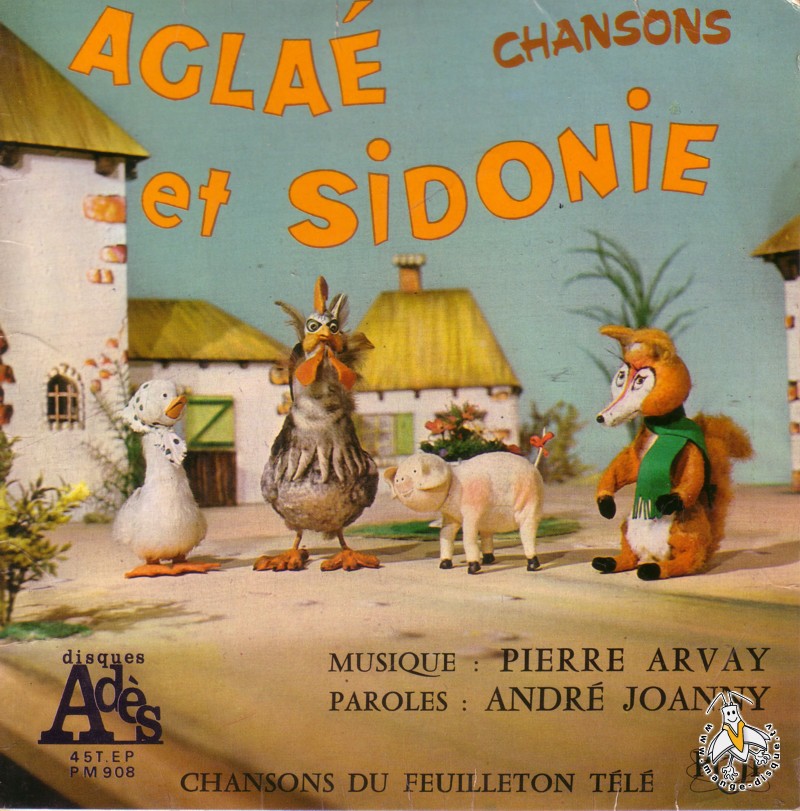
Aglaé et Sidonie

A tous les enfants
Qui sont obéissants
Nous allons dire au revoir en passant

Au revoir les amis
Nous rentrons au pays
Au pays d’Aglaé et Sidonie

A tous les enfants
Qui sont obéissants
Nous allons dire au revoir en passant

Au revoir les amis
Nous rentrons au pays
Au pays d’Aglaé et Sidonie

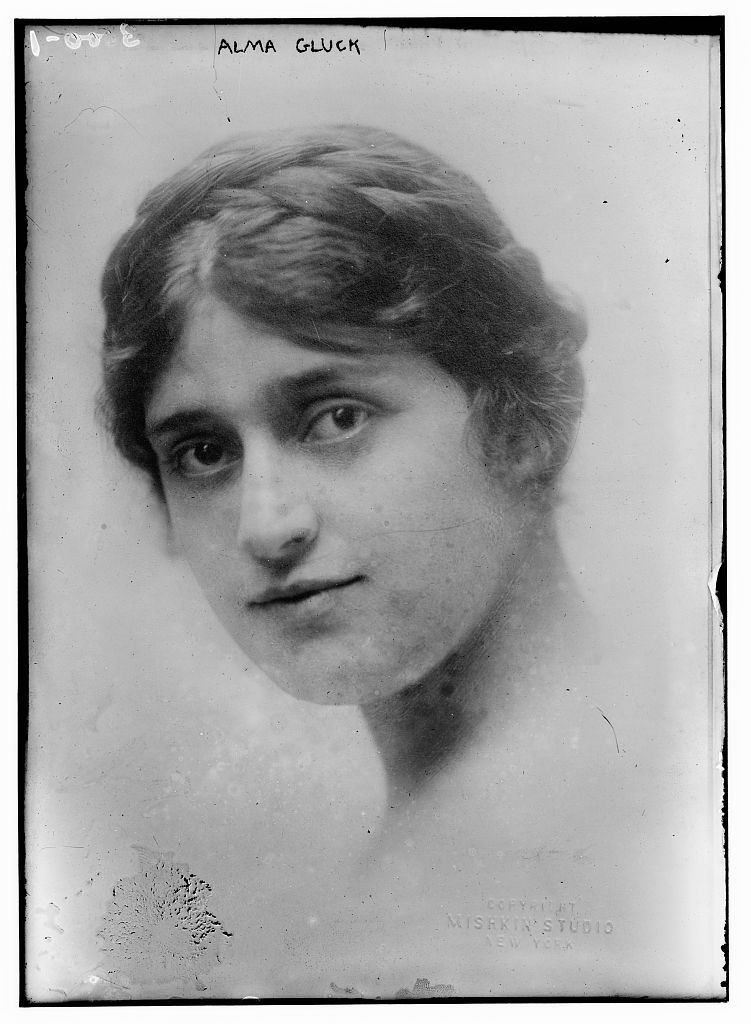
Alma Gluck

listen toAve Maria

Alma Gluck, the soprano whose recording of “Carry Me Back to Ol’ Virginny” sold almost two million copies, was born Reba Fiersohn on May 11, 1884, in Romania (variously reported as either Iasi or Bucharest). From an impoverished childhood, she rose to become not only one of the finest concert artists of the twentieth century but also one of the most popular. 

Alma was the youngest of seven children, born when her mother (whose name is reported as Anna, Zara, and Edith Sarah) was nearly fifty. Of the six other children, three girls survived infancy. The eldest, Cecile (eighteen years older than Alma), ran the household and reared the others. Her father (reported as Israel, Leon, and Louis Saul), who died when Alma was two, was an opera buff: His older daughters told stories of his attending a performance after hauling produce all day and returning home to sing the entire score for his family. 

By 1890, Cecile Fiersohn, who had paid her own passage to the United States, had saved enough from her sweatshop earnings to send for her mother and sisters. Alma attended public school through eighth grade on New York’s Lower East Side and subsequently worked as an office clerk. Although some accounts indicate that she attended the Normal School (later Hunter College) and Union College, an inspection of school records appears to show that this was not the case. On May 25, 1902, she married Bernard Gluck, an insurance agent (some sources record his name as Glick). They divorced in 1912. Their daughter, Abigail, became the writer Marcia Davenport. 

Although she had a beautiful voice as a girl and learned to play piano, Gluck began vocal training only as an adult. In 1906, a business associate of her husband’s who had heard her sing arranged for her to take voice lessons. She also studied in Europe accompanied only by her daughter. An anecdote tells of Gluck’s serendipitous encounter with Arturo Toscanini. The conductor heard her sing when she arrived for a lesson at her teacher’s house while he and the manager of New York’s Metropolitan Opera were dining there. Both men were skeptical of the teacher’s motives—Gluck was a beautiful woman—until they heard the soprano warming up. Toscanini then insisted on accompanying her himself. (Marcia Davenport writes that the meeting was no accident: Gluck’s teacher engineered it, and Gluck was aware of her listener’s identity.) After a formal audition, Gluck was hired. Toscanini conducted the performance in which she made her debut (under the name Alma Gluck), Massenet’s Werther. It was presented by the Metropolitan Opera but took place at the New Theatre on November 16, 1909. During Gluck’s first season with the company, she sang eleven minor roles in three languages. 

Gluck, however, was not fond of opera’s theatrical nature. Less than a year after her operatic debut, she sang her first recital. By 1911, she had found her niche as a concert artist, a venue in which her charm and elegance were more readily apparent. After leaving the Metropolitan in 1913, she studied in Berlin and Paris. By the following year, Gluck was the most popular concert singer in the United States. She performed in all forty-eight states (traveling later in a private railway car) as a recitalist and orchestral soloist. Until 1921, she gave almost 100 recitals a season, and she continued to perform until 1925. Between 1911 and 1919, Gluck made 124 recordings. Although many were classical, she was famous for her renditions of American folk songs. She was a best-selling artist: Between 1914 and 1918 alone her recording royalties totaled $600,000. 

On June 15, 1914, Gluck was married in London to violinist Efrem Zimbalist. They had two children, Maria Virginia Goelet (b. 1915), and Efrem, Jr. (b. 1918), the actor, writer, and director. Husband and wife often appeared together in concert, and several of Gluck’s recordings feature Zimbalist’s violin obbligatos. In her retirement, Gluck devoted herself to her family and to the artistic world: She was a founder of the American Guild of Musical Artists and was famous for her support of musical causes as well as for her soirées. In 1930, Alma Gluck was diagnosed with an incurable liver ailment. She died in New York on October 27, 1938. 

If Gluck identified herself with the Jewish community as an adult, there appears to be no record of it, and she developed strong ties to the Episcopal church. She left bequests to Union Chapel on Fishers Island, New York, where she had a summer home, and to St. Thomas Church in New York City. In addition, all three of her children were baptized: Maria Virginia and Efrem, Jr. at St. Thomas (in 1921), and Marcia Davenport (in 1922) at the boarding school run by Episcopal nuns to which she had been sent, with her mother as one of her sponsors. Gluck herself, Davenport writes, “drifted on the agnostic sea-of-consent where so many barks float or founder or merely keep on circling, but she did not think that right for her children.”

Paula Eisenstein Baker
Jewish Women’s Archive

[image credit: George Grantham Bain Collection, Library of Congress]

Collected Works of Alma Gluck with Efrem Zimbalist

Poupées de Cire

Louis XV and Mozart at the home of the Marquise de Pompadour

Le Musée Grévin is a waxwork museum in Paris located on the Grands Boulevards in the IXe arrondissement on the right bank of the Seine, at 10, Boulevard Montmartre, Paris, France. It is open daily; an admission fee is charged.
The museum was founded in 1882 by Arthur Meyer, a journalist for Le Gaulois, and named for its first artistic director, caricaturist Alfred Grévin. It is one of the oldest wax museums in Europe. Its baroque architecture includes a mirrored mirage room based on the principle of a catoptric cistula and a theater for magic shows.
Le Musée Grévin now contains some 300 characters arranged in scenes from the history of France and modern life, including a panorama of French history from Charlemagne to Napoleon III, bloody scenes of the French Revolution, movie stars, and international figures such as Albert Einstein, Mahatma Gandhi, and Pope John Paul II. The tableau of Charlotte Corday murdering Jean-Paul Marat includes the actual knife and bathtub used.
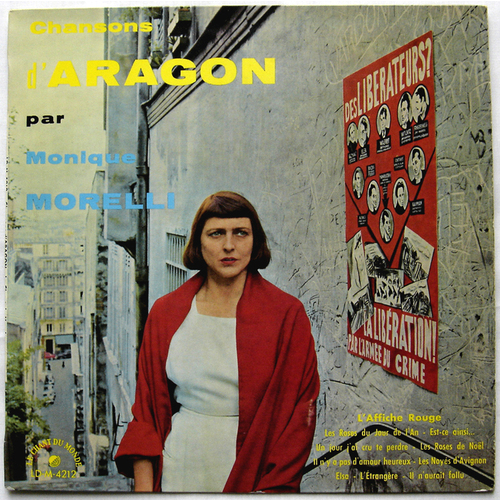
Louis Aragon wrote poems under the name of Le Musée Grévin (using the pseudonym of François la Colère), published during the Vichy regime by the Éditions de Minuit underground editor.

La Mamma

Charles Aznavour
Pierre-Auguste Renoir ~ The Artist’s Mother, 1860
Ils sont venus
Ils sont tous là
Dès qu’ils ont entendu ce cri
Elle va mourir, la mamma
Ils sont venus
Ils sont tous là
Même ceux du sud de l’Italie
Y’a même Giorgio, le fils maudit
Avec des présents plein les bras
Tous les enfants jouent en silence
Autour du lit ou sur le carreau
Mais leurs jeux n’ont pas d’importance
C’est un peu leurs derniers cadeaux
A la mamma


On la réchauffe de baisers
On lui remonte ses oreillers
Elle va mourir, la mamma
Sainte Marie pleine de grâces
Dont la statue est sur la place
Bien sûr vous lui tendez les bras
En lui chantant Ave Maria
Ave Maria
Y’a tant d’amour, de souvenirs
Autour de toi, toi la mamma
Y’a tant de larmes et de sourires
A travers toi, toi la mamma


Et tous les hommes ont eu si chaud
Sur les chemins de grand soleil
Elle va mourir, la mamma
Qu’ils boivent frais le vin nouveau
Le bon vin de la bonne treille
Tandis que s’entrassent pêle-mêle
Sur les bancs, foulards et chapeaux
C’est drôle on ne se sent pas triste
Près du grand lit et de l’affection
Y’a même un oncle guitariste
Qui joue en faisant attention
A la mamma


Et les femmes se souvenant
Des chansons tristes des veillées
Elle va mourir, la mamma
Tout doucement, les yeux fermés
Chantent comme on berce un enfant
Aprés une bonne journée
Pour qu’il sourie en s’endormant
Ave Maria
Y’a tant d’amour, de souvenirs
Autour de toi, toi la mamma
Y’a tant de larmes et de sourires
A travers toi, toi la mamma
Que jamais, jamais, jamais
Tu nous quitteras…

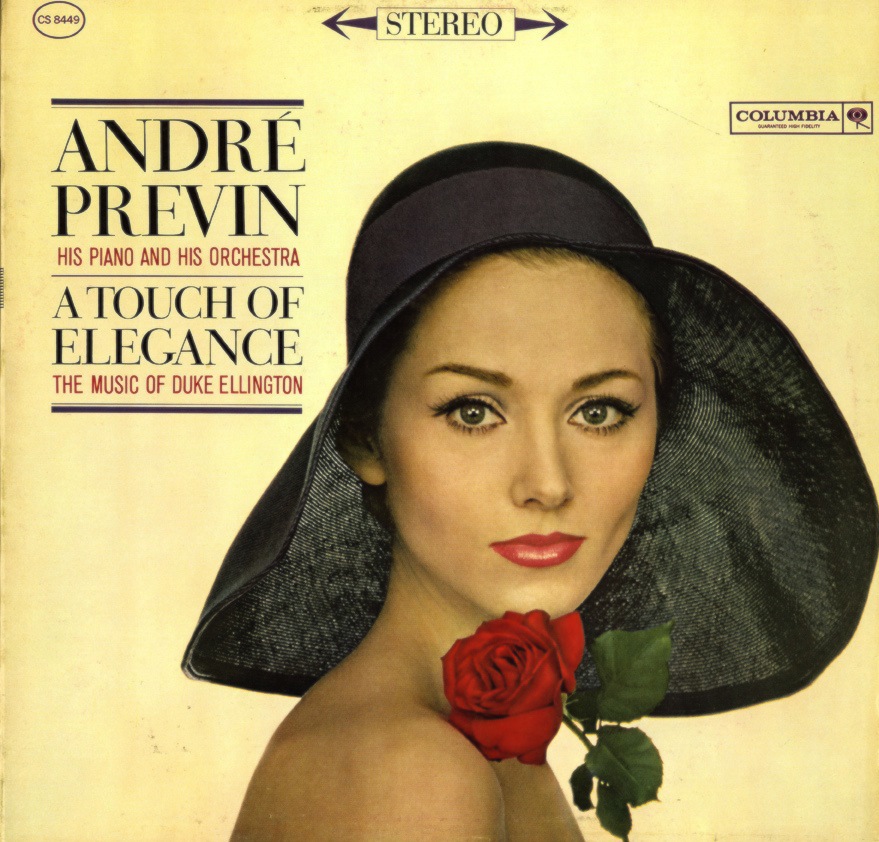
Sir André Previn

German-born American pianist, composer, arranger, and conductor, especially sympathetic to French, Russian, and English music of the 19th and 20th centuries.

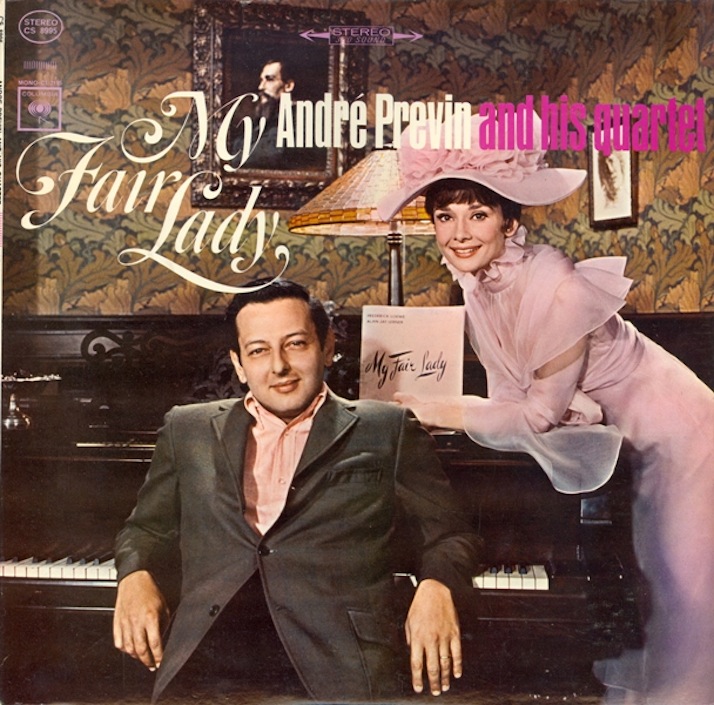
Previn’s family fled Nazi persecution and moved to Los Angeles in 1939. While still a teenager he was recognized as a gifted jazz pianist, and he performed various orchestrating and arranging tasks for Metro-Goldwyn-Mayer in the 1940s and then worked under contract with MGM from 1952 to 1960. Working for various studios, he won Academy Awards for his music scores for Gigi (1958), Porgy and Bess (1959), Irma la Douce (1963), and My Fair Lady (1964).
 
In 1951, while stationed in San Francisco with the U.S. Army, Previn began studies in conducting with Pierre Monteux. He made his conducting debut with the St. Louis (Mo.) Symphony in 1963. After serving in turn as principal conductor of the Houston, London, and Pittsburgh symphony orchestras, he worked as musical director of the Los Angeles Philharmonic from 1985 to 1989. He was associated with the Royal Philharmonic (as musical director, 1985–88, and principal conductor, 1988–91) and in 1993 was named conductor laureate of the London Symphony. He appeared in a guest conductor role with major orchestras in Europe and the United States.
 
Previn composed in varied genres throughout his career. His works include Symphony for Strings (1962); concerti for cello (1968), guitar (1971), piano (1985), and violin (2001); orchestral works such as Principals (1980) and Honey and Rue (1992); chamber music, including String Quartet with Soprano (2003); the opera A Streetcar Named Desire (1998; based on the play by Tennessee Williams); other theatrical music; and songs. His many Grammy Awards were in multiple categories: musical shows (1958 and 1959), pop (1959), jazz (1960 and 1961), and classical (several awards from 1973).
Previn has written extensively about music. His books include Music Face to Face (1971), Orchestra (1979), André Previn’s Guide to Music (1983; editor), André Previn’s Guide to the Orchestra (1986), and No Minor Chords: My Early Days in Hollywood (1991).
 

In 1996, Previn was created a Knight of the British Empire, and in 1998 he received a Kennedy Center Honor for lifetime achievement in music.

Encyclopædia Britannica
-=- G2 -=-‘s photostream

The Muppet Show – S3 E9 P3/3 – Liberace

1919 – 1987

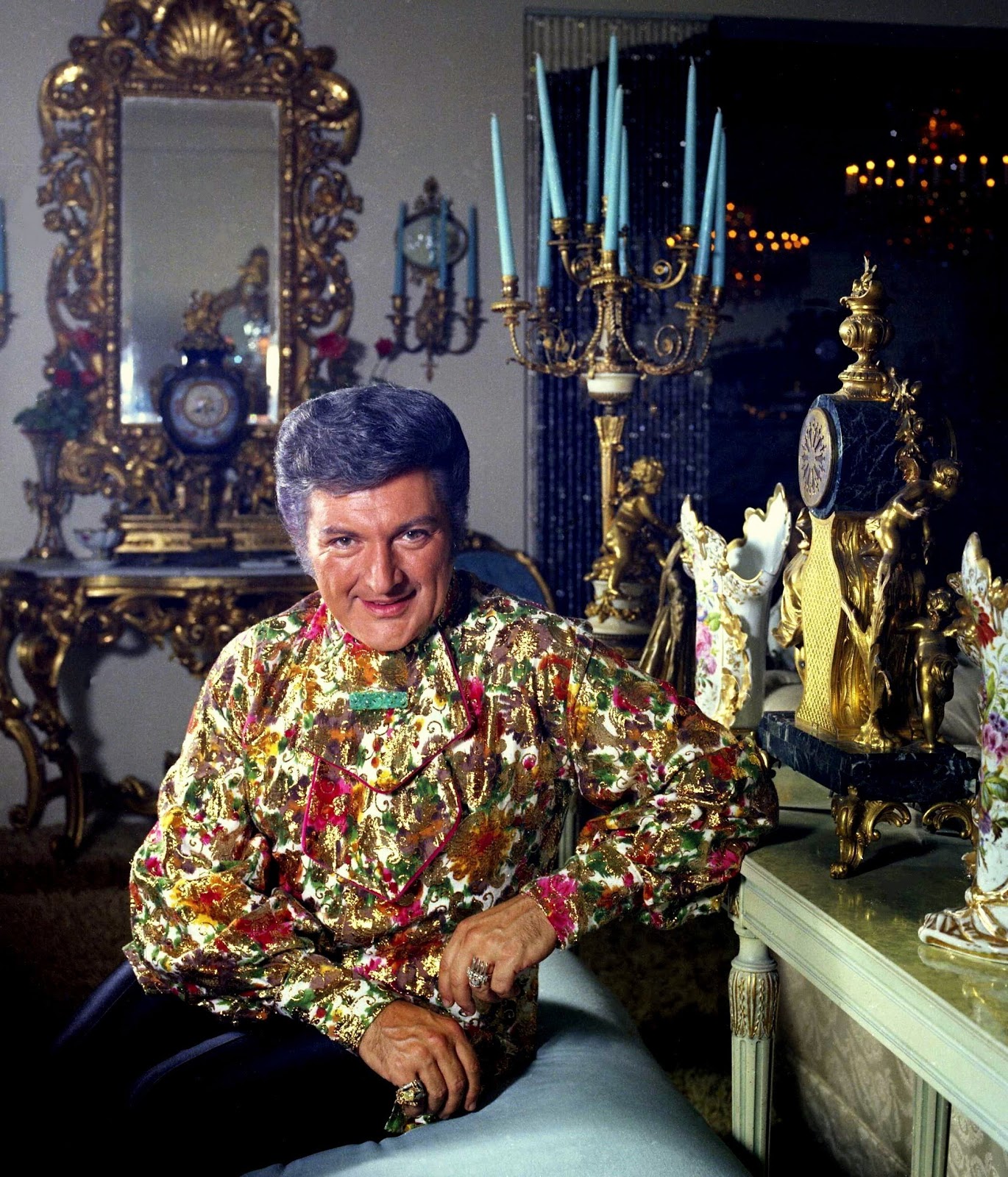
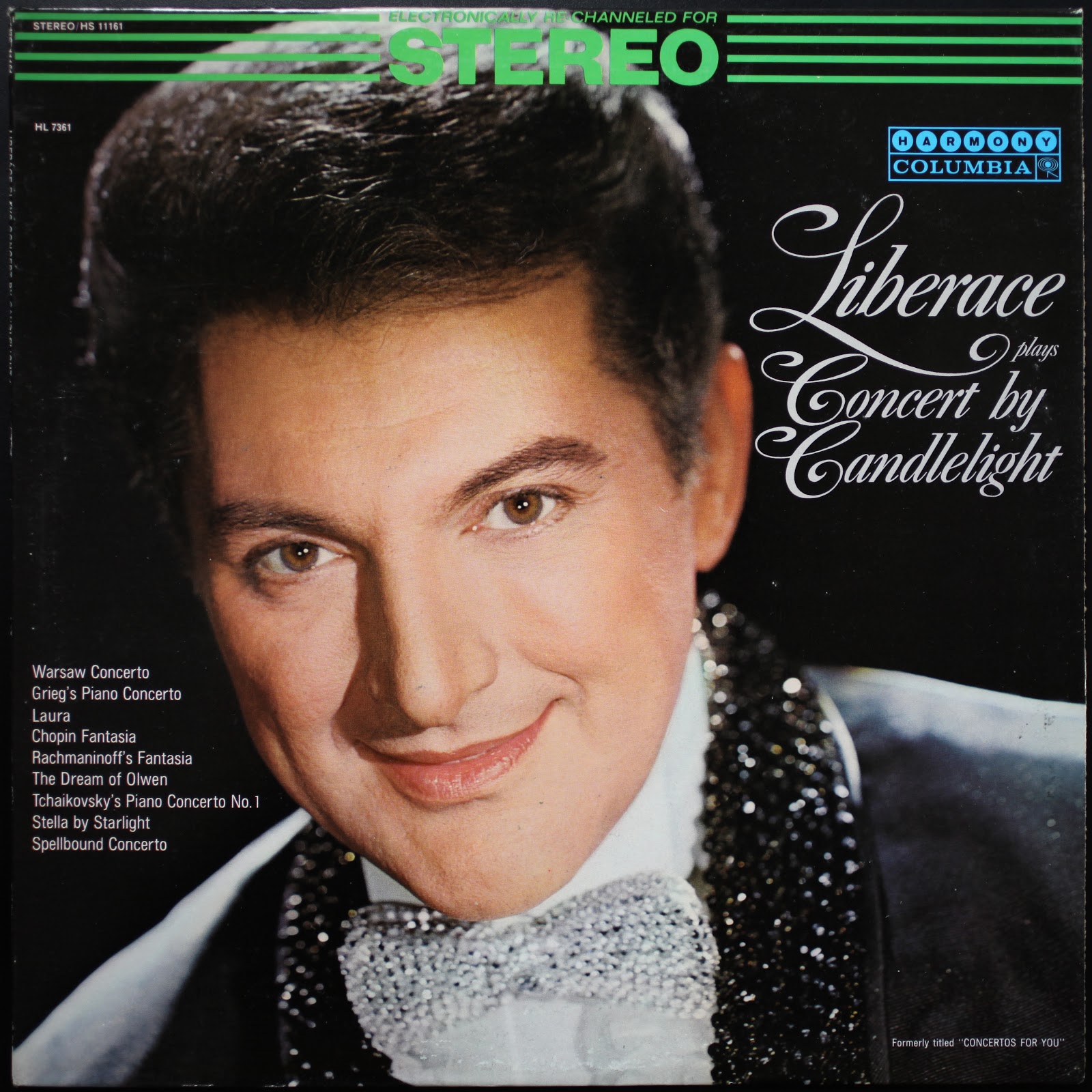
For decades, Liberace was known for his music, candelabra, charisma, rhinestones and dazzle. 
Over the years Liberace acquired an astounding array of prestigious awards, including: Instrumentalist of the Year, Best Dressed Entertainer and Entertainer of the Year. He also earned two Emmy Awards, six gold albums, and two stars on the Hollywood Walk of Fame. He is listed in the Guinness Book of World Records as the world’s highest paid musician and pianist. Best of all, he was known and loved throughout the world as “Mr. Showmanship.”