Van Leo

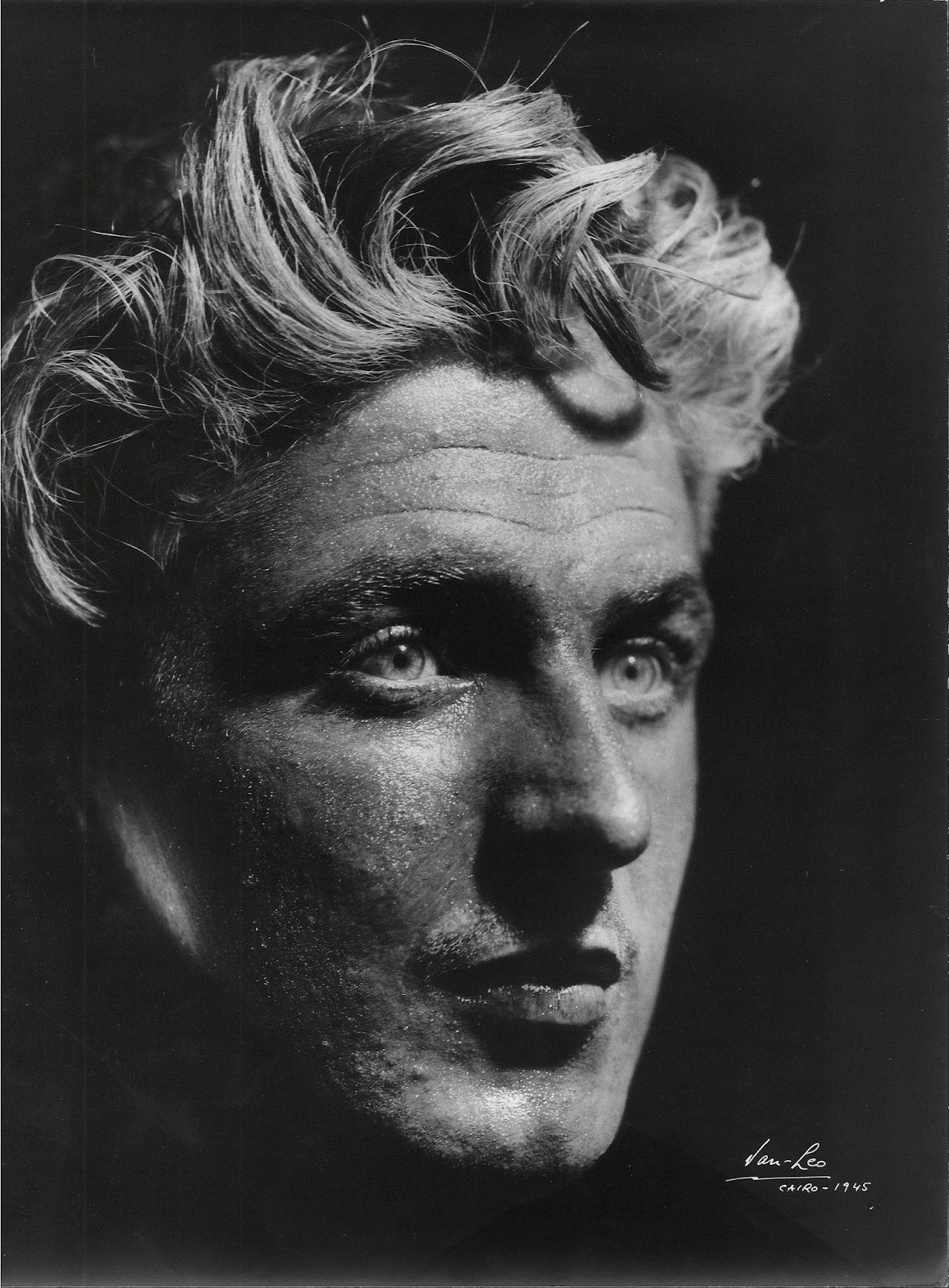
 Teddy Lane, South African dancer, Cairo, 1945

The photographer, Levon Boyadjian, or ‘Van-Leo’ as he called himself, was the last in a long line of distinguished Armenians who pioneered and dominated the burgeoning craft of photography in the Middle East. Working for close to 60 years, the eccentric photographer created some of the most interesting black-and-white portraits ever produced in the Arab world. Part artist-philosopher and part aspiring actor/director, Van-Leo came to prominence as a photographer during Cairo’s belle époque – a cosmopolitan period spanning the late 19th to mid-20th centuries and known for its relative liberal mores and multiculturalism. His unique aesthetic successfully fused the worlds of fantasy, glamour and documentary studio-portraiture.

The Exodus and Impetus 
Born in the village of Jihane in eastern Turkey in 1921, Van-Leo fled with his family to Egypt at the age of four, escaping the persecution of Armenians during and after the First World War. As a young man living in Cairo, he became enamoured of, and obsessed with, Hollywood movie stars, collecting magazines and miniature cards featuring still images of his favourite actors and actresses in character. Intoxicated by cinema and living in a fantasy world of fictional characters and make- believe, Van-Leo decided to leave his floundering studies at the American University and devote his life to photographing people in the manner of a possessed cinema director armed with a stills camera.

At 19, Van-Leo used his connections in the Armenian photographic community to arrange an apprenticeship at Artinian’s Studio Venus in downtown Cairo in 1940. There he managed to extract as many trade secrets as he could from an otherwise reticent boss. Seeing his enthusiasm and wanting to encourage his inborn entrepreneurial spirit, Van-Leo’s father purchased a 10×10 format studio camera and lighting equipment for his son and suggested that he start photographing his work colleagues for profit. Van-Leo promptly left Studio Venus and set up in partnership with his brother Angelo, opening up Angelo Studio in the living room of the Boyadjian family apartment on 18 Fouad 1st Avenue, in January 1941. 

With the Second World War in full swing, and with Cairo in the clutches of internationalists and grand strategists, there was no shortage of clientele for the young neophyte portraitist. British soldiers stationed in the Egyptian capital, and the hordes of foreign entertainers that flocked to the city to find work and to escape the war in Europe, not only formed the backbone of Van-Leo’s clientele but also became his most cooperative and malleable subjects. At times, in exchange for a free portrait, the photographer would convince his most attractive sitters to give him complete creative licence. His approach in this regard was to employ cinematic techniques of artificial light, shadow and suggestive poses to generate charismatic personas – iconic creations that bordered on film noire in their mood and which invoked moments of drama. In this way Van-Leo blurred the lines between reality and fiction in an era and culture when such artistic approaches had not yet arisen in the collective imagination. “I am like a film director,” Van- Leo once remarked. “The customer has no idea what to do.” 

Hyped Shutter Speed

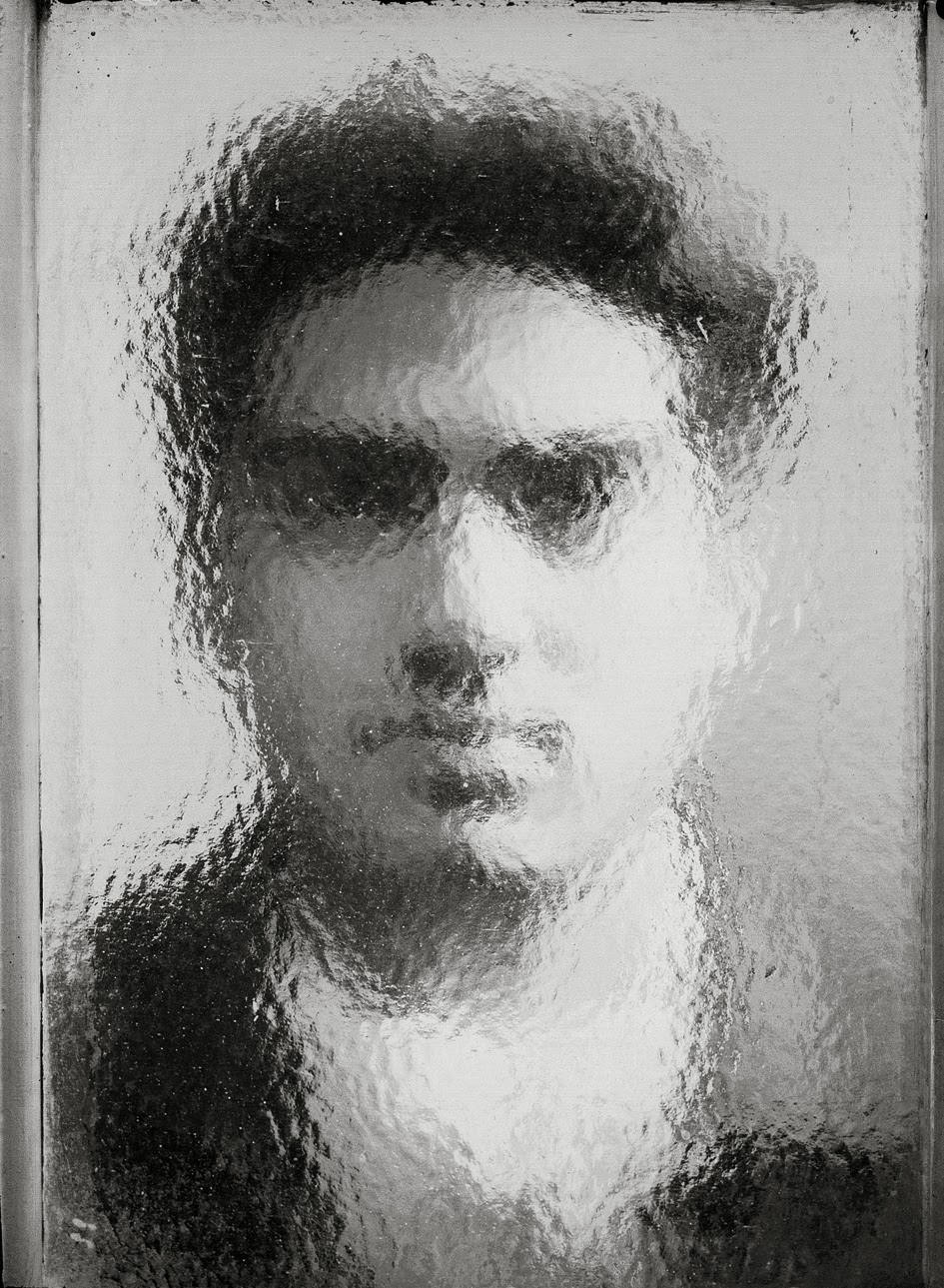
It was partly in this strange and novel manner that Van-Leo captured the personalities of Cairo during the heady war years of the 1940s and after. Beginning with World War Two theatre troops, he quickly moved to photographing aristocrats, cabaret dancers, singers, actors, expatriates and Egyptians from all walks of life. As his reputation grew, countless people flocked to his studio to be photographed. These included such Middle Eastern notables and society figures as the writer Taha Hussein, actors Omar Sharif, Rushdie Abaza and Samia Gamal, and the singers Farid Al-Atrache and Dalida. As much as Van-Leo is known today as a photographer of Egypt’s upper crust, he is becoming equally renowned as a self-portraitist, having taken over 400 photographs of himself disguised as 400 different characters. Van-Leo’s fictional avatars range from Zorro and Rasputin to Sam Spade and all manner of personas in-between: from a steamship captain to a gangster, to a British fighter-bomber. Each of these images provides a key to the furthest depths of Van-Leo’s psyche, linking the observer directly with a man who wanted to live every fictional character in endless worlds of his own making. Indeed, Van-Leo admitted to devoting most of his free time in the 1940s to creating self-portraits. “My father used to get very angry,” Van-Leo admitted in 1998. “He’d tell me: ‘Did you make the studio for yourself or for the customer? Stop making photos of yourself!’”  

Self-portrait, Cairo, 1945
Self-portrait, Cairo, 1943

Van-Leo’s struggles with identity and personality were not just visible in the realms of his photographic fictions. They also appeared in his personal life. His relationship with his brother and business partner Angelo, a much overlooked aspect of his formation as an artist, was as difficult and complex a matter as  any in his life. “The two brothers were as opposite in character as any two people could possibly be,” says Angelo’s surviving daughter, Katia Boyadjian, an artist and photographer who lives in Normandy, France. “Angelo was loud, over-confidant, flamboyant, reckless, irresponsible, and a gambler, while Van- Leo was artistic, quiet, feminine, solitary, and was cautious and miserly in the extreme.” But he was also devoted to his work.

Different Angles
 When Angelo started to neglect his duties at the studio, and began dipping into the studio cash-till to support his lifestyle of drunken late-night parties at the Cairo cabarets, Van-Leo decided to abort the partnership. In 1947, the brothers terminated their collaboration and both photographers looked to begin anew professionally. In the summer of that year Van-Leo bought Studio Metro, located across the street on 7 Fouad 1st Avenue, from Kourken Yegorian for 450 Egyptian pounds – a price that included the equipment and furniture. Studio Metro would be renamed Studio Van-Leo by Boyadjian later, in 1955. Meanwhile, Van-Leo’s brother kept the old Studio Angelo, which he eventually moved to Cherif Pasha Street, and then to a different location on Abdel Khalek Tharwat Street.  

“There was no resentment between the brothers when I first met them in 1953,” says Raga Serag, Van-Leo’s former studio assistant and girlfriend, who today lives in Cairo’s crowded Shubra district. “Relations were very normal. Of course, Angelo was an ‘ afreet (mischievous) but Leon was very patient with him.” Though still amicably tied, the two brothers, now business rivals, would find their relationship over time increasingly beset with tension. Angelo and Van-Leo envied each other for the position each came to occupy in life; a strange irony, considering that both brothers were deeply dissatisfied with their respective achievements. Eventually, Angelo would emigrate to Paris in 1960 with his French wife in tow, where he would struggle as a photographer with mixed success, dreaming constantly of returning to Egypt while Van- Leo looked at Angelo in envy, himself wanting to flee the country but not having the strength or will to do so. “Both men lived in a kind of perpetual exile, always as foreigners, and with identity issues,” Boyadjian says.
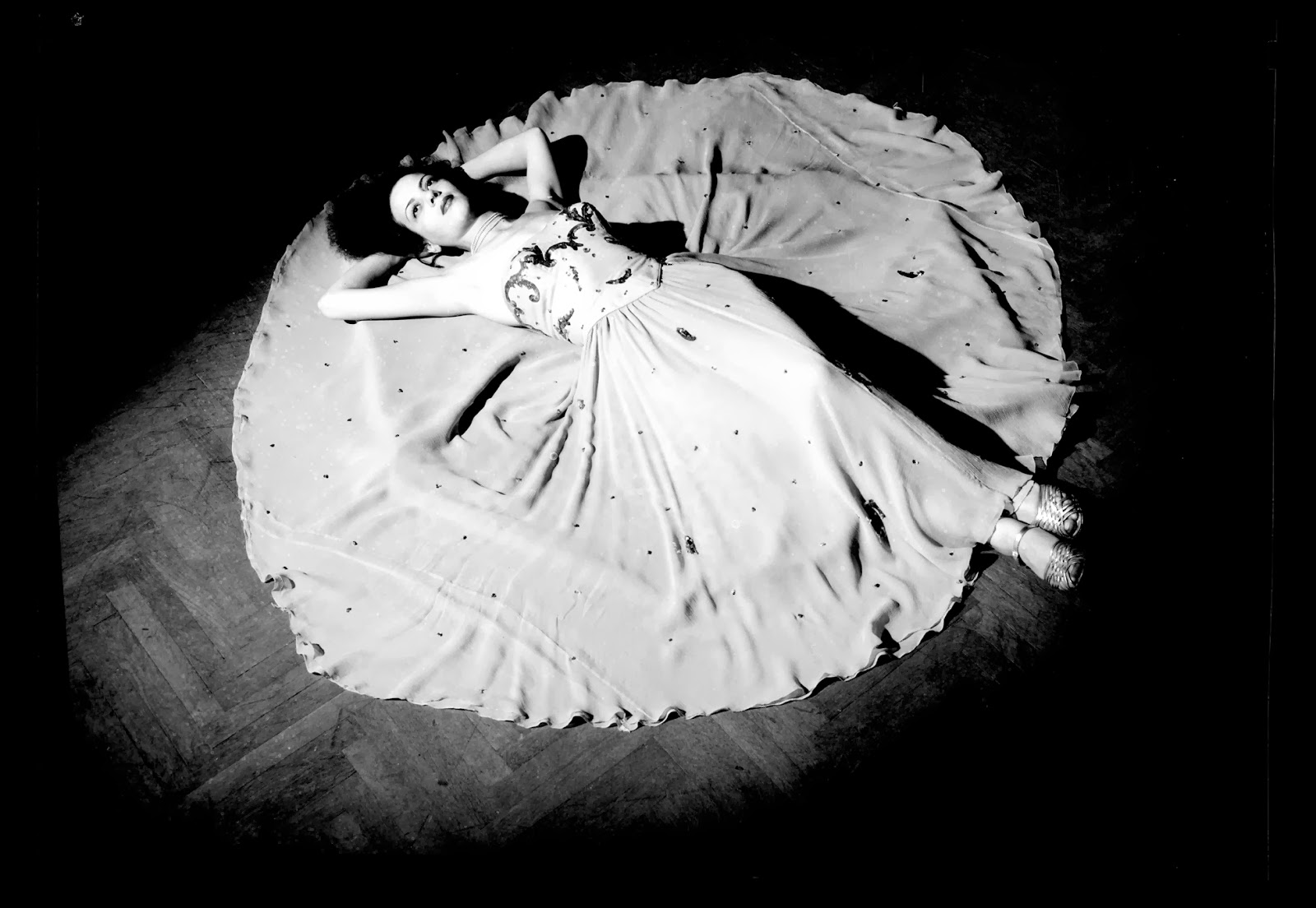
Nadia Gamal, 1940s

Although Angelo took many of his own negatives and prints with him upon leaving in 1947 – including his own images of Omar Sharif, Dalida and Samia Gamal – it remains difficult to discern which of a number of Van-Leo’s early photographs were his alone or were instead the result of an equal collaboration between the two brothers. Although it is generally agreed that Van-Leo was the more talented of the brothers, and that their styles bear different artistic signatures, many of the narratives published on Van-Leo until now have assumed that all of his work up until 1947 was his alone. “In a sense the boundary between Van-Leo and Angelo in the early years is one which will always be blurred,” Boyadjian says. “You cannot know one man without knowing the other.”

Changing Landscapes 

 
From a professional standpoint, Angelo’s flight from Egypt may not have been the worst of all possible fates for an Egyptian photographer at that time. Although managing to take high quality black-and-white portraits well into the 1960s, increasing political upheavals, a vanishing clientele and the slow decline of black-and-white photography caused Van- Leo’s business to flounder by the early 1970s. The 1980s saw an even further withdrawal by the artist from an increasingly indifferent and growingly conservative Cairo, more interested in passport photos than in fine art photographs. This state of affairs persisted until the early-mid 1990s when Van-Leo was suddenly rediscovered by Cairo’s expatriates, like Professor Schleifer and others, who, smitten with nostalgic curiosity, found in Van-Leo and his work a living link to an otherwise irretrievable past.

Pushing the limits of old age and ill-health, Van-Leo finally stopped making photographs in 1998. Fearing for the future of his negatives and prints, he made the decision at the prompting of a friend and fellow photographer, Barry Iverson, to donate his entire corpus of work and equipment to the Rare Books and Special Collections Library at the AUC, which today houses The Van-Leo Collection. The Arab Image Foundation in Beirut, an organisation devoted to collecting and preserving old photographs of the Middle East, nominated Van-Leo for the prestigious Prince Claus Award, which the Cairo Photographer won in 2000. However, he would only enjoy for a short time the revival of interest in his work that the award afforded. Van-Leo passed away in March 2002 at the age of 80. 

Since then Van-Leo has not surprisingly become something of a legend within the Middle East photographic community. A number of articles about his life and work, written by friends and colleagues who knew him in his final years, abound. Each pays homage to a man who, in his insistence to persevere in his art, found himself increasingly alienated from society and life at large. The apocryphal and almost at times mythical quality of these tributes, each reaching deep into an obscure past, mirror the extent to which mystery and ambiguity still surround Van-Leo as a man – a mystery made more fulsome and enigmatic by his own photographic fictions, which often overshadowed the reality of who he was…

John Zada
Photography Special 
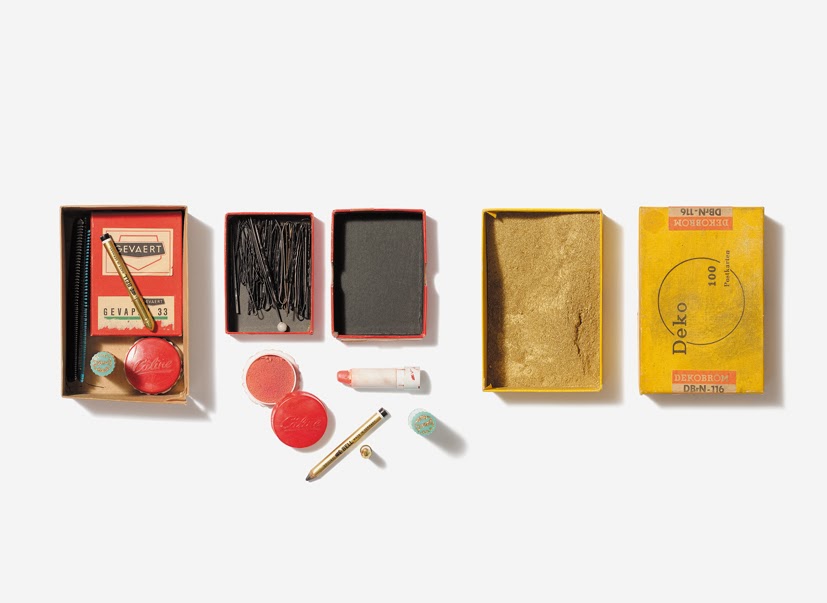
Tools-Makeup and hair

for more information on Van Leo and his work:
VAN LEO: Cairo’s Master Photographer
Van Leo

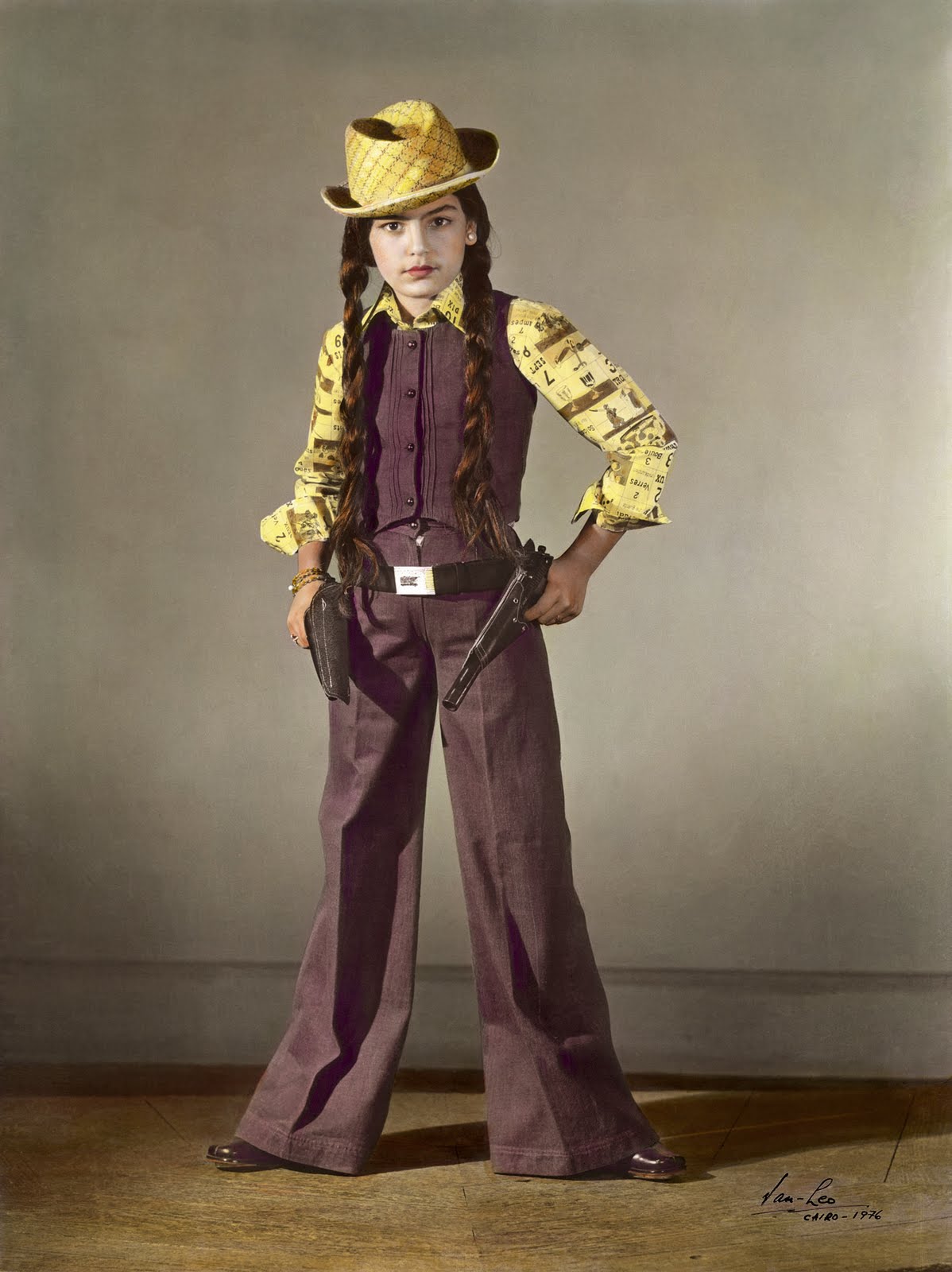
Sherihan actrice égyptienne – Le Caire, Egypte, 1976

Van Leo’s unrivaled images of Cairo’s belle epoch 

by Fatma Bassiouni, Special to the Middle East Times 

Van Leo was a tirelessly busy man whose career as a photographer achieved immortality. Today he is a living embodiment of the belle epoch ideal, a remnant of a golden age, an era that he captured on film like no other artist.

Although his career developed in Egypt, he began life in the Turkish town of Jihane in 1921. There he was born Levon Boyadijian and from there his family joined the exodus of Armenians fleeing persecution in Turkey.

But his childhood was not lost to those disturbing realities, and he arrived in Egypt in 1924, where his family went to live in the Delta town of Zagazig.

His introduction to what became his livelihood and passion, the creative art of photography, was occurred on the rooftop of a Zagazig home when he, his brother, sister and parents posed for a family photograph in 1928.

This early contact with photography instilled in him a fascination for the profession that would lead to a career that spanned almost 57 years.

Van Leo was a master of glamour as a genre. His photographs are not only a visual record of one man’s times but also an account of the development of an artist and a person, and a history of the world he knew.

Van Leo’s inimitable aesthetics in portraits, the sheer tact of his pictures in conjunction with the striking elegance of his sitters, provides an aesthetic jolt that is like walking back into a more rarefied time.

His images capture the personalities in orbit during the belle epoch – from British army officers, to Pashas, to cabaret dancers, actors, writers, directors. They all provide a revealing look at a bygone era that continues to tantalize.

Some of his images have acquired the status of popular icons, the photographer having been paid the ultimate compliment. His portrait of Egyptian literary figure and philosopher, Taha Hussein (1950) is such a case. It took only two poses and a masterpiece was complete.

Photography for Van Leo is a popular art that subverts pretension. He has made portraits of many leading artistic and literary figures of pre-revolutionary Cairo, including Rushdie Abaza, Samia Gamal, Doria Shafik, Farid Al Attrache, Dalida, Taha Hussein and countless others.

The work of Van Leo represents one of the most impressive achievements of the photographic perspective known as portraiture. His photographs, made over a period of more than five decades, are the result of patience, reflection, complicity, and involvement.

Van Leo’s decisive move into photography as a profession came in 1940 when he abandoned his studies at the American University in Cairo, having spent his formative years at Cairo’s College de la Salle (1930-31) and the British Mission College (1932-1939), in order to become an apprentice in Studio Venus on Qasr El Nile Street in downtown Cairo.

When G. Lekegian arrived in Egypt and opened his studio next to the celebrated Shepheard’s Hotel in the late nineteenth century, the intricate recesses of that area where his studio was located – between Qasr El Nil and the Opera Square – developed in the decades that followed into a ‘golden triangle of photography.’

Near the center of this golden labyrinth were the studios of Venus, Armand, Archak, Vartan and Alban – some of the most celebrated photographers of the 1930 and 1940s.

Among the plethora of these studios, the most distinguished were almost all Armenian, for at the time photography in Egypt was the domain of the Armenians. In particular, portraiture became their forte, a specialty that Van Leo would later elevate to an art form.

In 1941 Van Leo left Studio Venus and together with his brother, Angelo, turned half of the family flat on Avenue Fouad and Sherif Pasha Street into a studio (the bathroom became the dark-room).

His reputation began to grow, and people began to flock there to have their pictures taken. The sitters were from all walks of life: workers, socialites, debutants, and expatriates.

What distinguished Van Leo’s work at the time was a natural flair for flattering portraiture, together with a strong sense of dramatic impact.

Depending on the aesthetics of the sitter, each portrait was turned into an iconic creation. Unwanted lines disappeared, light and shadow interplayed on the face, shadows were accentuated, until all that remained in the portrait was compelling charm, romance, and excitement. Thus Van Leo brought glamour to photographic portraiture.

Although the youngest amongst his peers, the generation that Van Leo belonged to was different from its predecessors in both its claim and its right to attention. This august group included aside from Van Leo, Alban, Cavouk and Armand.

Theirs was a visual world of aesthetics, which was wholly new and different from the tradition of their masters (their predecessors). The photography of the ‘old school’ – Lekegian, P. Dittrich, Weinberg, Zola, Kerop – was as much an imitation of salon painting as it was an art of its own.

In Van Leo’s world photography was glamour, a visual world based purely on the aesthetics of art. In a medium such as photography, where reproduction is based on the cold and scientific effect of light on film, the human element is often insignificant. In Van Leo’s work it came first.

If the early years at the family flat and in partnership with his brother Angelo had failed to live up to their romantic promise, the years that followed redressed the balance with a vengeance.

It was 1939. World War II was in full swing. Blackouts, restrictions and shortages of every kind provided constant irritation in Europe. By contrast, Cairo was the stage for polo, parties, espionage and war plans.

The years 1939 to 1945 enmeshed the city with mystery and turned it into a cosmopolitan watering-hole, filled with those actively pursuing the war and those avoiding it.

For Van Leo business boomed. The city was filled with everyone from the old stagers – Vivian Leigh, Noel Coward, Miriam Voigt, Olivia Manning, Lawrence Durrell, Cecil Beaton – to thousands of British Army officers and soldiers, many of whom were cabaret dancers, actors, and writers who had joined the army to ‘see the world.’

It was countless numbers of these dancers, singers and actors who flocked to Van Leo seeking to look extraordinary.

As a result of his newly-acquired fame and the growing clientele, Van Leo’s productivity swelled to allow him to establish a studio of his own. In 1947 he left the partnership with his brother and bought premises at a strategic location downtown: Avenue Fouad (present day 26th of July Street) and Emad Eddine Street.

His days were filled with work and his clientele continued to be Cairo’s cosmopolitan community as well as more prominent personalities: pashas, socialites and film stars frequented the same studio as cabaret performers and young starlets searching for celluloid glory.

With glamour as his motif, Van Leo chronicled the times, the moods, and the style of the bright lights and beauties of a generation.

Though he focused on portraiture in his photographic career, the viewer is rarely struck by a sense of repetition because he was constantly seeking the new in his exploration of the visual resources of his surroundings.

“A face is a landscape,” he explains.

Teddy Lane’s face was one such landscape. Captured in a 1944 portrait, this image of a British actor stationed in Cairo with the British troops at the height of the war is unmatched, a technical feat. Out of the darkness emerges a head that looks like that of an Etruscan god. In order to convey the texture of a stone sculpture, the model’s face was covered with Vaseline and then smothered with sand; his body carefully hidden in a black sack.

Van Leo’s 1944 photograph of Anthony Holland – a British actor performing in When Night Must Fall at the Royal Cairo Opera House – has a surreal film noir sentiment to it. The abstract play of light and dark is as effective and powerful as the subject itself.

Van Leo’s portraits have a strength that comes from the photographer’s depth of understanding of each character.

Asked what attracted him to portraiture, he replied that it had been always the person’s face that interested him. His photograph of a 1950s street vendor proves the sentiment’s validity very well. It is almost a study of the effects of age, the changes wrought by experience on a face.

One of the great appeals of Van Leo’s work lies in the fact that he was able to elaborate a visual style and approach which was the photographic equivalent of the Cairene social tradition of the time.

In their largely urban subject matter, his photographs encapsulate sophistication, the quintessential expression of the modern city. And no city was more modern or sophisticated than pre-revolutionary Cairo.

Van Leo’s natural milieu was the ebb and flow of the city’s urban crowd. His photography above all else was rooted in that social milieu, that of belle epoch Cairo and its environs. Taken as a whole, his photographs both trace and celebrate the history, culture, politics and preoccupations of that class and period.

The 1952 coup d’etat passed reasonably unnoticed for him in his studio. The new status quo ushered in General Muhammad Naguib (the figurehead who quickly reached his political demise at the hands of Gamel Abdel Nasser in 1954) and the Free Officers movement.

Just as he had done with the pashas of his day, he continued to photograph whoever walked through his studio doors.

In 1952 he was asked to photograph General Naguib at the Abbassia barracks. The photograph in its expression of mood and character transcended the superficiality of the officer’s public image.

By the 1960s however the typical Van Leo subject was no longer, as Cairo’s cosmopolitan community and its Khedivial panache dwindled during post-revolutionary times. The elegance and sophistication of his time were quickly evaporating.

Thousands of Egypt’s high society, Armenians, Jews, Italians and Greeks, left the country. Remaining was a small-diluted circle of nostalgic survivors.

Van Leo’s brother Angelo – a familiar social figure at L’Auberge and other Cairene watering holes of his heyday – departed to Paris in 1961 where he established his studio on Avenue Wagram.

Van Leo himself considered establishing himself at Studio Harcourt in Paris but the idea was short-lived. He could not abandon his individuality and his legendary name to become “just another photographer among many at a studio.” He decided to remain in his beloved Cairo pursuing his lifetime passion and art.

Though the golden age disappeared, Van Leo continued to aspire to his ideals and produce his art – the studio portrait.

He exhibited his work twice at the American University in Cairo during the early 1990s. But with his photographic activity limited in 1998 (due to poor health he could no longer lift the equipment), Van Leo allowed the responsibility of organizing and displaying his work pass to others. He donated his lifetime’s work to the AUC and decided to sell his studio and retire.

Retirement seems to signify the final phase of Van Leo’s career, but with astonishing resilience the 78- year-old lives in his downtown flat, reminiscing about old times with the occasional visitor.

Today his pictures not only reflect his times, but exist in a separate right – a record of the artistic concerns and pursuits of one man. Van Leo belongs to that tiny band of artists whose jeweled gifts seem to have been bestowed by the gods – artists whose magic sets them apart from other mortals and turns them into lofty enigmas.

In the world of photography Van Leo is the supreme enigma: a myth in his own time.
 

Via Hotshoe, Armeniapedia
© Van Leo, Sherihan actrice égyptienne, Le Caire, Egypte, 1976 Collection Fondation Arabe pour l’Image – Fondation Arabe pour l’Image