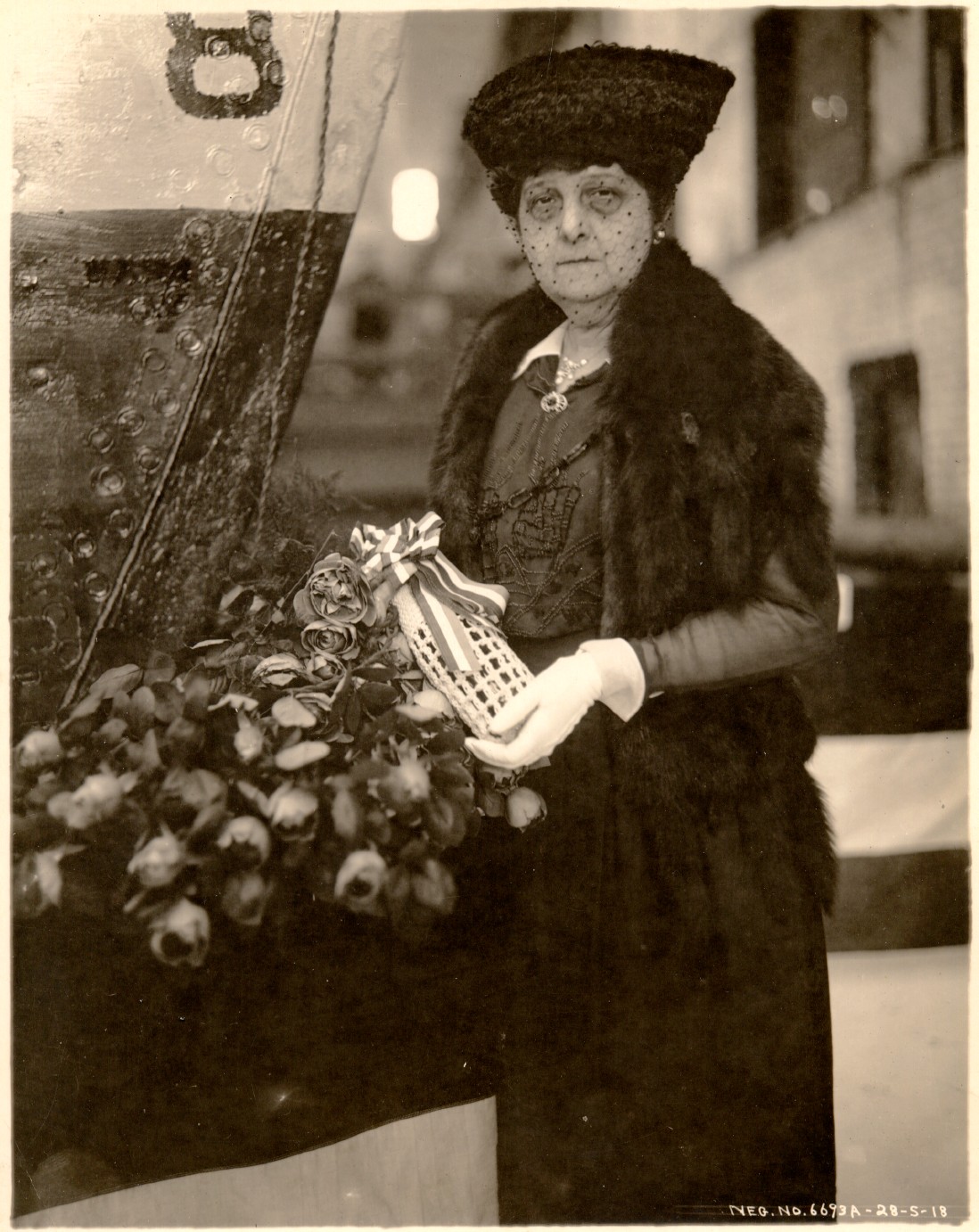
Ladies Who Launch

Ship Christening Photographs from Delaware Valley Shipyards

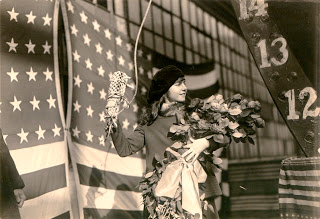
Ship launching ceremonies have been recorded as long ago as 3,000 B. C. Although modern ceremonies no longer include such ancient customs as animal sacrifice to the gods, the sentiment behind them is the same as in ages past: to officially name the ship and bless it on its voyages.
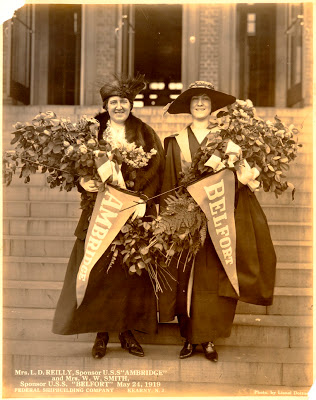
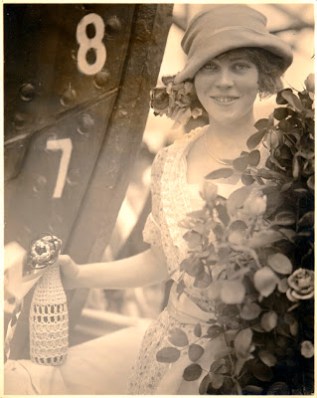
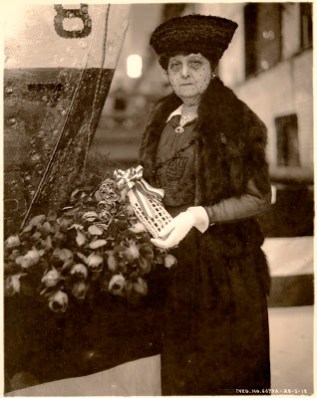
In America, women became the preferred sponsors of ships around the 1840s, charged with breaking a bottle of spirits over the bow. Champagne eventually became the libation of choice for its effervescence.
Local shipyards documented their ceremonies with photographs of the participants, leaving us a record not only of the massive machinery they produced, but also of the human ritual that made an appeal to forces beyond mere technology.
USS Sonoma, 1912
Sinclair Oil Company tanker, c. 1921
SS Eurana, 1921
USS Reuben James, 1919
USS Twiggs, 1918

Ladies Who Launch

Armenian women

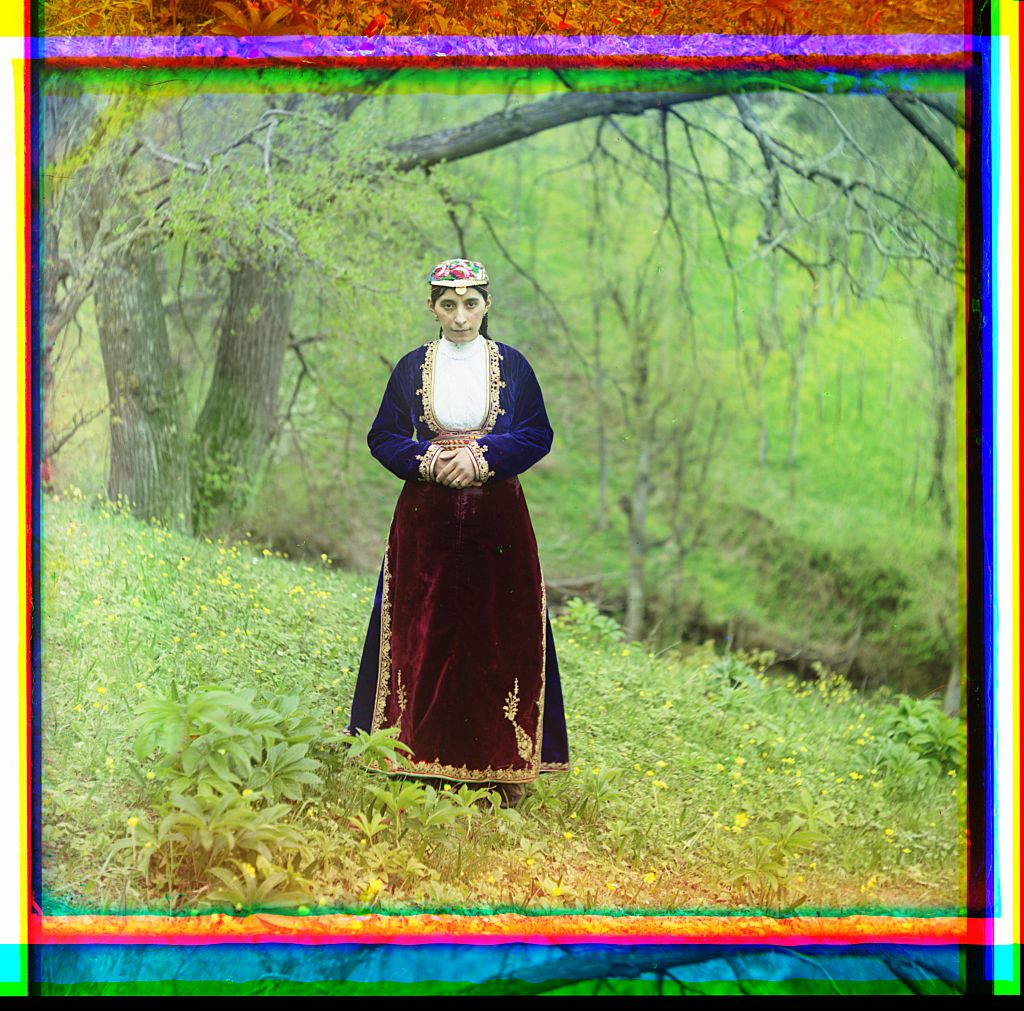
Armenian woman in national costume, Artvin [between 1905 and 1915]
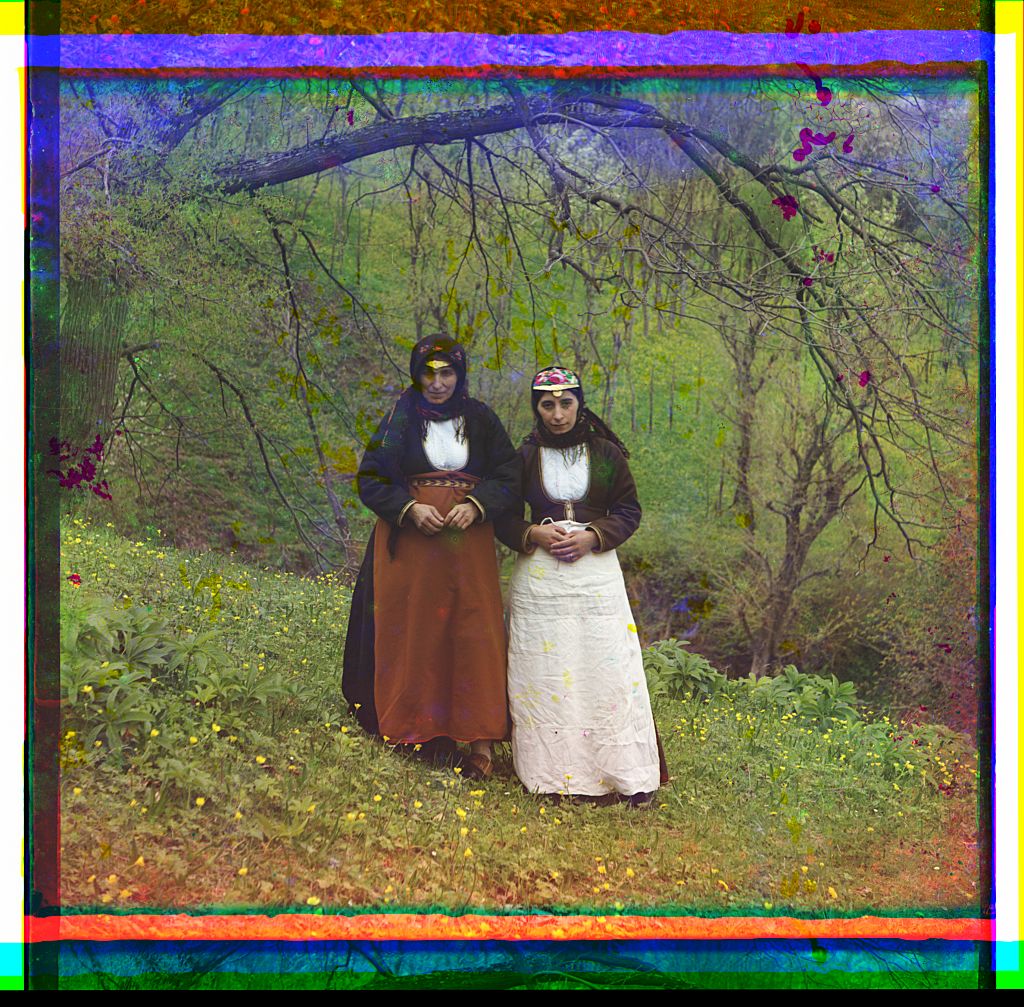
Armenian women (Catholics) in customary dress, Artvin [between 1905 and 1915]
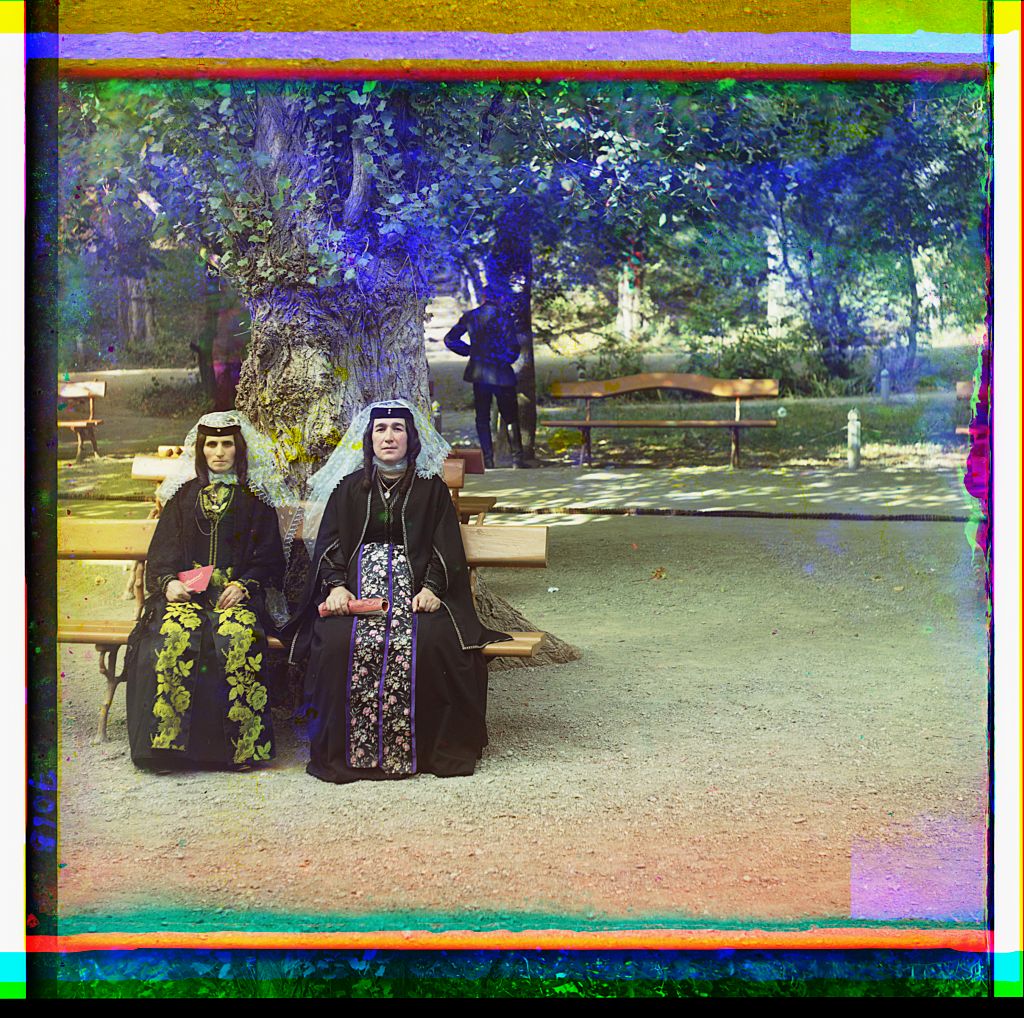
Armenian women in holiday attire, Artvin [between 1905 and 1915]

Photographer to the Tsar: Sergei Mikhailovich Prokudin-Gorskii

Portrait of Prokudin-GorskiiThe photographs of Sergei Mikhailovich Prokudin-Gorskii (1863-1944) offer a vivid portrait of a lost world–the Russian Empire on the eve of World War I and the coming revolution. His subjects ranged from the medieval churches and monasteries of old Russia, to the railroads and factories of an emerging industrial power, to the daily life and work of Russia’s diverse population. 

In the early 1900s Prokudin-Gorskii formulated an ambitious plan for a photographic survey of the Russian Empire that won the support of Tsar Nicholas II. Between 1909-1912, and again in 1915, he completed surveys of eleven regions, traveling in a specially equipped railroad car provided by the Ministry of Transportation.

Prokudin-Gorskii left Russia in 1918, going first to Norway and England before settling in France. By then, the tsar and his family had been murdered and the empire that Prokudin-Gorskii so carefully documented had been destroyed. His unique images of Russia on the eve of revolution–recorded on glass plates–were purchased by the Library of Congress in 1948 from his heirs. For this exhibition, the glass plates have been scanned and, through an innovative process known as digichromatography, brilliant color images have been produced. This exhibition features a sampling of Prokudin-Gorskii’s historic images produced through the new process; the digital technology that makes these superior color prints possible; and celebrates the fact that for the first time many of these wonderful images are available to the public.

Born in Murom, Vladimir Province, Russia (originally believed to be St. Petersburg) in 1863 and educated as a chemist, Prokudin-Gorskii devoted his career to the advancement of photography. He studied with renowned scientists in St. Petersburg, Berlin, and Paris. His own original research yielded patents for producing color film slides and for projecting color motion pictures. Around 1907 Prokudin-Gorskii envisioned and formulated a plan to use the emerging technological advancements that had been made in color photography to systematically document the Russian Empire. Through such an ambitious project, his ultimate goal was to educate the schoolchildren of Russia with his “optical color projections” of the vast and diverse history, culture, and modernization of the empire. Outfitted with a specially equipped railroad car darkroom provided by Tsar Nicholas II, and in possession of two permits that granted him access to restricted areas and cooperation from the empire’s bureaucracy, Prokudin-Gorskii documented the Russian Empire around 1907 through 1915. He conducted many illustrated lectures of his work. Prokudin-Gorskii left Russia in 1918, after the Russian Revolution, and eventually settled in Paris, where he died in 1944.
The Empire That Was Russia

About the Prokudin-Gorskii Collection at The Library of Congress

The Sergei Mikhailovich Prokudin-Gorskii Collection features color photographic surveys of the vast Russian Empire made between ca. 1905 and 1915. Frequent subjects among the 2,607 distinct images include people, religious architecture, historic sites, industry and agriculture, public works construction, scenes along water and railway transportation routes, and views of villages and cities. An active photographer and scientist, Prokudin-Gorskii (1863-1944) undertook most of his ambitious color documentary project from 1909 to 1915. The Library of Congress purchased the collection from the photographer’s sons in 1948.  
Prokudin-Gorskii Collection

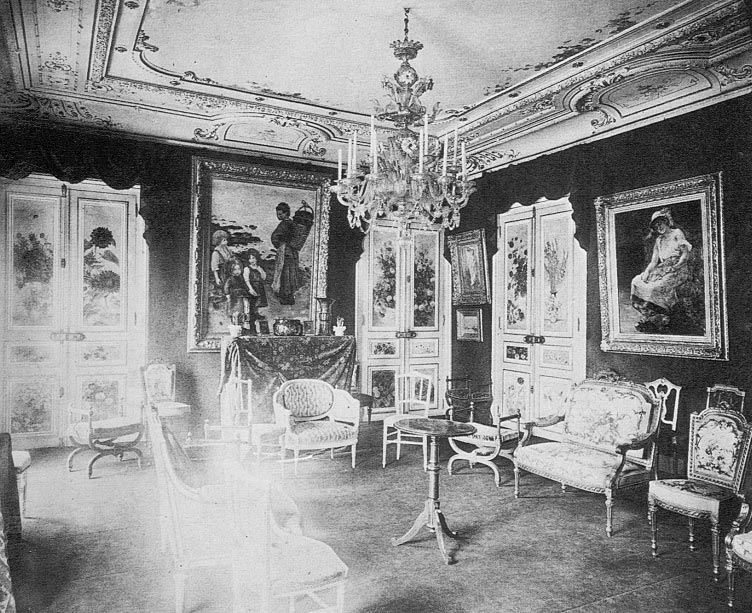
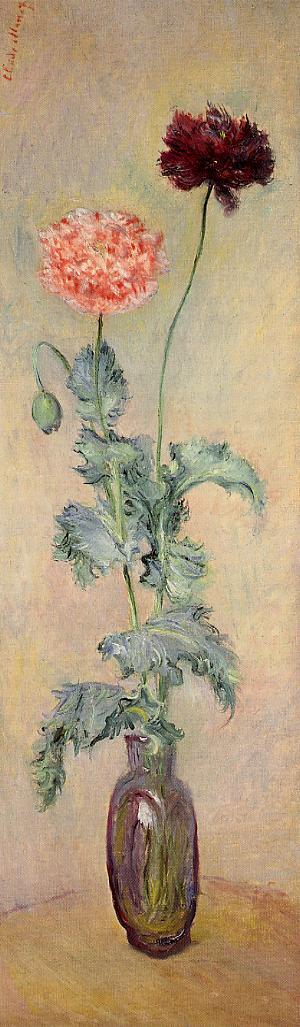
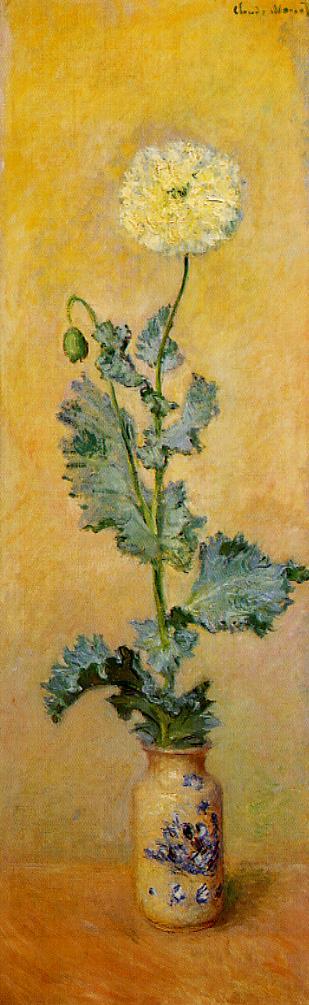
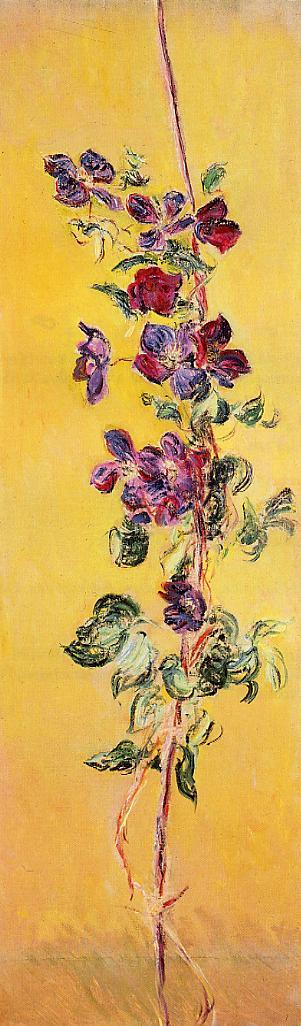
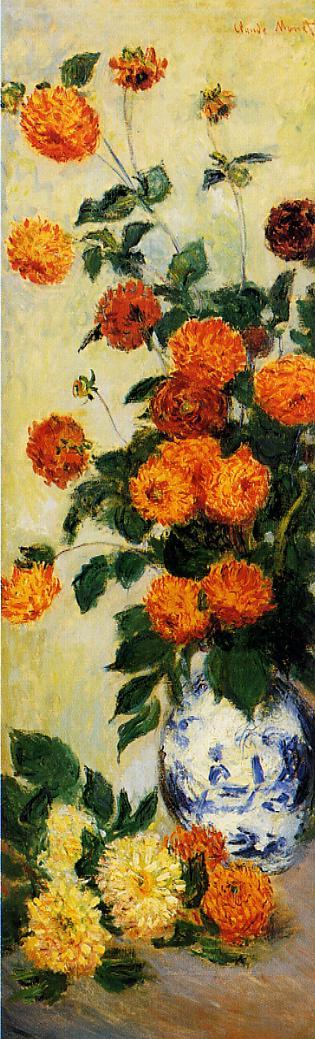
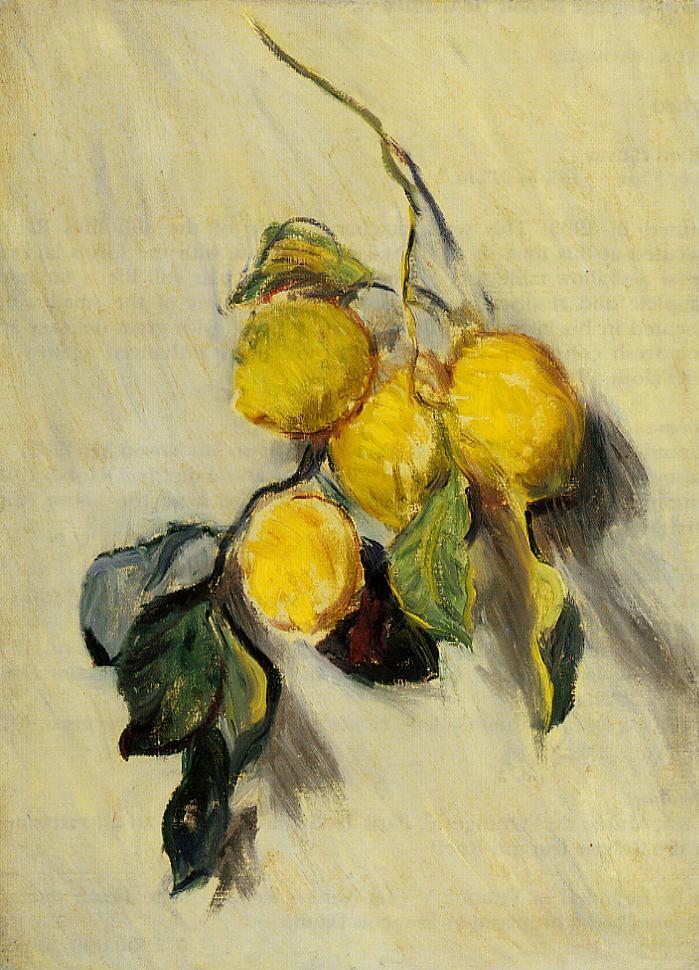
Décoration de M. Claude Monet

[graphic][merged small][merged small]
“What I need most of all are flowers, always, always”

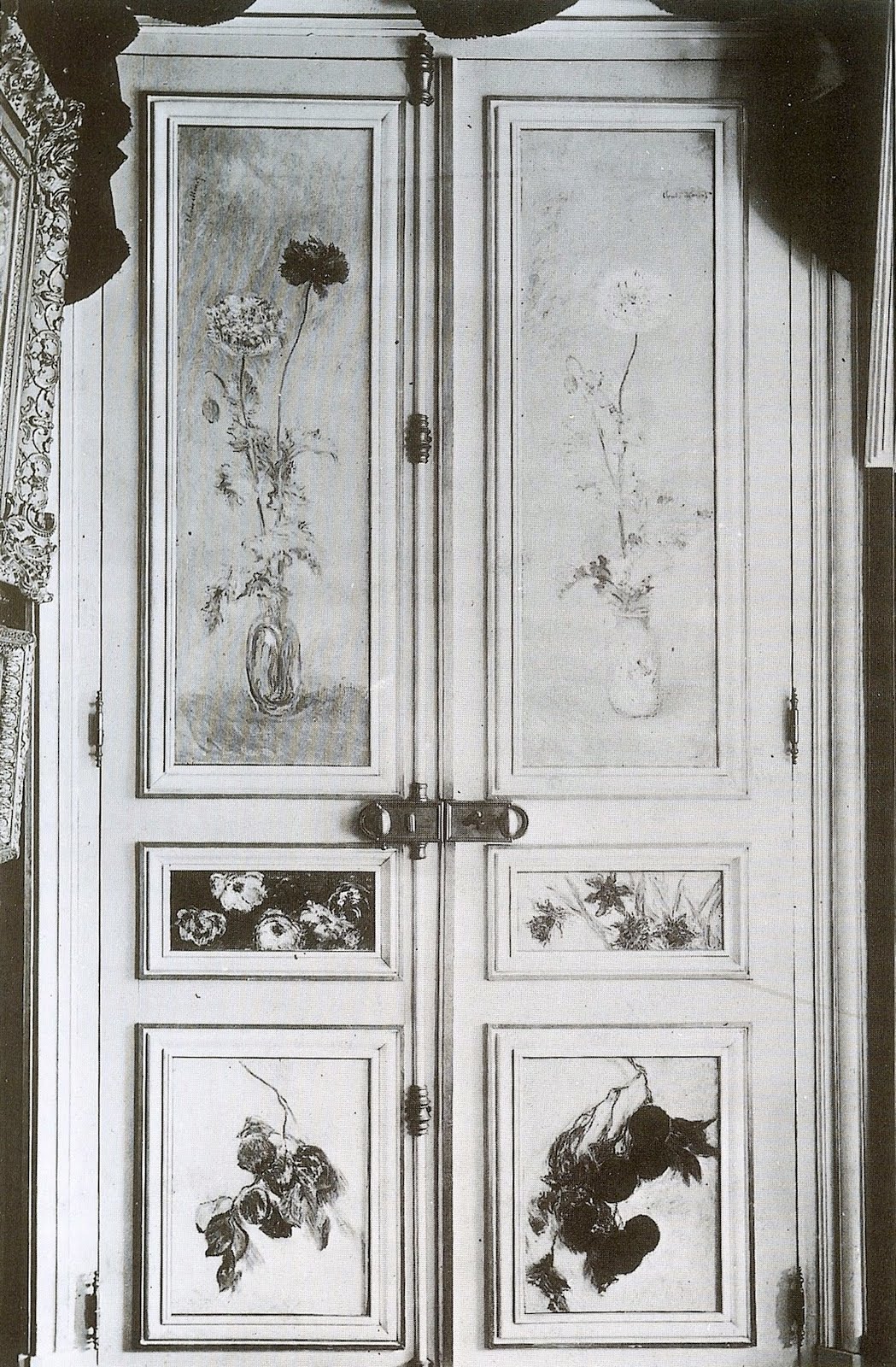
[The scholar Paul Hayes Tucker has described the commission as “one of the artist’s major preoccupations between 1882 and 1885” and the paintings as “charming, lusciously painted, and often quite novel” (Claude Monet: Life and Art, New Haven, 1995, p. 122). Thirty-six of the paintings, including twenty-nine flower still-lifes and seven images of fruit, were hung in 1885 on six double doors in Durand-Ruel’s large drawing-room. ] Impressionist and Modern Art

[graphic]
On loin du tableau de M. Puvis de Chavannes, la paix froide d’une rue de village sous la neige, par M. Pissarro. La bise a fouetté la neige qui s’amoncelle dans des angles; aux endroits où sa violente caresse a fait rage, le sol est dénudé. Les maisons, qui ne sont pas encore alourdies par l’épaisseur des couches, ont une blancheur pimpante sur le ciel sombre.
Hâtivement, des gens circulent en des attitudes transies. Le ton verdâtre des portes, des volets, accroît la sensation de froidure.
Puis, une grande toile de M. Renoir.

Drawing room of Durand-Ruels’s apartment, 35 rue de Rome, showing doors painted by Monet

Une femme, portant sur les épaules une hotte d’osier, va lentement vers la mer, dont la nappe immense forme le fond du tableau et qu’on sent, par delà le cadre, s’étaler à l’infini. Elle tourne la tête pour regarder des enfants, qu’elle a laissés derrière elle. Cette torsion entraîne une évolution correspondante du buste sur les hanches et ces deux mouvements, fort logiquement associés, sont d’une souplesse si vivante, d’une si éloquente vérité que, sous les hardes, on devine les sinuosités du flanc. La flexion dû cou se dessine en plis gras dans l’embonpoint des chairs. Un mince ruban bleu circuite dans la chevelure châtain roux et la limpidité de grands yeux pers pacifie l’éblouissante carnation du visage. Les détails de l’accoutrement, corsage brun, tablier bleu vert, jupe à reflets violacés, peints à larges touches, sont d’un fastueux éclat. Des tignasses d’un blond ardent et soyeux coiffent les figures poupines de trois enfants dont les yeux sont de bleues clartés. Pour chacun, l’or des cheveux, l’incarnat des joues, le bleu du regard, le rouge-cerise des lèvres sont associés en valeurs délicates et justes. Au blond chaud de la première petite fille correspond un vermillon plus vif, un bleu plus foncé. Les trois valeurs décroissent simultanément et s’adoucissent chez la seconde. Enfin, la toison du mince garçonnet casque de chanvre fin les joues rose tendre où s’alanguit un regard glauque.

La fraîcheur de la vision, l’instinctive compréhension de la beauté des lignes se complètent par une très grande science des harmonies et des rapports de tons. Le sentiment de l’œuvre est, en outre, exprimé par une simplicité touchante de groupement et d’attitudes : l’aînée des petites filles donne la main ù sa mignonne sœurette, avec un air d’attentive protection. Son autre main, elle l’emprisonne câlinement entre son épaule et sa figure inclinée en une pose de gêne naïve. Les frisottis et les boucles d’or encadrent de leur mobilité soyeuse la fraîcheur des joues, l’ambre des cous nus. Les membres replets ont les libres souplesses de l’enfance. De quel chatoyant éclat resplendissent ces hardes de misère : pour l’une des petites filles, c’est un jupon rouge, pour l’autre un caraco aux vieux tons cramoisis, une robe d’un bleu vif radoubée vers le bas d’étoffe à carreaux pourpres et violâtres.

Ils se promènent sur la grève parsemée de blocs, de touffes de goémon, de souples algues et de varechs. Le flot ascendant bientôt y apportera son écumante caresse. Au loin, les vagues battent leur cadence et l’on perçoit le balancement des houles, l’infini des étendues. Des voiles blanches, qu’on sent mobiles et légères sous le vent du large, évoluent en l’immensité bleue de la mer dont la grandeur incite aux mélancolies. 

Pour compléter la fête de couleurs qui éjouit son salon, M. Durand-Ruel a fait à cette peinture un cadre digne d’elle : les panneaux des portes ont été décorés par M. Claude Monet. Au lieu de monotones boiseries blanches qui couperaient de silences l’allégresse des symphonies, ce sont des fleurs aux pétales diaprés, des grappes de fruits d’or, des corbeilles où, parmi des verdures, l’éclat velouté des corolles luit fastueusement. Les trois saisons efflorescentes, le printemps, l’été, l’automne, mêlent leur grâce jeune, leur chaleur, leur chaude mélancolie.

Et comme si ce n’était pas assez de l’opulent éclat de fleurs isolées surgissant de terre, M. Claude Monet associe en bouquets d’une polychromie harmonieuse la splendeur d’ombelles, de thyrses détachés de leur tige et placés dans des vases d’un savoureux émail. La joie des efflorescences spontanées est accrue par la grâce de pimpantes unions de couleurs.

Les disques fauves et citrins des soleils fulgurent au centre de leur verte auréole lancéolée; campanules graciles, aux tons pâles, émergent de claires folioles; anémones, violettes, pourpres ou ardemment jaspées, narcisses entr’ouvrant leur calice jaune, chantent dans des touffes de verdure. La neige des reines marguerites et des azalées rosit tendrement. De vases à l’émail mat surgit une hampe qui, entre des feuilles arrondies en volutes, dresse haut, sur fond crémeux, les efflorescences roses, grenat et vieil ivoire de larges pavots. Puis, à nouveau, resplendit l’éclat velouté des narcisses et des anémones, et l’or ardent de six lourdes oranges s’associe harmonieusement à l’ombre bleue qu’elles portent sur le panneau clair, tandis que des citrons teintés de vert appendent entre leurs feuilles luisantes et recroquevillées. La candeur des dahlias, le panache bigarré des glaïeuls se mêlent aux diaprures des tulipes, à la pourpre des pêches.

L’art impressionniste d’après la collection privée de M. Durand-Ruel, 1892 ~ Georges Lecomte

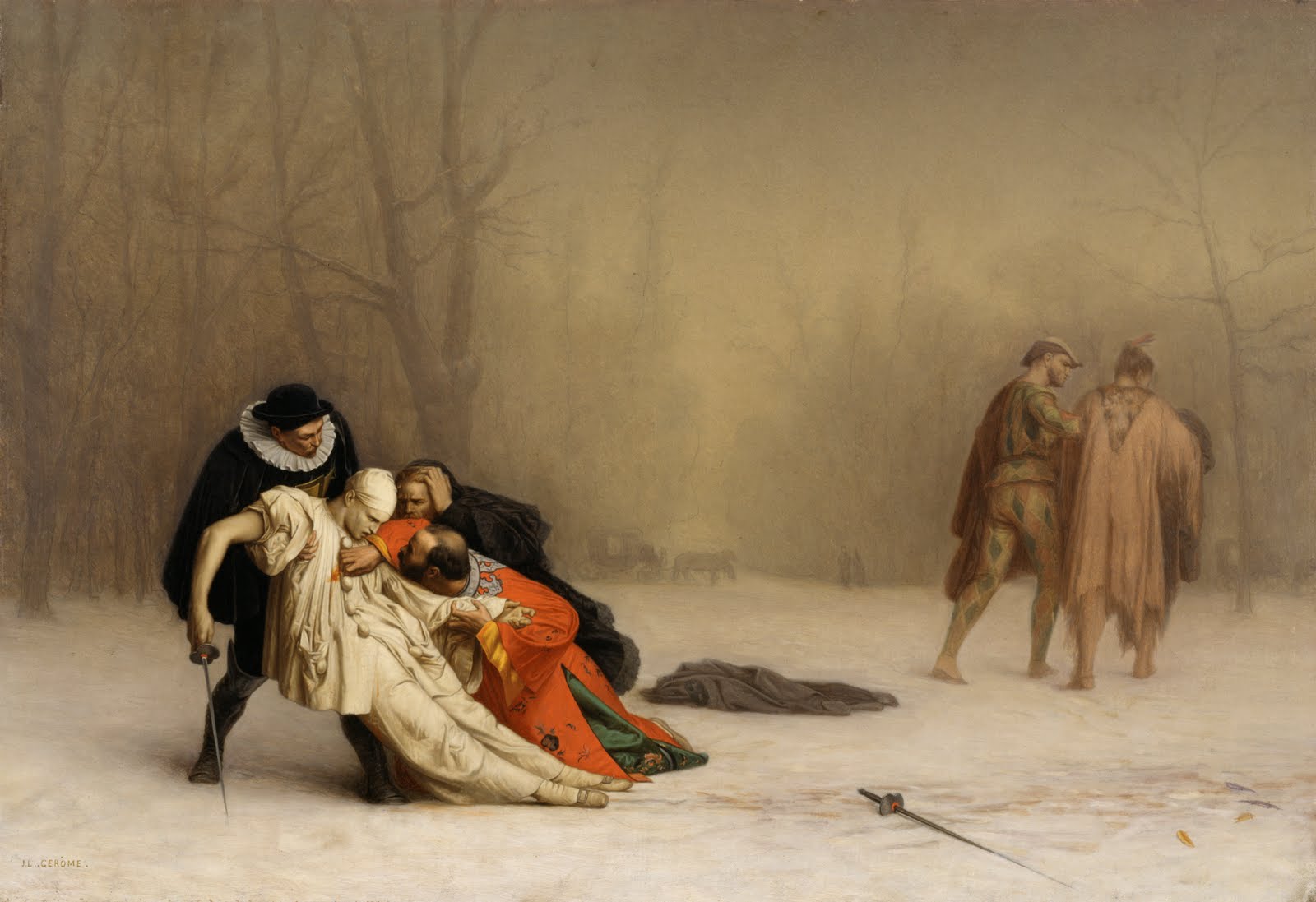
The Duel After the Masquerade

Jean-Léon Gérôme, 1857-1859
Walters Art Museum, Baltimore, Maryland 

One is always certain of finding a large crowd standing before Gérôme ‘s Duel. It is the popular success of the Salon; and, as the picture is not large, one has to wait for his turn to see it. This popularity, I hasten to remark, is not due to any method that is foreign to art. Nourished by the severest studies and naturally endowed with an exceptionally pure taste, the young master would scorn a triumph gained at such a price. The strangeness of the subject attracts the public and the merit of the execution holds the connoisseur. It would be almost trite to say that the forms and costumes of modern life are not attractive to the painter. Artists are so convinced of this fact, that they prefer to borrow the subjects of their compositions. It is only in the last extremity, in the portrait for instance, that they resign themselves to the fashions of the day, and even then they; alter them as much as possible by the introduction of mantles, burnous shawls, scarfs and other accessories having some special character. Even in genre pictures they stop at the last century with the picturesque material of the Pyrenees, Brittany, Aragon and Algeria. The number of canvases that might be used in future ages as documents for our interiors, furniture, costumes, types and modes of living, is extremely limited; and, unfortunately, almost always of mediocre execution. It would seem that the art of to-day is affected by farsightedness, and can only discern objects belonging to remote and bygone ages: it sees nothing in what is taking place. Aside from portraits and some official pictures few canvases depict the present period. We must, therefore, thank M. Gérôme, the painter of Grecian elegance, the Pompeian archaeologist, the expert in exotic and primitive types, for having selected a subject from our modern life: he risks much in handling a scene of which every one is, or thinks he is, capable of judging, and in adapting new matter, new physiognomies and new attire to the exigencies of art. What would have been the result if he had painted a duel fought in black coats ?
The idea of the Duel after the Masquerade is ingenious, thrilling, romantic; it impresses both eye and mind by the antithesis of the action and the actors—terrible action and grotesque actors, a duel of Pierrots and Harlequins elevated to a tragic height, without avoiding a single comic detail. Some young men, probably overheated with wine, have quarrelled on the steps of the Opera, or in some cabinet in the Maison d’Or, on account of a push with an elbow, a too-cutting sarcasm, a slight fit of jealousy, or for any other trifling reason. One of those busy bodies, who are always ready to display courage with the blood of other people, has procured swords, and without taking time to change their costumes the merrymakers have gone in two carriages to the Bois de Boulogne, where the grey dawn is just beginning to open its heavy eyes upon the morning mist through which skeletons of slender trees are dimly seen. The snow has covered the earth with a white winding-sheet that has been spread out during the night as if to receive the dead. Cold and silence and solitude have kept watch so that nothing should disturb the duellists; and, indeed, they have succeeded only too well in this unfortunate affair. Foot-prints in the snow show the place of the struggle: one of the duellists— Pierrot—has been wounded and could repeat Mercutio’s funereal pun: ” Ask me to-morrow and you shall find me a grave man! ” The red stains of blood are spreading over the cassock with the big buttons, the legs, which life is leaving and over which the will has no longer any control, lie inert upon the snow, and even in the loose trousers seem already in a shroud. Were it not for the support of a friend, dressed as a valet of the Comedie-Frangaise, he would lie prostrate. The pallor of death appears through the paint that has been partly wiped from the face of poor Pierrot; his dull eye already stares into vacancy and on the drawn lips his expiring sigh leaves a rosy foam.

The sleeve of the right arm, turned up above the elbow for the combat, exposes the quivering flesh and weak muscles of the young debauchee, who still holds in his contracted fingers the sword that has so badly defended its master.

Another person, dressed in the costume of a Chinese mandarin, in red and green, covered with flowers of fantastic design, has dropped upon his knees and is examining with terrible anxiety the blood-stained breast of his victim. A little in the rear of this group a man in a black domino is lifting his hands with a gesture of despair, as if about to tear his hair at the deplorable result of this silly quarrel.

Mohican. Harlequin, in preparing for the fight, has thrown on the snow his black mask and his cloak; his bloodstained sword lies on the ground and these significant accessories skilfully connect the two parts of the composition; the Harlequin seems to be excitedly telling the Indian, whose arm he is grasping, that his opponent did not parry, that he ran himself upon the sword and other explanations; and his companion bends his head as if to ask ” What can we do about it ?” In the background the black silhouette of the carriage of the wounded man assumes in the fog the melancholy look of a hearse, and the drivers, who are whispering together, seem like undertakers.

Surely this is odd and sinister, a strange mixture of wild and romantic fancy with philosophical daring. To mix up the Carnival and Death, to change the wooden sword of Harlequin into a real sword; to transform the spots of wine into bloodstains, to surround the death agony with a circle of masks and to ask of Harlequin—”what hast thou done with thy brother Pierrot?”—all this would make the most intrepid pause. M. Gérôme  has performed this difficult, not to say impossible, task with an icy severity, a pitiless sangfroid, an irony superior to fate. He has omitted nothing: there is the crimson hole that a drop of warm blood has melted in the snow; there are the spangles glittering on the lozenges of the murderer’s coat; there is the bear’s claw on the collar of the Indian; there is the formless and battered mask; and the cold death sweat that dissolves the paint on the face of the dying man.

All this is rendered with a clean, firm, delicate and sure touch which keeps everything perfectly united, and a tone that is sober, neutral and wintry, so to speak, created by the livid shuddering pallor of the chief figure in the midst of which the brilliant vivid hues of the costumes produce a sinister discord. The face of Pierrot, who is sobered by the approach of Death and who is passing from the dizzy whirl of a masked ball to the silence of the tomb, is a creation of powerful orginality. No grimace, no melodrama, no straining after effect. There is something here as striking and strong as a page of Merimeé. The impression produced is all the more profound because the narrator appears indifferent.

M. Gérôme, like a careful artist, does not leave his frames to the fancy of the gilder. He has designed the one for this picture: on the top are two masks—tragic and comic— separated by a fool’s bauble. Does not Folly dance between Joy and Sorrow, causing one to be born of the other ?   

Théophile Gautier

Charles Jones (1866-1959)

Mildred Grant

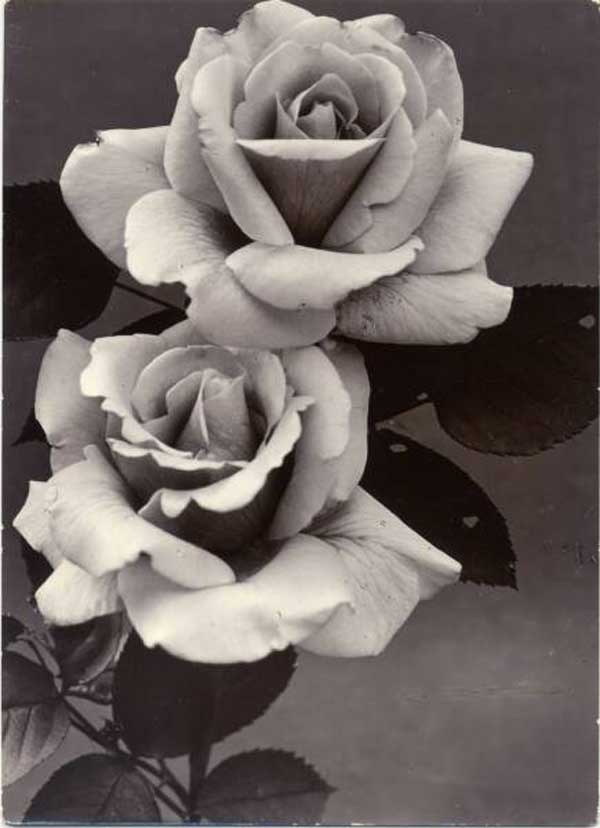
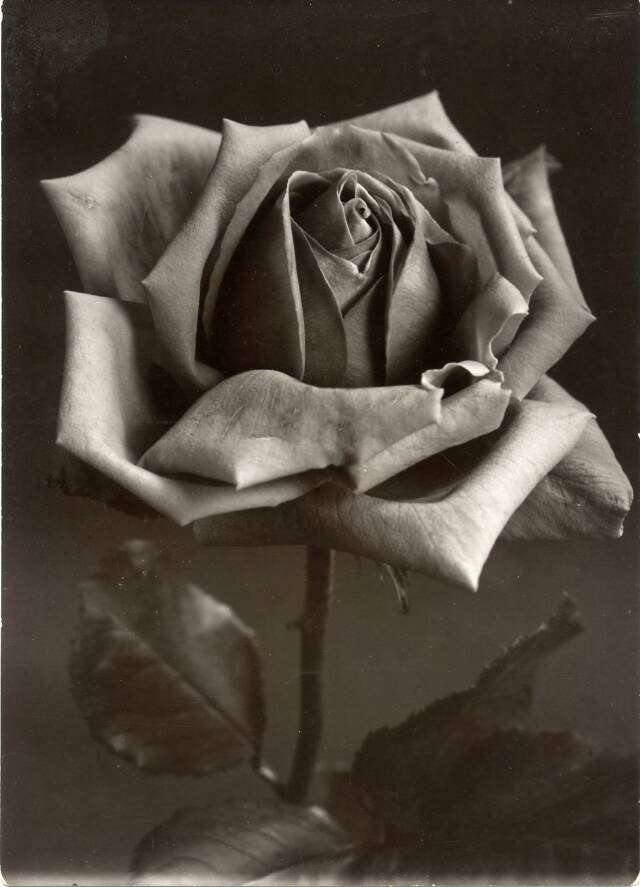
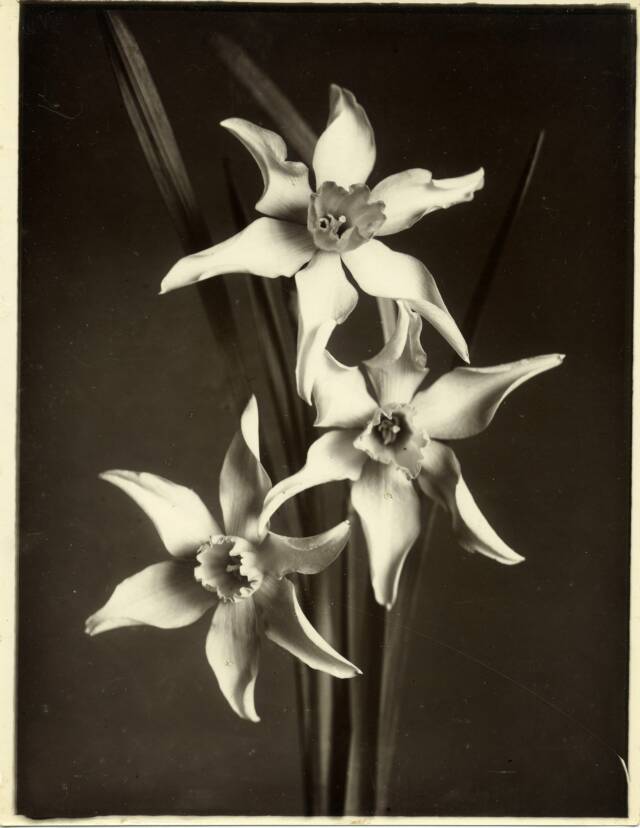
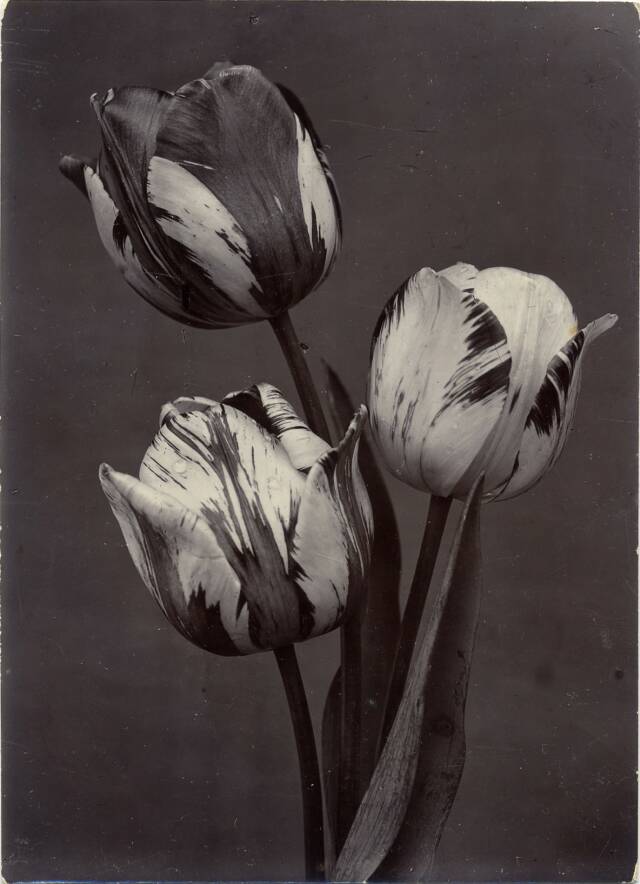
Charles Jones was an English gardener working one hundred years ago.  In this profession he was renowned enough to have been featured in a glowing 1905 aritcle in The Gardener’s Chronicle about his place of employment, Ote Hall, Sussex.  It stated in part, “The present gardener, Charles Jones, has had a large share in the modeling of the gardens as they now appear for on all sides can be seen evidences of his work in the making of flowerbeds and borders and in the planting of fruit trees, etc…”  What no one realized then or for another seventy-five years was that this same gardener was also a photographer of uncommon sensitivity who chose as his subject matter the very produce and plants which he grew.

Flowers have always appealed to artists over the centuries and it is natural that Jones woudl have been attracted to them.  However, it is in his treatment of vegetables and fruits, the easily overlooked ingredients of our kitchen, that Jones transformed the ordinary into the extraordinary.
The strength of Jones’s photographs is in the subtlety of his arrangement, llighting and focus.  They do not have the decorative artsiness of the Edwardian age in which they were created.  Instead, his works anticipate the modernism of painters like Charles Demuth and Giorgio Morandi and photographers  such as Edward Weston and Karl Blossfeldt without the attendant formalism of twentieth century aesthetics.  The photographs of Charles Jones have a simplicity, like Shaker furniture, that is spare and direct.
In the Bermondsey antique market in London in 1981, the author and photographic collector Sean Sexton purchased a trunk that contained several hundred turn-of-the-century photographs.  Two-thirds of the images were of vegetables with the remaining third evenly divided between  between fruits and flowers.  The photographs were fastidiously annotated with the name of each plant followed by the initials C.J., although a few had the full name of the photographer…Charles Jones.  Meticulously printed gold-toned silver prints from glass plate negatives, the majority of the photographs were unique with few duplicates.  Here, three-quarters of a century after the photographs were made and twenty-two years after his death was the first appearance of the artistic work of Charles Jones.
A chance viewing of Sexton discussing the photographs on a television program by Charles Jones’s granddaughter, Shirley Sadler, brought forth his personal history but raised many  questions as answers.  A private and uncommunicative individual, Jones’s activities as a photographer were virtually unknown to his family though Mrs. Sadler remembered her aged grandfather using some discarded glass plate as cloches in his garden…
Robert Flynn Johnson 
Curator in Charge 
Achenbach Foundation for Graphic Arts
Fine Arts Museum of San Francisco

Charles Jones has been the subject of a book by Robert Flynn Johnson and Sean Sexton with a preface by Alice Waters, Plant Kingdoms: The Photographs of Charles Jones (Smithmark Publishers, New York, 1998), and of museum exhibitions at the Fine Arts Museums of San Francisco, California, in 1998, at Le Musée de l’Elysée, Lausanne, Switzerland, in 1999 and the Chicago Botanical Gardens, in 1999.


Charles Jones’ vintage photographs can be found in the collections of the Fine Arts Museums of San Francisco, Achenbach Foundation for Graphic Arts, San Francisco, the Victoria and Albert Museum, London, and the Museum of Fine Arts, Boston.

DAVIS and LANGDALE COMPANY, INC.    

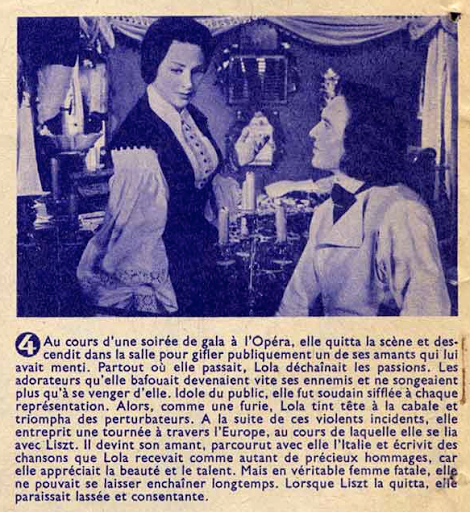
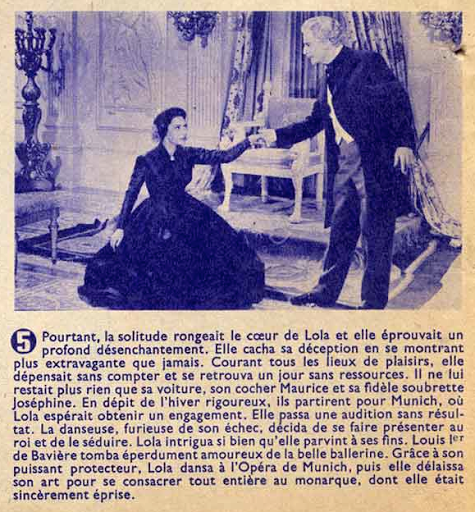
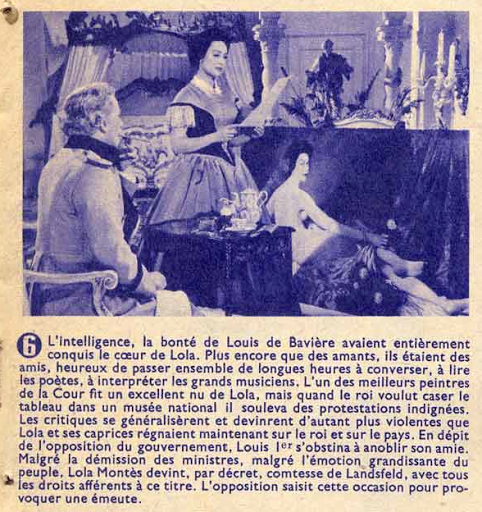
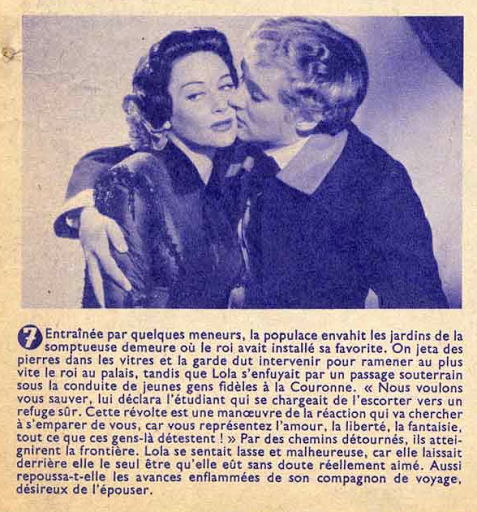
Le Chef-d’œuvre d’ Ophüls

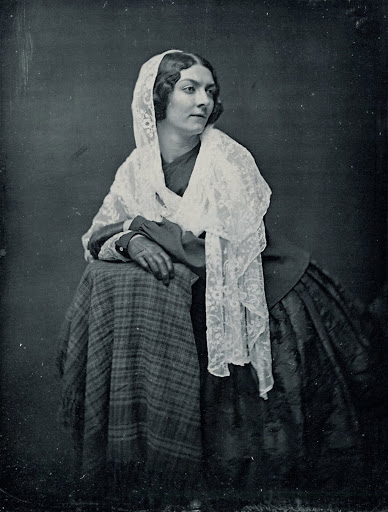
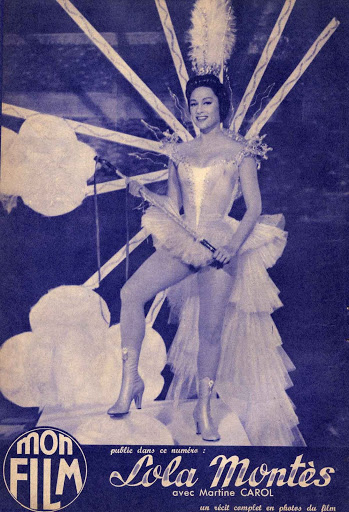
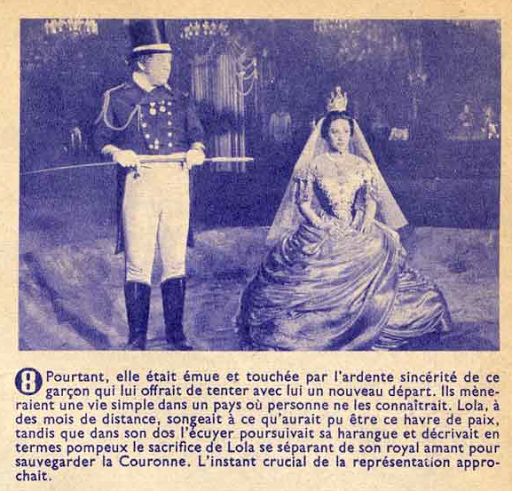
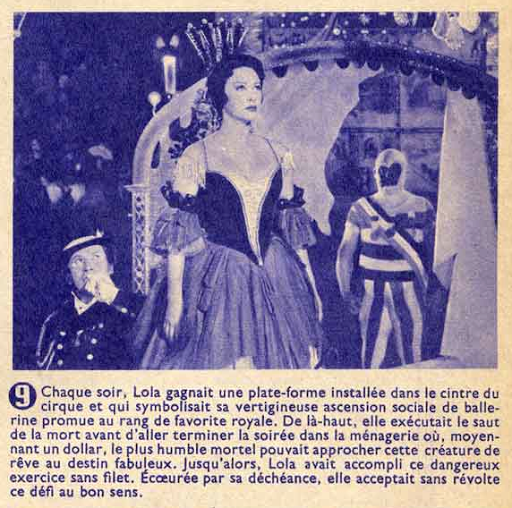
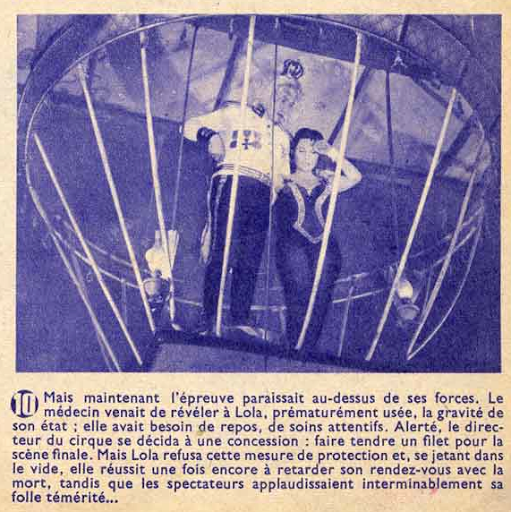
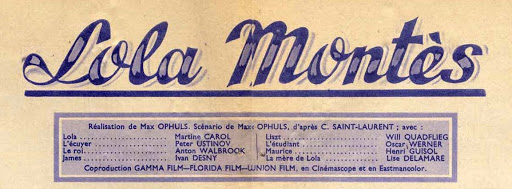
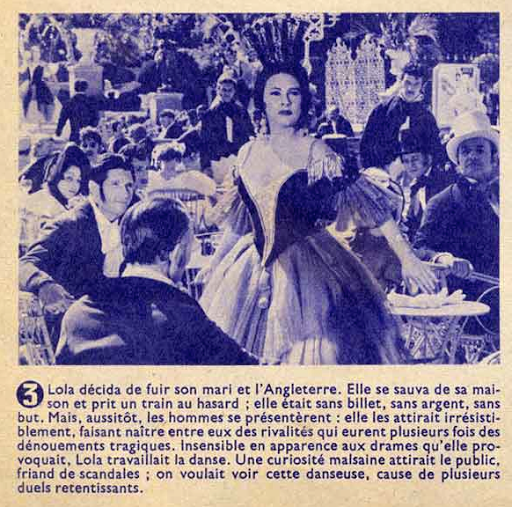
Lola Montès, 1955
Director: Max Ophüls; Screenplay: Max Ophüls, Annette Wademant, based on the [never actually written] novel La Vie Extraordinaire de Lola Montès by Cécil Saint Laurent 

In the 1960s, Andrew Sarris declared unabashedly, Lola Montès is in my unhumble opinion the greatest film of all time.” It seems fitting that the auteur theory’s chief proponent in English-language criticism should fix on this film in particular. For one thing, its director, Max Ophuls, had a somewhat stormy relationship with his producers; and one of the core principles of auteur criticism is that a great director will turn such practical hardships to artistic advantage. Furthermore, Ophuls was the darling of the French critics at Cahiers du cinéma (François Truffaut, Jean-Luc Godard, et al.) who proposed the politique des auteurs in the first place. While Truffaut especially railed against most commercial French films of the 1950s (collectively pilloried as the “Tradition of Quality”), he had nothing but praise for Ophuls. Truffaut wrote, “There are films that demand undivided attention. Lola Montès is one of them.”  Ironically, though, Alan Williams labels the work of Ophuls as the summit of the “Tradition of Quality”, due to its big budgets, production values and stars. 
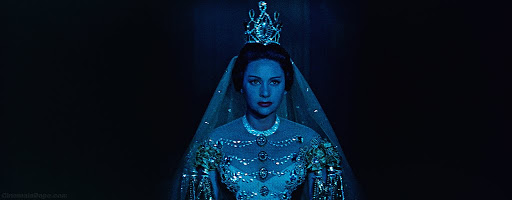
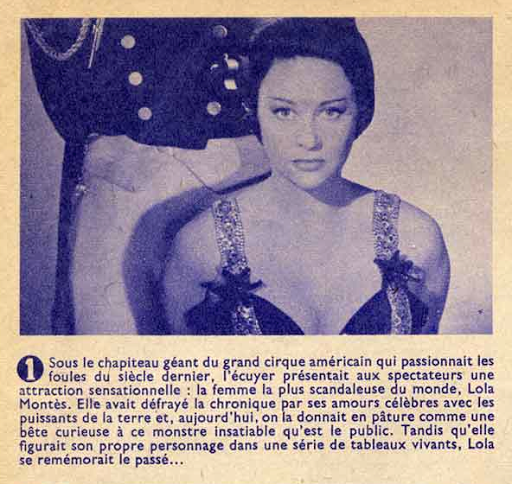
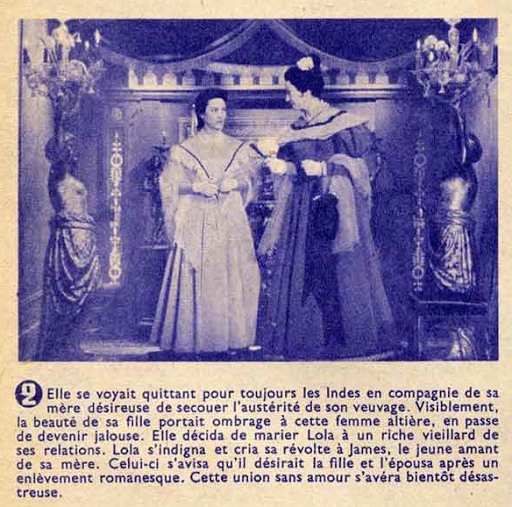
The history of Ophuls’ 1955 swan song is almost as colourful as that of its subject matter, the Irish-born dancer and actress Eliza Rosanna Gilbert (1821–1861), who used the stage name, Lola Montez. Just as there are various, often contradictory accounts of the life of this notorious celebrity mistress – whose lovers included Franz Liszt and King Ludwig I of Bavaria – numerous versions exist of the film itself. What’s more, for decades there were persistent reports of a 140-minute “original version”, which apparently never existed. Despite a recent restoration of the 116-minute German premiere version of the film, Ophuls’ son, Marcel, considers the 110-minute, second French cut (edited with the director’s cooperation) to be definitive, and it is this version that is most commonly screened today.
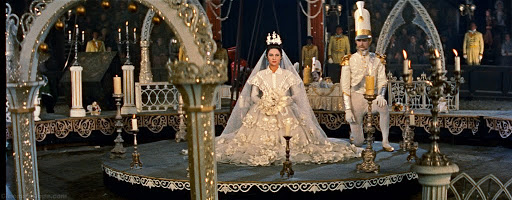
The idea for Lola Montés originated with its production company, Gamma Films. The producers hired best-selling novelist Cecil Saint-Laurent (a nom-de-plume of Jacques Laurent) to write the screenplay. Ultimately, though, Ophuls shot from his own script; but for the sake of name-recognition the producers included the credit, “Based on a Novel by Cecil Saint-Laurent” – despite the fact that no such novel existed. This connection to a literary source, albeit spurious, lent the project an air of prestige befitting the “Tradition of Quality”.


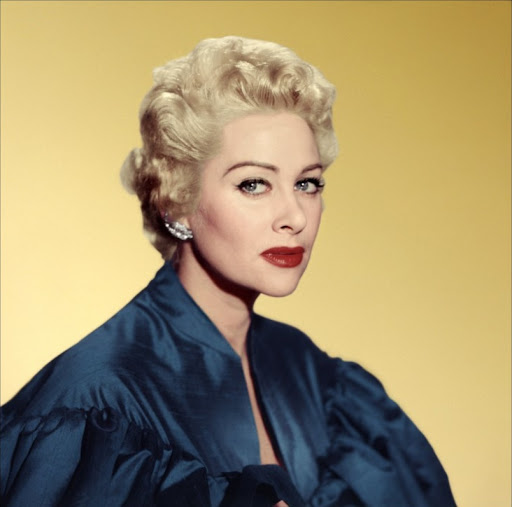
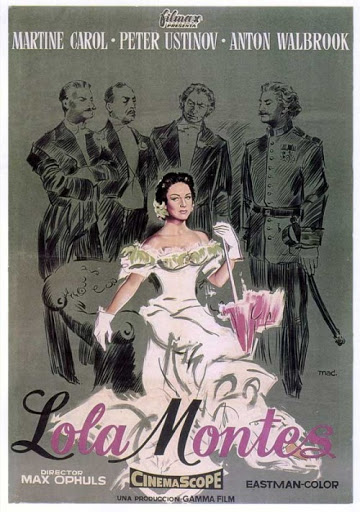
Similarly, the film garnered considerable clout by way of its star power. Once Martine Carol had signed onto the project, her perceived box-office bankability took the film to a new level of financing. The original, 1954 budget of 2 million deutschmarks rose to 8 million (roughly $US2 million) by 1955, making Lola Montés the most expensive European film since the end of World War II.
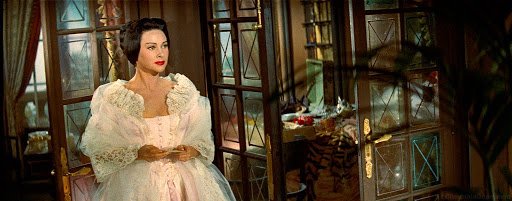
For directing the three versions of the film (French, German and English), Ophuls’ salary was 204,000 deutschmarks, which included a bonus for shooting in CinemaScope. (By comparison, the high-end salary for a director in West Germany in the 1950s was around 100,000 deutschmarks.)  Curiously, Ophuls was not the producers’ first choice as director. Initially they had considered Michael Powell (chiefly because of The Red Shoes, 1948), as well as Martine Carol’s husband, Christian-Jacque. Shooting ran from March to July 1955, mostly in Germany but also in France and Austria. Ophuls edited the three versions in Paris, with three different editors in different cutting rooms. He never wanted a purely French, German or English version, but rather each version was to include a mixture of languages. 
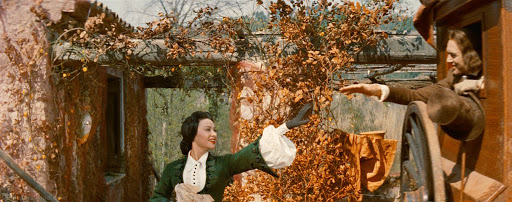
What seems most remarkable about Lola Montès is the film’s striking juxtaposition of realism and high artifice. Champions of a realist film aesthetic, such as André Bazin, valorised techniques like the long take and moving camera – both hallmark’s of Ophuls’ cinematic style – as well as CinemaScope, which the director used here for the first and only time. Camille Taboulay characterises Ophuls as “the master of the melodramatic operetta, scented with quaint perfume, transcended by lyricism and spectacle…. He is an expert of the camera arabesque….”  Truffaut, who praised the film unequivocally, wrote: “If Ophuls were an Italian filmmaker, he might say, ‘I have made a neorealist film’. He has indeed given us a new kind of realism here, even if it is the poetry, above all else, that draws our attention.”
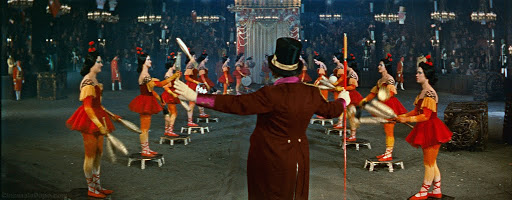
Despite its realist elements, the film achieves an almost unparalleled level of artifice and spectacle, constantly calling attention to its own synthetic construction. This is achieved primarily through the framing device of the circus – which Truffaut describes as “nightmarish and hallucinatory” – with the brilliant Peter Ustinov as our unreliable narrator/ringmaster. Martina Müller points out that Ustinov appears to be addressing the movie audience, not the virtually invisible audience in the arena; and this direct address contributes to an overall Brechtian strategy, much as we find in other Ophuls films, notably La Ronde (1950).
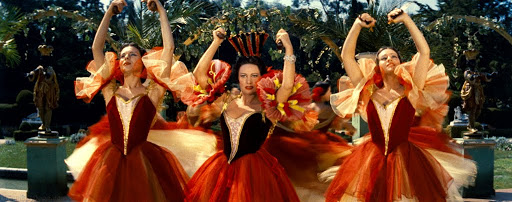
Hinting at this sort of Brechtian distancing, Susan White points out that,


Ophuls has often been called an ironic director because the obvious patterns of camera movements, repetitions of dialogue, and other details seem to imply a consciousness that invites us to distance ourselves from some events, pass judgment on particular characters, or reflect on an abstract “meaning” that is the result of intertextual references to other films, novels, or plays.
This reflexive approach is emphasised in the very first and last shots of the film, as we are brought into and out of the circus by way of a curtained proscenium.
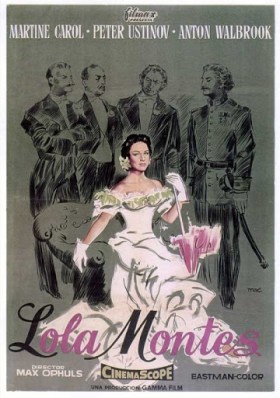
Ultimately, though, Lola Montès is sheer cinematic pleasure, and Ophuls’ inventiveness is evident in every frame. Truffaut notes that CinemaScope is “here used to the maximum of its potential for the first time,” and indeed one would be hard-pressed to find a more unusual deployment of the widescreen process than in Ophuls’ carefully crowded, overwrought framings. It is easy to see why later filmmakers as divergent as Stanley Kubrick and Jacques Demy were so heavily influenced by Ophuls’ work. We might say that, like Kubrick, Ophuls was a true “filmmaker’s filmmaker” – and Lola Montès a true cinephile’s film. © Rodney Hill, March 2006
Senses of Cinema

via jc22h’s photostream
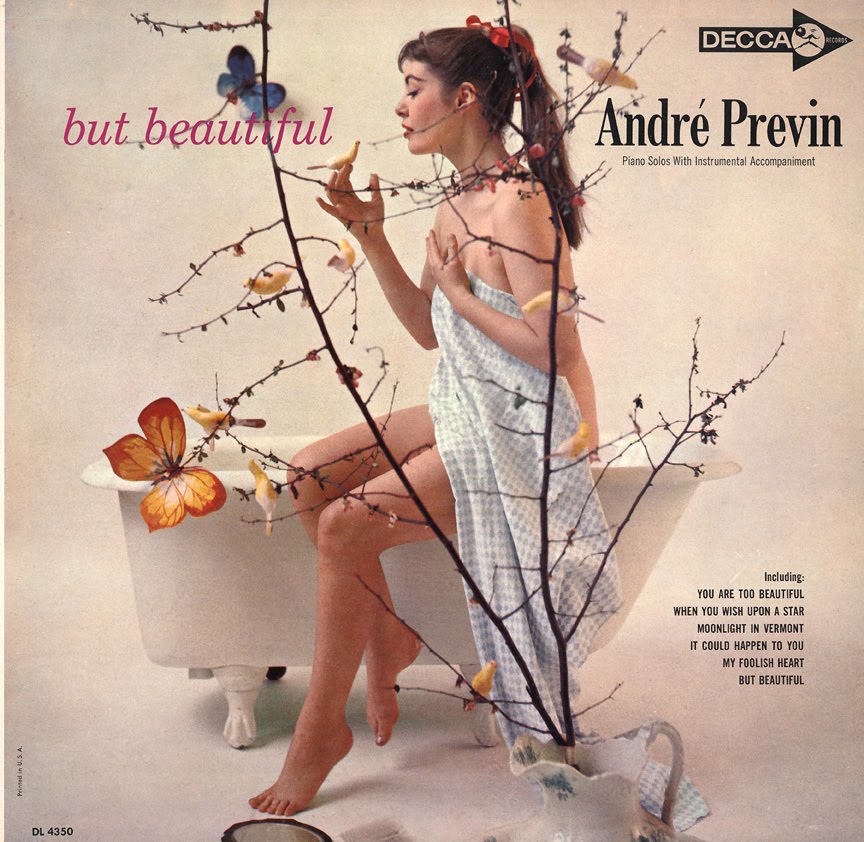
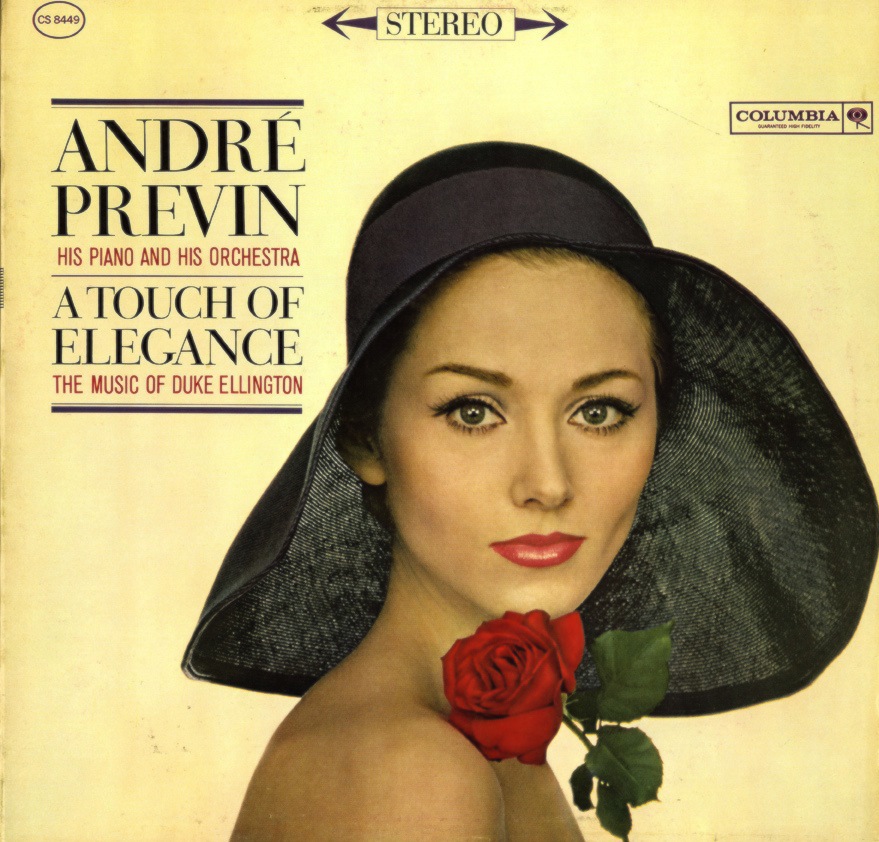
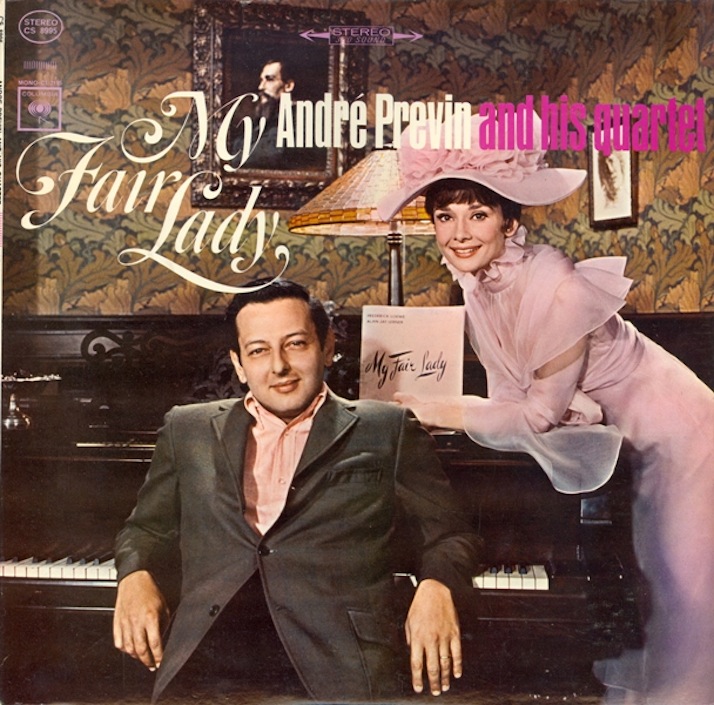
Sir André Previn

German-born American pianist, composer, arranger, and conductor, especially sympathetic to French, Russian, and English music of the 19th and 20th centuries.

Previn’s family fled Nazi persecution and moved to Los Angeles in 1939. While still a teenager he was recognized as a gifted jazz pianist, and he performed various orchestrating and arranging tasks for Metro-Goldwyn-Mayer in the 1940s and then worked under contract with MGM from 1952 to 1960. Working for various studios, he won Academy Awards for his music scores for Gigi (1958), Porgy and Bess (1959), Irma la Douce (1963), and My Fair Lady (1964).
 
In 1951, while stationed in San Francisco with the U.S. Army, Previn began studies in conducting with Pierre Monteux. He made his conducting debut with the St. Louis (Mo.) Symphony in 1963. After serving in turn as principal conductor of the Houston, London, and Pittsburgh symphony orchestras, he worked as musical director of the Los Angeles Philharmonic from 1985 to 1989. He was associated with the Royal Philharmonic (as musical director, 1985–88, and principal conductor, 1988–91) and in 1993 was named conductor laureate of the London Symphony. He appeared in a guest conductor role with major orchestras in Europe and the United States.
 
Previn composed in varied genres throughout his career. His works include Symphony for Strings (1962); concerti for cello (1968), guitar (1971), piano (1985), and violin (2001); orchestral works such as Principals (1980) and Honey and Rue (1992); chamber music, including String Quartet with Soprano (2003); the opera A Streetcar Named Desire (1998; based on the play by Tennessee Williams); other theatrical music; and songs. His many Grammy Awards were in multiple categories: musical shows (1958 and 1959), pop (1959), jazz (1960 and 1961), and classical (several awards from 1973).
Previn has written extensively about music. His books include Music Face to Face (1971), Orchestra (1979), André Previn’s Guide to Music (1983; editor), André Previn’s Guide to the Orchestra (1986), and No Minor Chords: My Early Days in Hollywood (1991).
 

In 1996, Previn was created a Knight of the British Empire, and in 1998 he received a Kennedy Center Honor for lifetime achievement in music.

Encyclopædia Britannica
-=- G2 -=-‘s photostream