 |
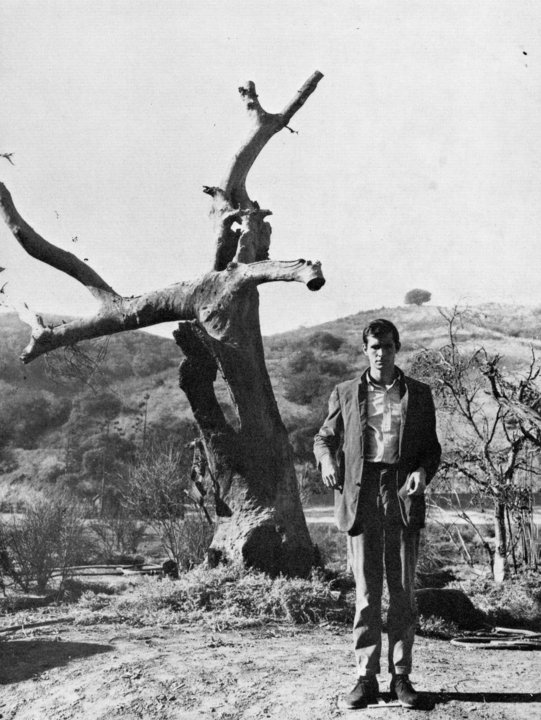
| I have learned more about love, selflessness and human understanding from the people I have met in this great adventure in the world of AIDS than I ever did in the cutthroat, competitive world in which I spent my life. Anthony Perkins |
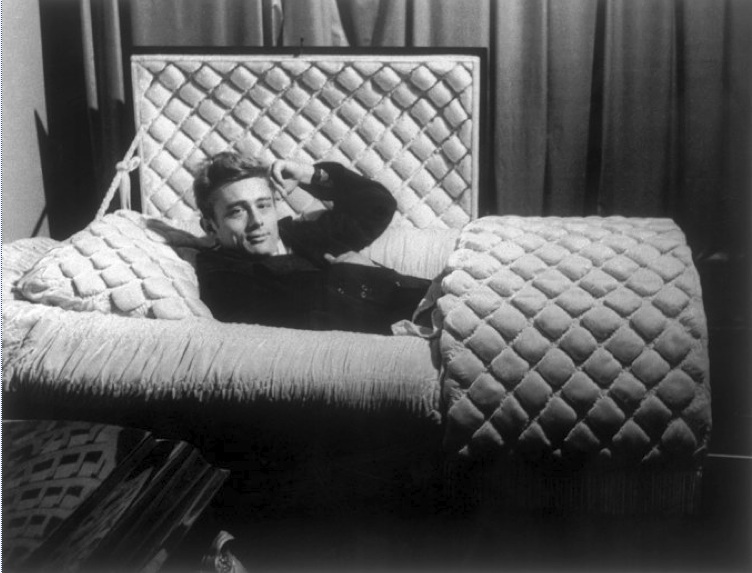
Good morning mister Dean
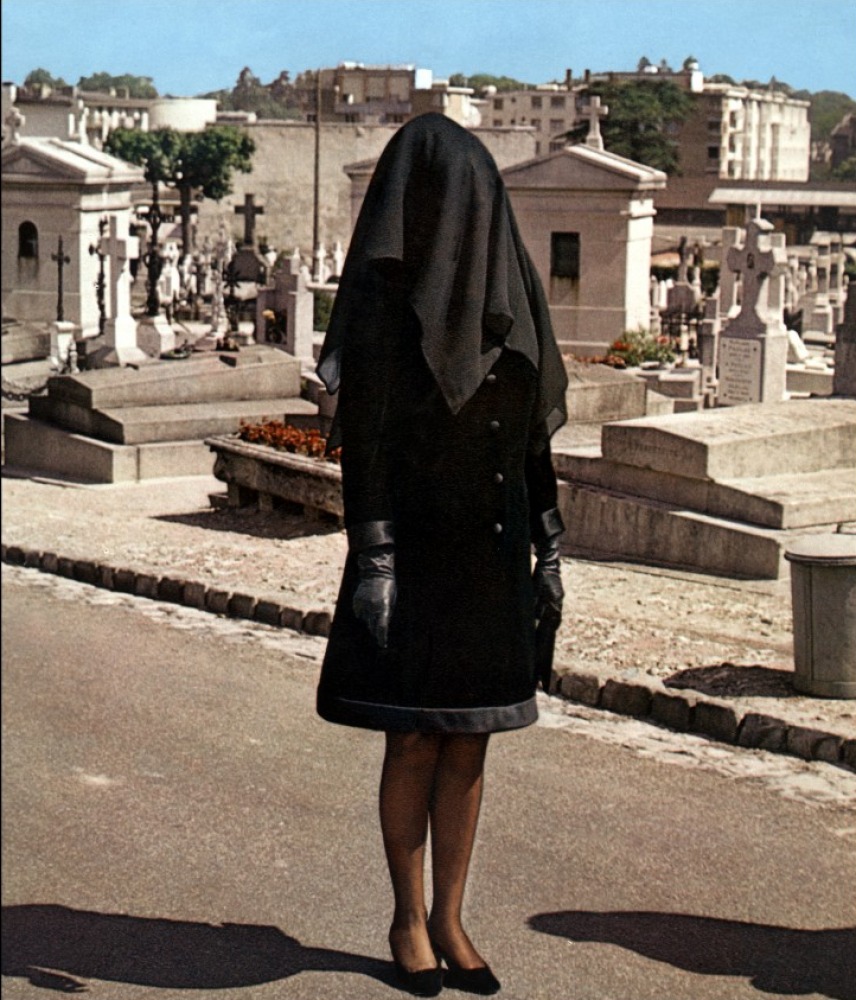
La Mariée était en noir
 |
| Jeanne Moreau
For Ms. Moreau, ”People are great liars, and I love lies, as long as they provoke a transformation of life. Building a sort of incredible image of oneself is both a way of projecting yourself the way you would like to be seen, and it can be, too, a way to protect the real self. It’s a mixture.”
But isn’t that like acting? ”No, acting has nothing to do with that,” Ms. Moreau said. ”If people act because they want to hide something of themselves, then I’m not interested. They should go lie on a couch and see a shrink every week. Acting has nothing to do with personal comfort.’
Orson Welles called her “the greatest actress in the world.” |
Pleine de Mepris

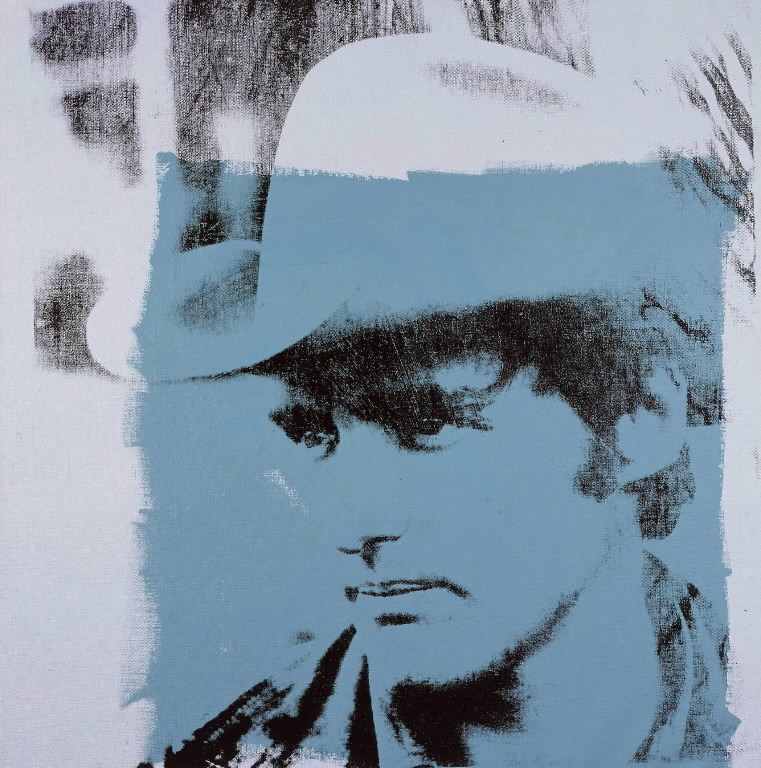
Dennis Lee Hopper
 |
| [May 17, 1936 – May 29, 2010] |
Le Gâteau d’amour

La Cigale
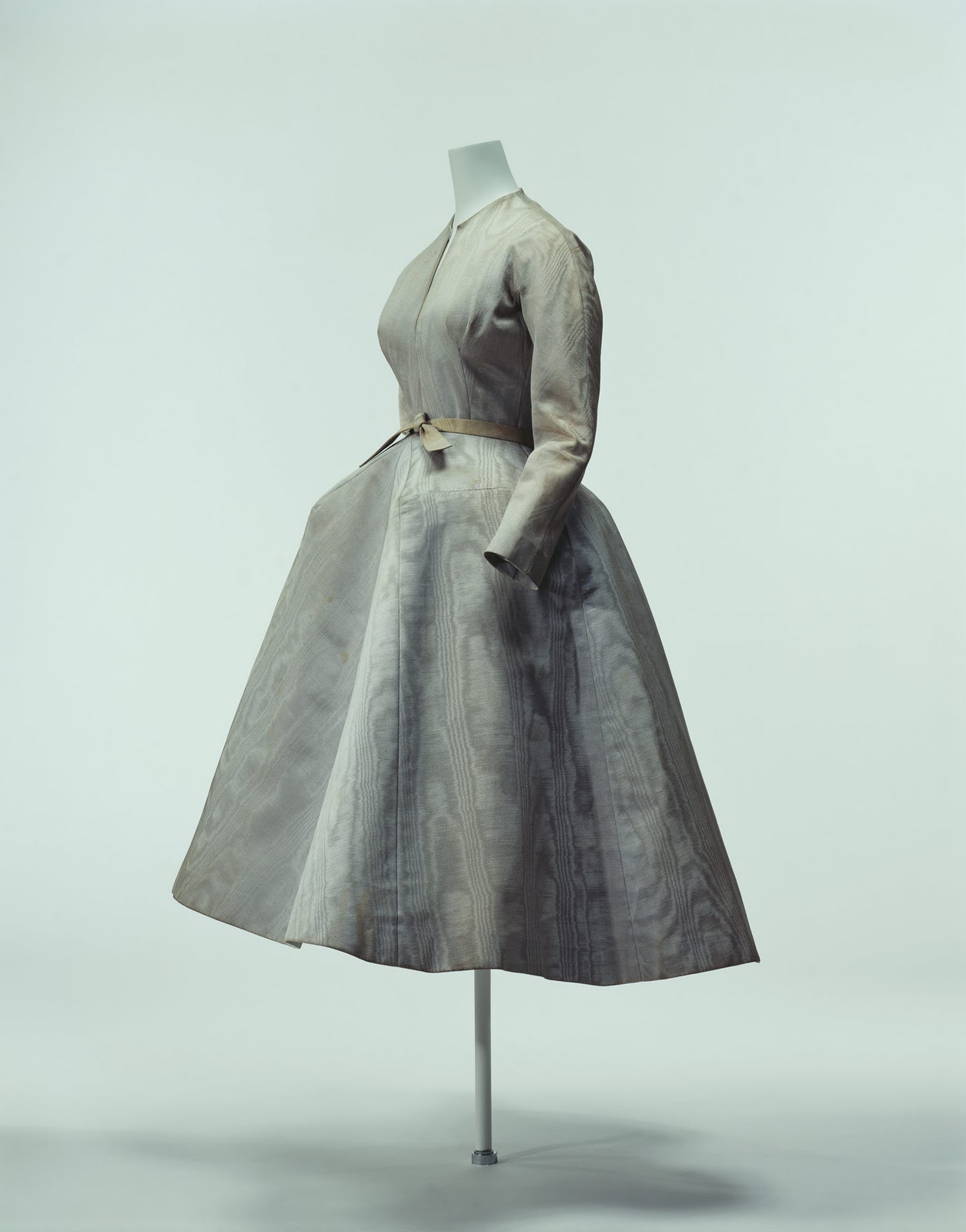 |
| Christian Dior ~ Day Dress “La Cigale” Automne- Hiver 1952 [photo by Takashi Hatakeyama] |
This dress from the collections “Profile Line,” which have a distinctive sharp silhouette. In contrast to the slender upper body, the skirt spreads out three-dimensionally. Supported by a stiff petticoat, which has same form of the outer skirt, the skirt maintains a perfect silhouette.
Christian Dior led the golden age of Haute Couture in Paris since introducing the “New Look” in 1947. He created new silhouettes, such as the “Tulip line” and “A-line,” one after another for every season. Using a stiff interlining and bones, Dior created three-dimensional silhouettes.
The Kyoto Costume Institute
Harper’s Bazaar (September 1952) described “La Cigale” as built in “gray moiré, so heavy it looks like a pliant metal,” while Vogue (September 1, 1952) called it “a masterpiece of construction and execution.” In 1952, what has been called the Dior slouch was placed inside a severe International Style edifice. The devices customarily used to soften surface and silhouette in Dior are eschewed, and the dress becomes the housing of the fashionable posture now required by its apparent weight: the skirt is cantilevered at the hipbone—hip forward, stomach in, shoulders down, and the back long and rounded. Dior employed shaped pattern pieces to mold the bodice to the body and likewise to allow for the dilation at the hips.
American periodicals continued to promote Parisian couture lines after World War II, but they also included American design images and the ready-to-wear lines of Paris in order to make their publications relevant to a wide economic range of American women. “La Cigale” has the underpinnings of couture, but with its standard moiré, long, fitted sleeve, and smooth bodice and skirt cut, a facade of this cocktail piece could easily be adapted for the department store. American designers like Anne Fogarty and Ceil Chapman emulated the “New Look” line for cocktail wear, but used less luxurious fabrics and trims. Dior, along with French contemporary Jacques Fath and milliners Lilly Daché and John Fredericks, quickly saw the advantages of promoting cocktail clothing in the American ready-to-wear market, designing specifically for their more inexpensive lines: Dior New York, Jacques Fath for Joseph Halpert, Dachettes, and John Fredericks Charmers.
Le Mystère des Gants Verts
 |
| ➔ Bibliothèque Rose et Bibliothèque Verte – Le site officiel |
British writer who published over 600 children’s or juvenile books during her 40-year career. Enid Blyton‘s most famous series was The Famous Five. Its central characters were Julian, Dick, Anne, George, and the dog Timmy. Her works celebrated good food, enjoyment of picnics in the idyllic English countryside, outdoor life, spirit of comradeship, and honesty. By the 1980s, Blyton’s books had sold some 60 million copies and had been translated into nearly seventy languages.
Anne saw some cows pulling at the grass in a meadow as they passed. ‘It must be awful to be a cow and eat nothing but tasteless grass,’ she called to George. ‘Think what a cow misses – never tastes an egg and lettuce sandwich, never eats a chocolate aclair, never has a boiled egg – and can’t even drink a glass of ginger-beer! Poor cows!’ (from Five Get Into Trouble, 1949)
Enid Blyton was born in London, in a small flat above a shop in East Dulwich. She was the eldest of three children. Her father, Thomas Carey Blyton, had many talents: he painted in water colours, wrote poetry, learned to play piano, taught himself foreign languages, and was a photographer. After working as a cutlery salesman, he joined his two older brothers in the family ‘mantle warehousing’ business of Fisher and Nephew. Theresa Mary Hamilton, Enid’s mother, did not share her husband’s interests, and she did not approve that Enid kept her nose in a book all the time. After Thomas started an affair with another woman, she moved with her children, Enid, Hanly, and Carey, to Beckenham. Thomas established a successful wholesale clothing business in the City of London. He took care of his children’s private school fees and sent regularly money to support his family. Blyton’s father died in 1920; she did not attend her funeral.
 |
| ➔ Audio Books « Peter Viney’s Blog |
From her earliest childhood, Blyton had been schooled in the belief that she would eventually be a musician. However, she had also started to write and send stories, articles, and poems to various periodicals. Although her family thought, that most of her writing was a waste of time, she remained undaunted. Her first published poem – entitled ‘Have You–?’ – appeared in Nash’s Magazine (1917). Blyton’s first book, Child Whispers (1922), was a collection of verse. This twenty-four-page work was followed by Real Fairies: Poems (1923), Responsive Singing Games (1923), The Enid Blyton Book of Fairies (1924), Songs of Gladness (1924), The Zoo Book (1924), and other books published by J. Saville and Newnes.
Blyton, who was trained as a kindergarten teacher at Ipswich High School, opened her own infants’ school. When the literary commitments increased, Blyton devoted herself entirely to writing. In 1926 Blyton took on the editing a new magazine for children, Sunny Stories for Little People. Her stories, plays, and songs for Teachers’ World were received with enthusiasms. She also compiled a children’s encyclopedia, but it was not until in the 1930s, when her stories started to attract a wider audience.
In 1924 Blyton married Hugh Pollock, an editor of the book department of George Newnes. None of the members of hers or Pollock’s families were present at the wedding ceremony. When she visited a gynecologist, she was told that she had a much underdeveloped uterus, equivalent to that of a young girl. However, hormone treatment allowed her to have children. Enid and Hugh moved soon to Elfin Cottage, a newly built house in Shortlands Road, Beckenham, which Blyton eventually called her first “real home”. In 1929 they moved to “Old Thatch”, a large sixteenth-century cottage, close to the River Thames at Bourne End in Buckinghamshire. The house, that was to be associated with Blyton for the rest of her life, was Green Hedges. It was built of red brick with black and white half-timbered gables, and situated in Beaconsfield, a small town about twenty-five miles from London.
In the mid-1930s Blyton experienced a spiritual crisis, but she decided not to convert to Roman Catholicism, because she had felt it was “too constricting”. Although she rarely attended church services, she saw that her two daughters, Gillian and Imogen, were baptized into the Anglican faith and went to the local Sunday School. Much of a workaholic, she devoted herself to her writing with increasing intensity. Blyton’s younger daughter Imogen has portrayed her in A Childhood at Green Hedges (1989) as an arrogant, insecure, pretentious, rather frightening figure, whereas Gillian recalled her as a fair and loving mother.
Blyton’s first full-length children’s book, The Secret Island, was published in 1938. This fast-moving story led to such series as The Famous Five, directed for readers between nine and thirteen years, The Secret Seven, for readers between eight and nine years, the Adventure series, the Mystery series, and the ‘Barney’ Mystery books. Her young characters are courageous and resourceful children, who encounter adventures without having adults hanging over them. ” ‘I only like adventures afterwards,’ said Lucy-Ann. ‘I don’t like them when they’re happening. I didn’t want this adventure at all. We didn’t look for it, we just seemed to fall into the middle of it!’ “ (in The Castle of Adventure, 1946)
 |
| ➔ monkeemoomoo |
During World War II, when publishing was restricted, Blyton managed to get her works printed, and made her name a brand. In the following decades she ruled the field of juvenile literature. With her portable typewriter Blyton could write between 6,000 and 10,000 words a day, which enabled her to keep up her prodigious output. She once explained, “I shut my eyes for a few minutes… I make my mind a blank and wait – and then, as clearly as I would see real children, my characters stand before me in my mind’s eye.” In 1940 eleven books were published under her name, including The Secret of Spiggy Holes, which had appeared earlier in serial form in Sunny Stories, Twenty-Minute Tales and Tales of Betsy May, both collections of short stories, The Children of Cherry Tree Farm, and a story book annual for the News Chronicle. The remainder were brought out by George Newnes, who continued as Blyton’s main publisher. Under the pseudonym Mary Pollock she wrote Three Boys and a Circus and Children of Kidillin.
Blyton’s marriage ended in 1942. Next year she married Kenneth Darrell Waters, a middle-aged surgeon, her lover. An exploding shell at the Battle of Jutland during First World War had permanently impaired his hearing, but helped with a hearing aid, he could pick up Blyton’s speech. He was also genuinely interested in her work and they shared many interests in common, including gardening. According to Duncan McClaren, Blyton ridiculed her first husband in the character of PC Goon, a bumbling policeman in the Mystery series.
In 1945 Blyton decided to wind up her column for Teachers’ World. Seven years later she withdrew from Sunny Stories, which was replaced by Enid Blyton Magazine from 1953. Regular news was given for sponsored clubs. The main object of the magazine was to raise money for children, who had spastic cerebral palsy, and the special centre in London. The Famous Five Club originated through a series of book about the ‘Famous Five’. After the publication of the first adventure in 1942 a new title followed each year.
Little Noddy Goes to Toyland, (1949), a story of a little toy man, who always ends up in trouble and has to seek help from his Toyland friends, was a huge success; its sales exceeded expectations. Other Noddy books of various sizes and types followed in rapid succession. The stories, directed for readers between three and five years, were illustrated by Van Der Beek who died suddenly in Holland in 1953. ‘Noddy’ became a household name, the subject of music hall jokes and sketches. The series also produced a play and a film.
 |
| ➔ feefs ‘s Gallery on Picasa |
Enid Blyton Magazine was closed in 1959. In the early sixties her memory began to falter but her condition, the first signs of what may have been Alzheimer’s disease, was kept a secret. Blyton found it increasingly difficult to concentrate to writing; Five Are Together Again (1963) was the last in this series. Her husband died in 1967. During the months that followed, her own illness grew progressively worse. Blyton died in her sleep on November 28, 1968, in a Hampsted nursing home.
Along with William Earl Johns, the creator of Biggles series, Blyton was the most prolific children’s writer of the immediate post-war period. In the 1950s and 1960s her books were attacked from many sides and also the BBC kept her work off air until 1963. Moreover, librarians imposed sanctions on her publications owing to their supposedly limited vocabulary. The main target for anti-Blytons was Noddy, “the most egocentric, joyless, snivelling and pious anti-hero in the history of British fiction”, as he was described by Colin Welsh. Rumours were spread, that she did not write all her own books. The “banning” did not last long and eventually Blyton’s ability to encourage children to read was recognized generally. Although her books were criticized for racism, sexism, and snobbishness, they always found new readers from new generations. “She was a child, she thought as a child and she wrote as a child,” has the psychologist Michael Woods summarized the secret of her writing.
At the end of the 1990s, well over 300 Blyton titles were still in print, including editions of the Famous Five stories linked to the popular television serialization (1995) and modern adventure games, also based on the Famous Five series. Blyton’s life was the subject of the BBC drama Enid (2009), starring Helena Bonham Carter in the title role. “She was totally emotionally immature. She’s a therapist’s dream,” Bonham Carter said. It was long believed that there are no more unpublished or unknown Blyton works waiting to be discovered, until a 180 page fantasy novel, titled Mr Trumpy’s Caravan, was found in 2011 among the collection of Seven Stories, the national gallery and archive of children’s books. Blyton’s diaries and the logs in which she recorded her writing were destroyed by her husband.
© Petri Liukkonen & Ari Pesonen & Kuusankosken kirjasto 1997-2008
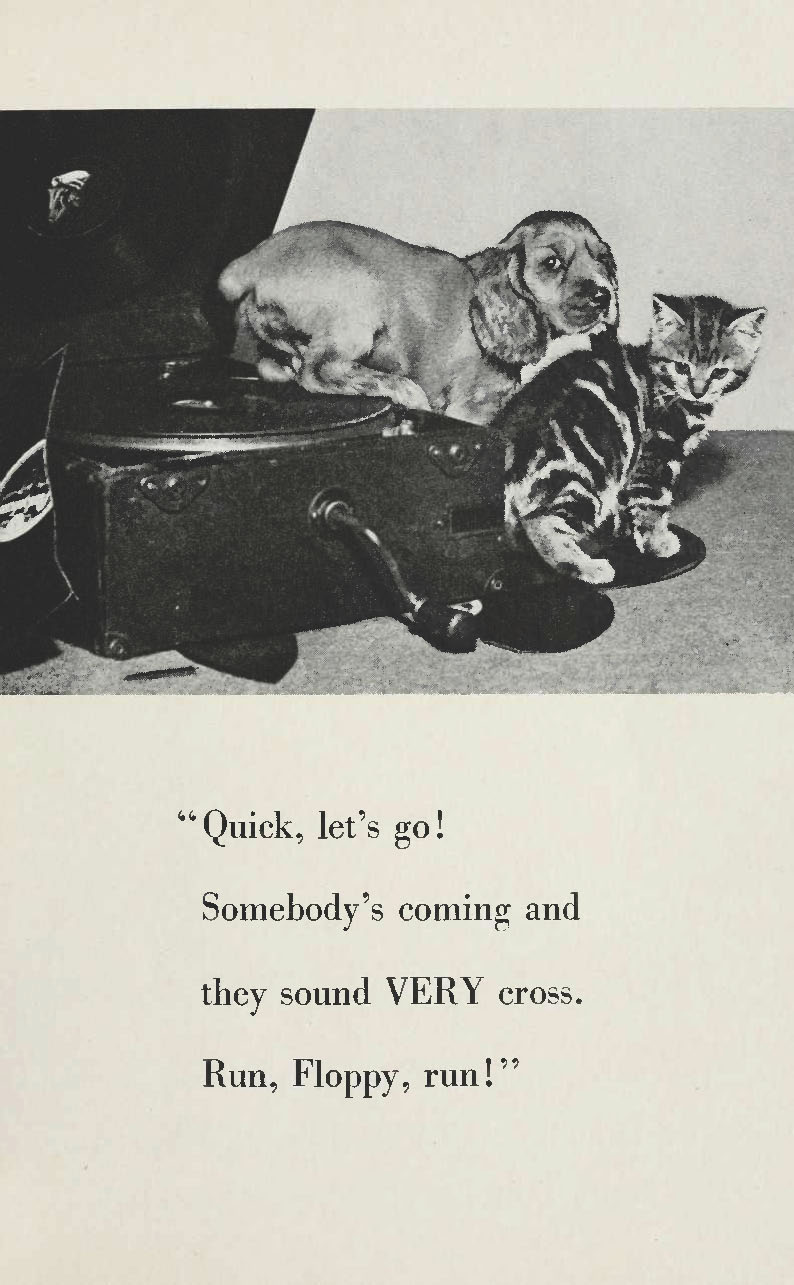
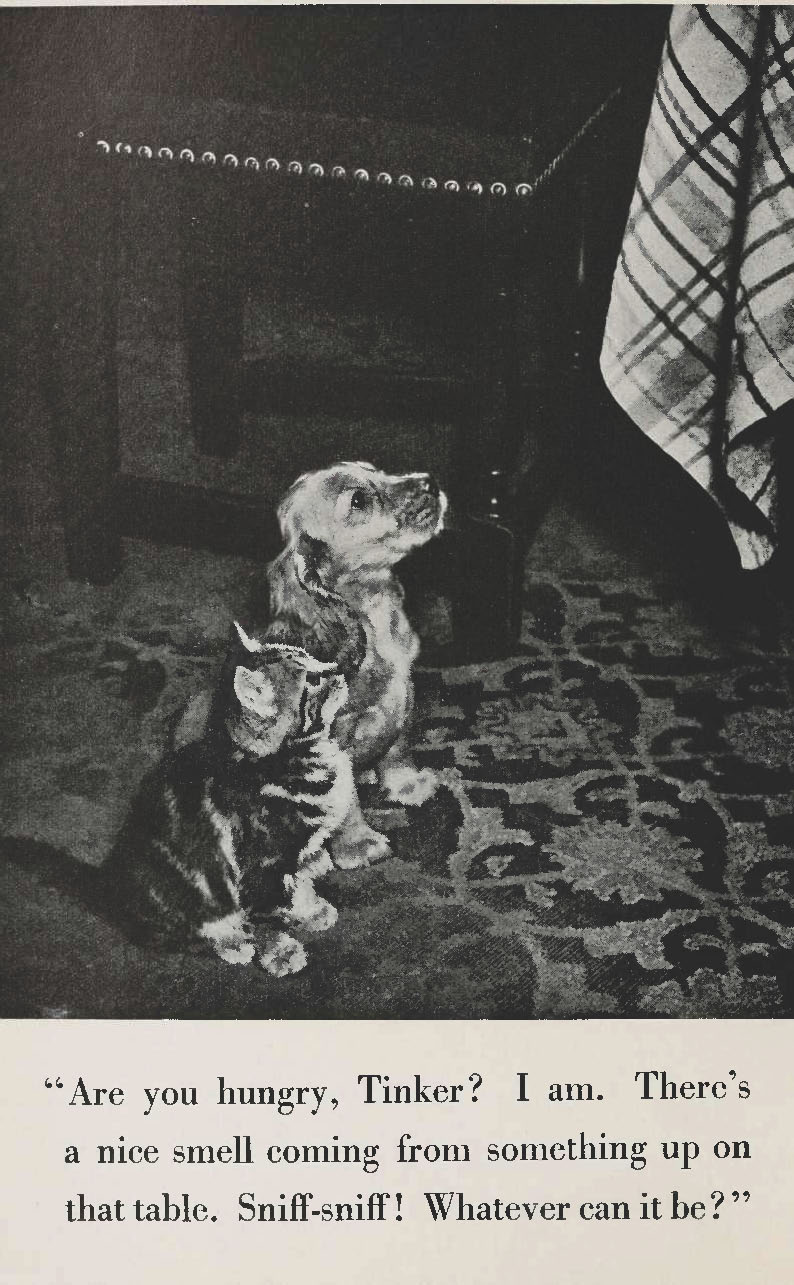
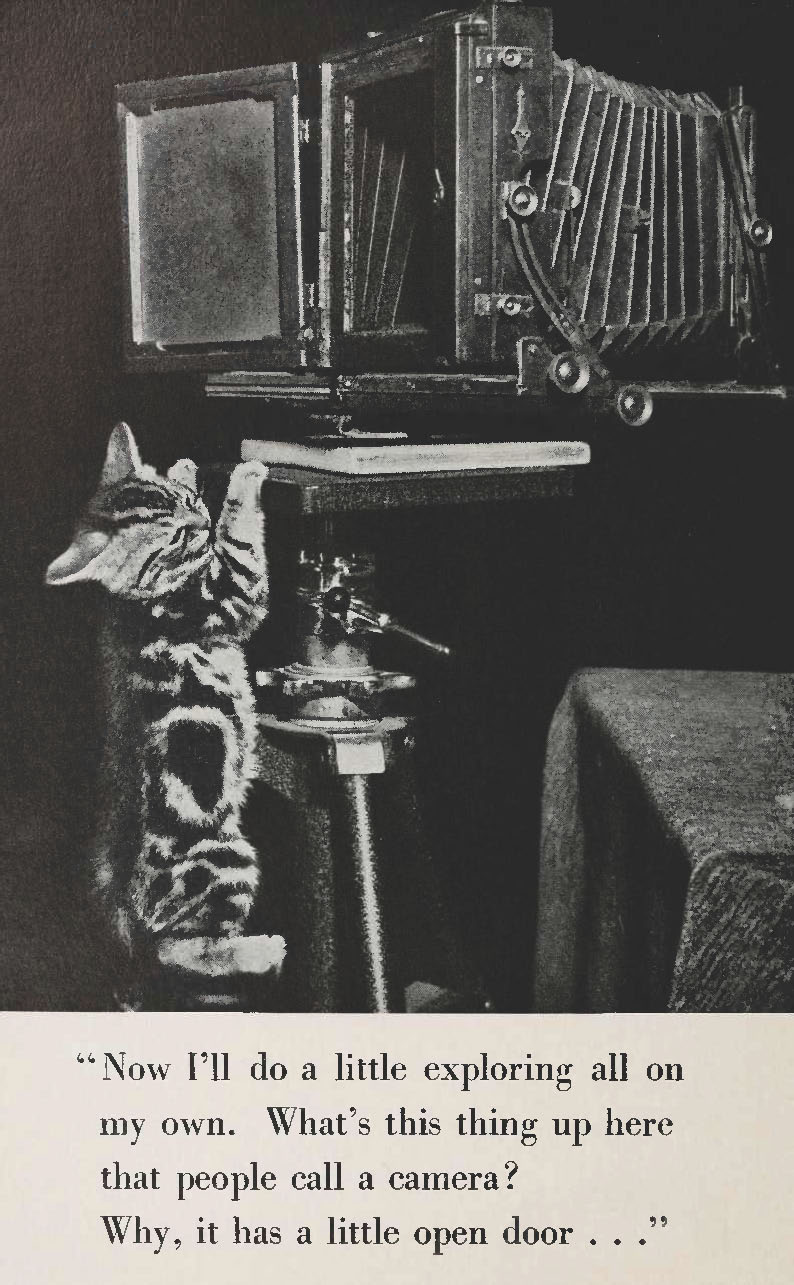
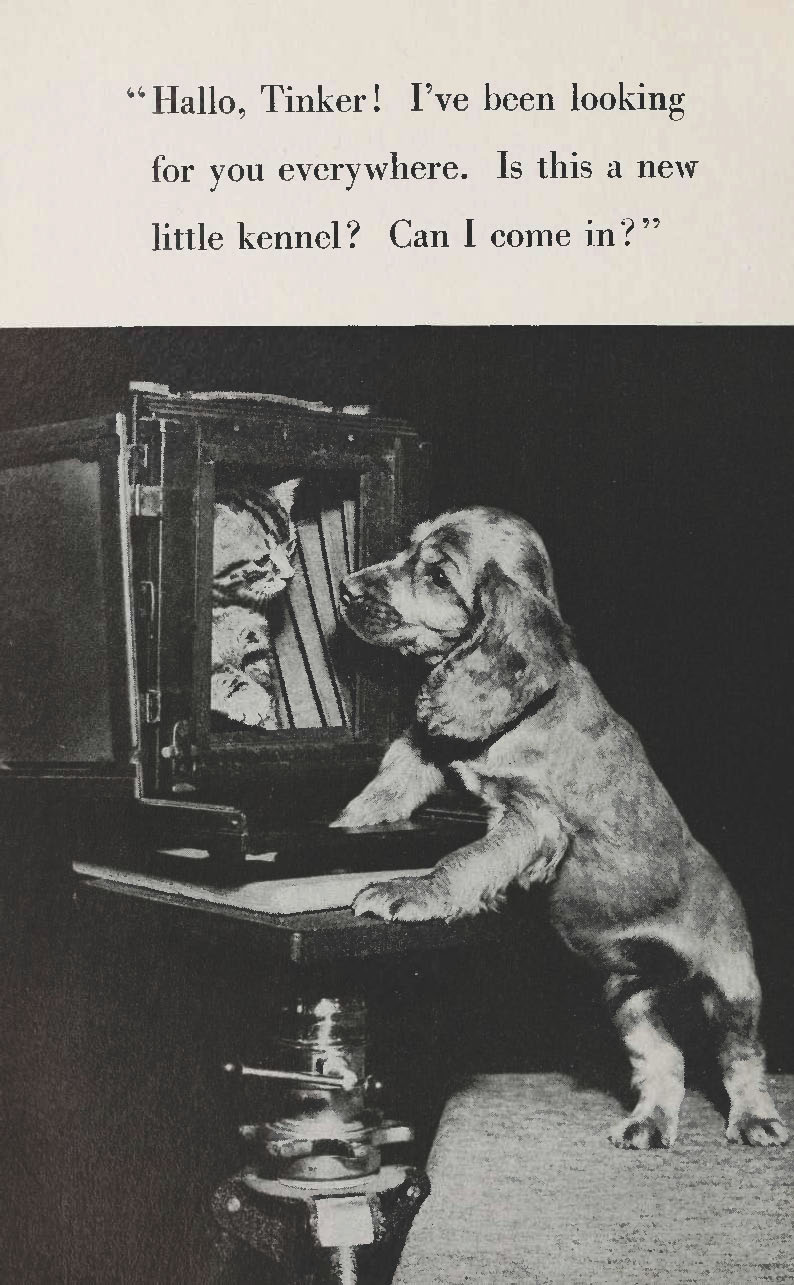
Mischief Again
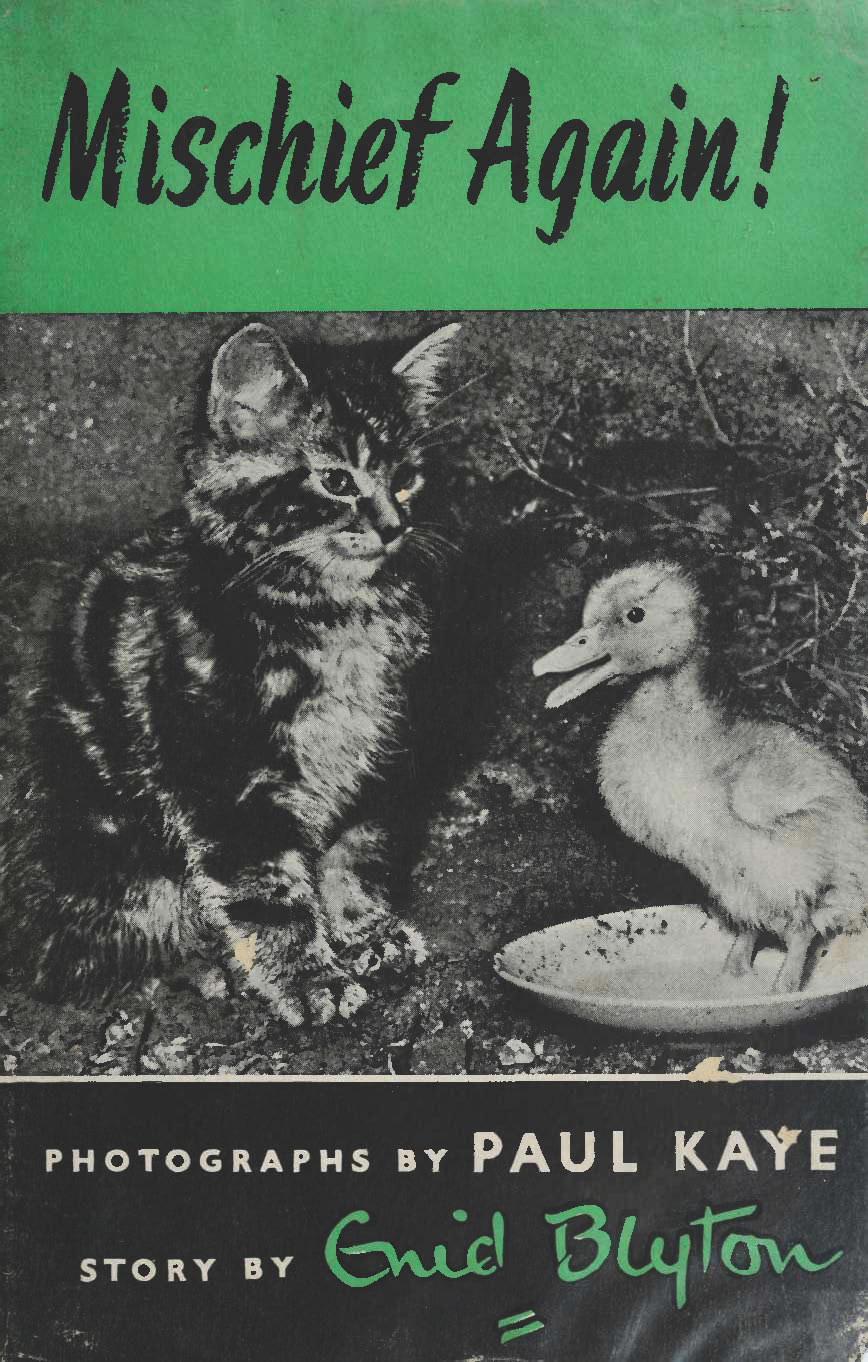 |
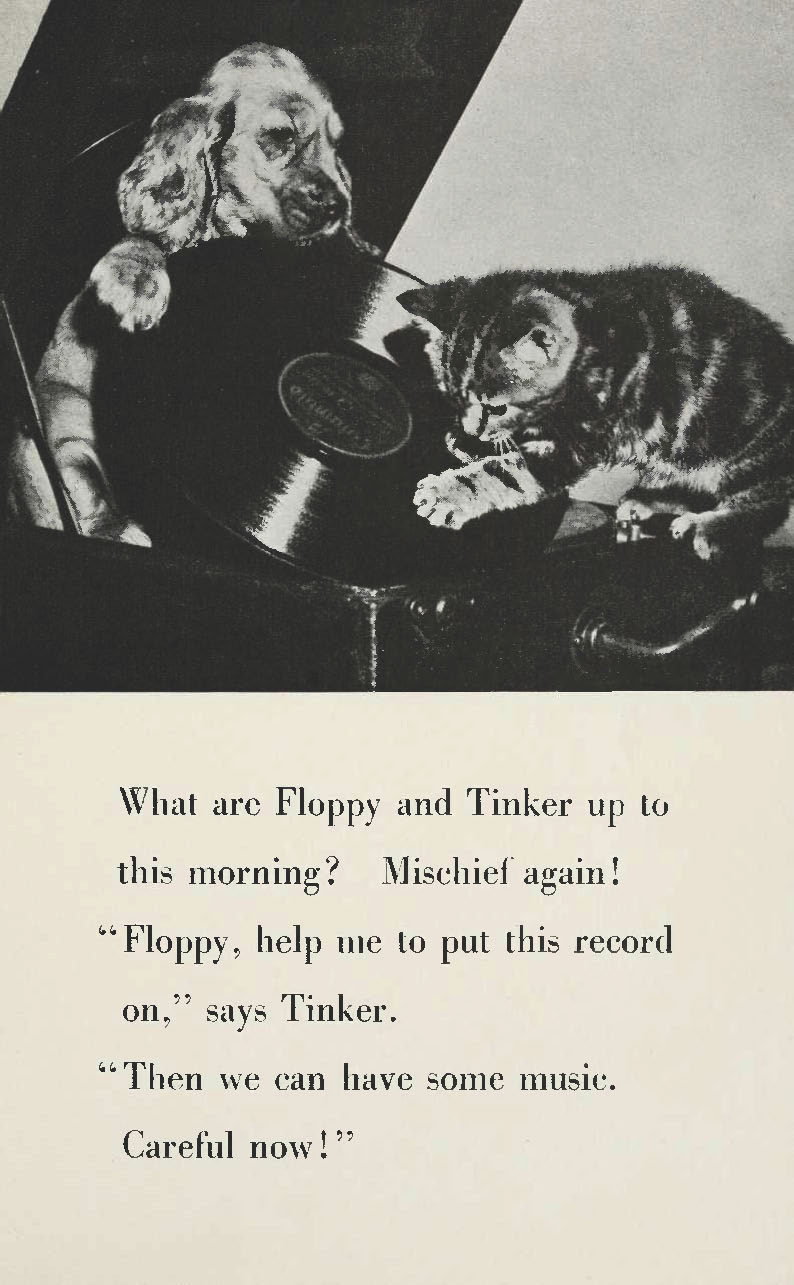
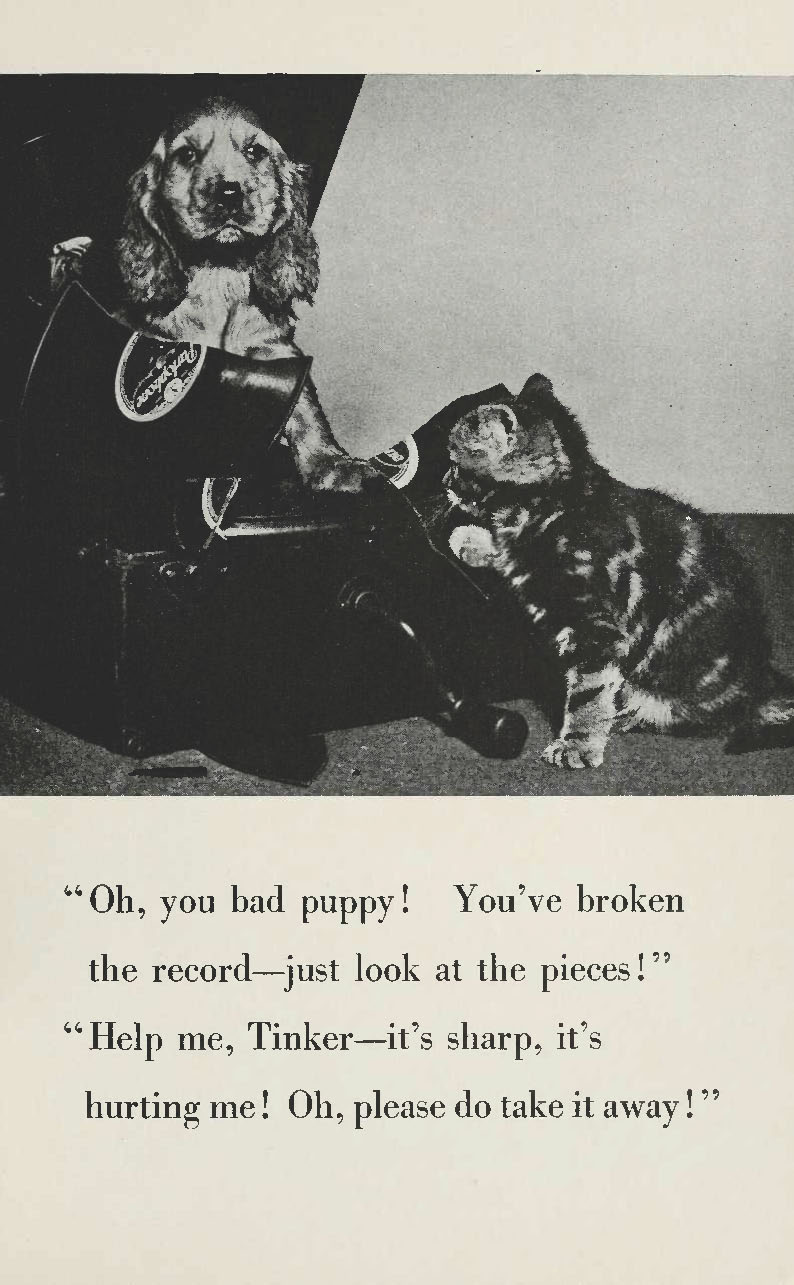
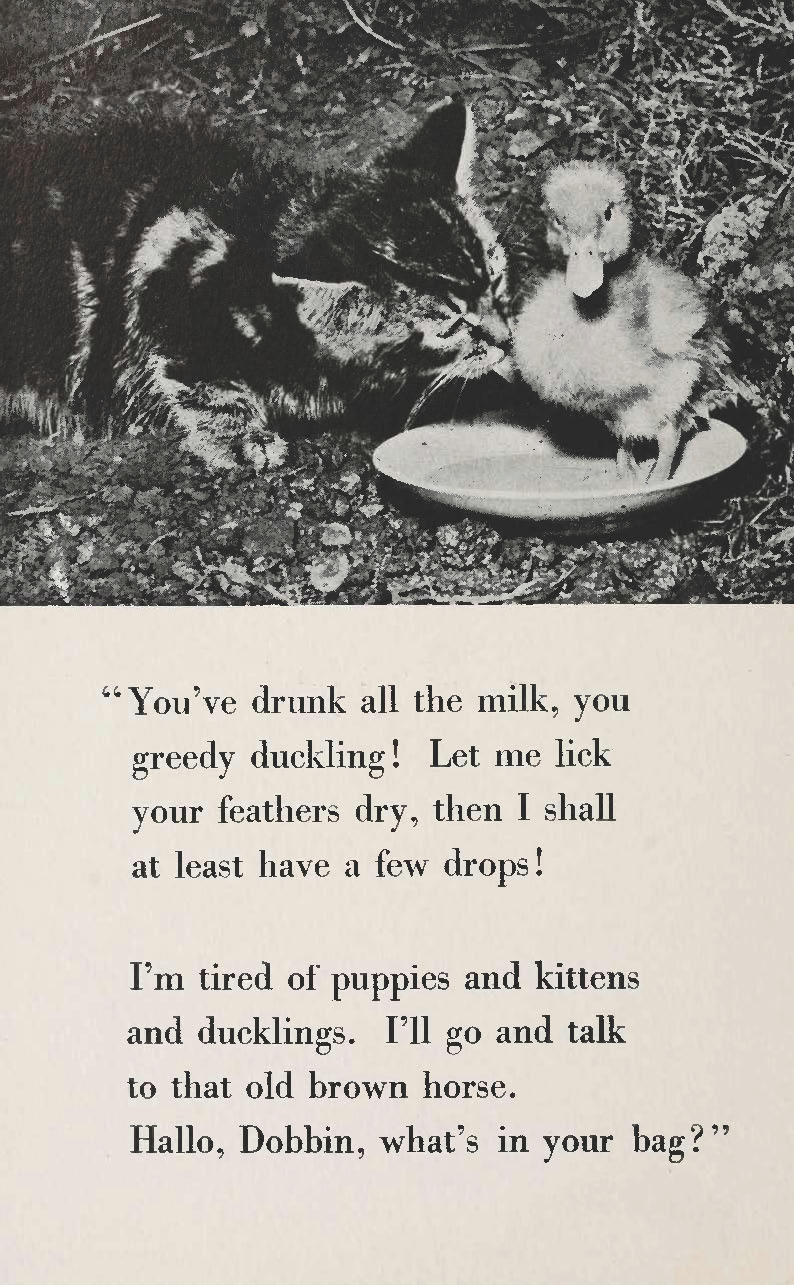
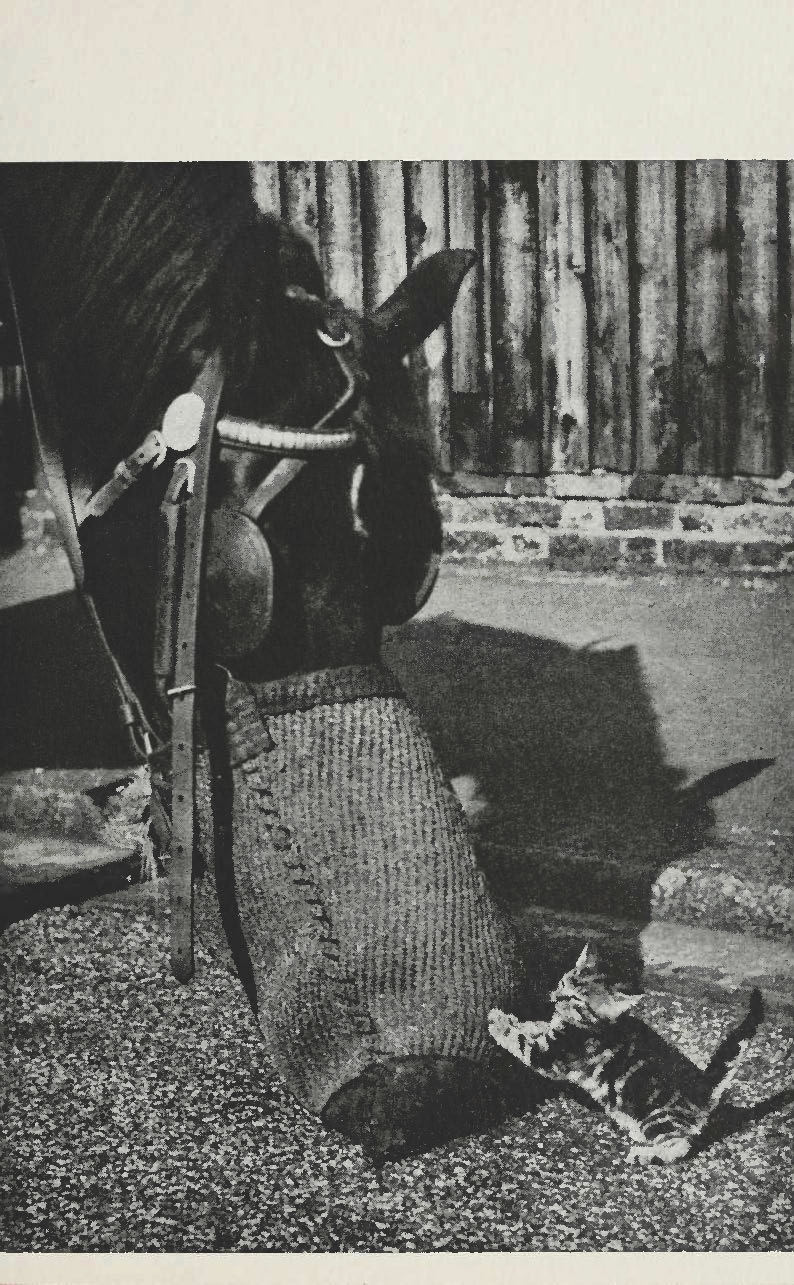
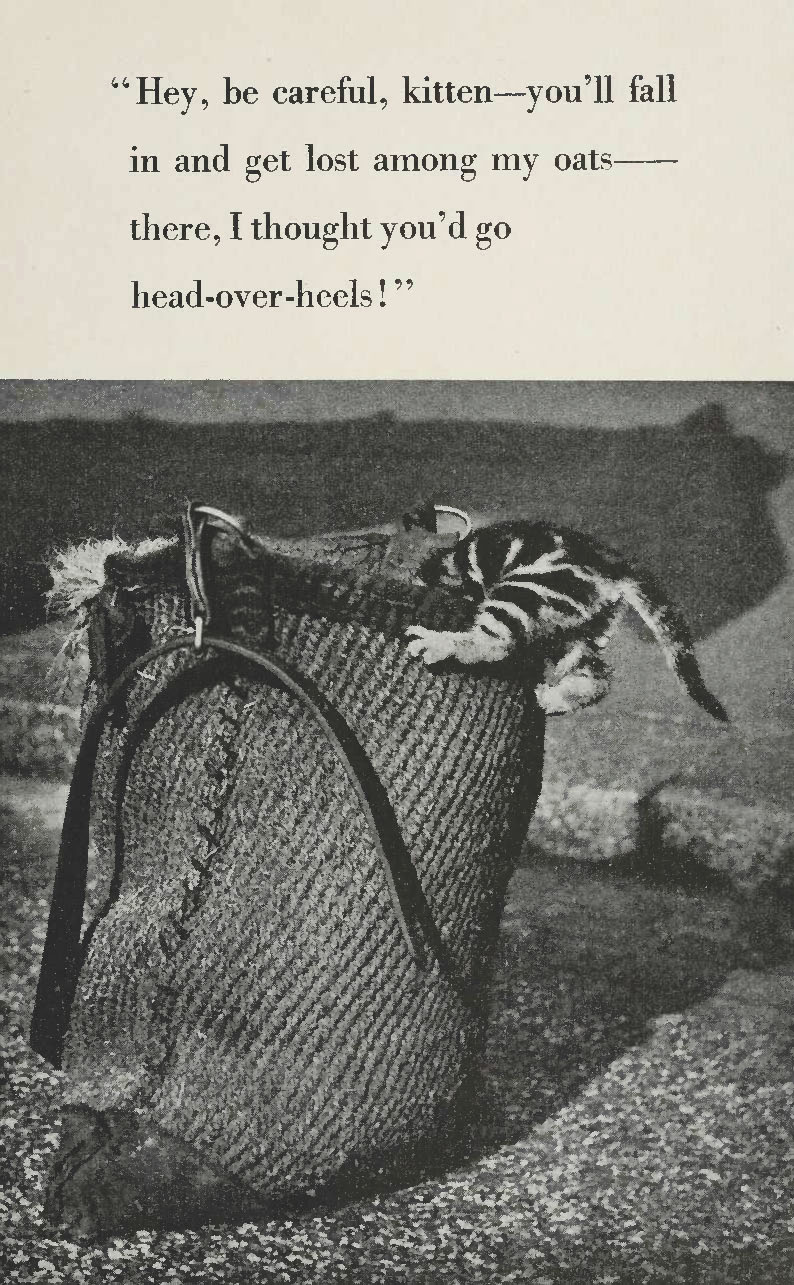
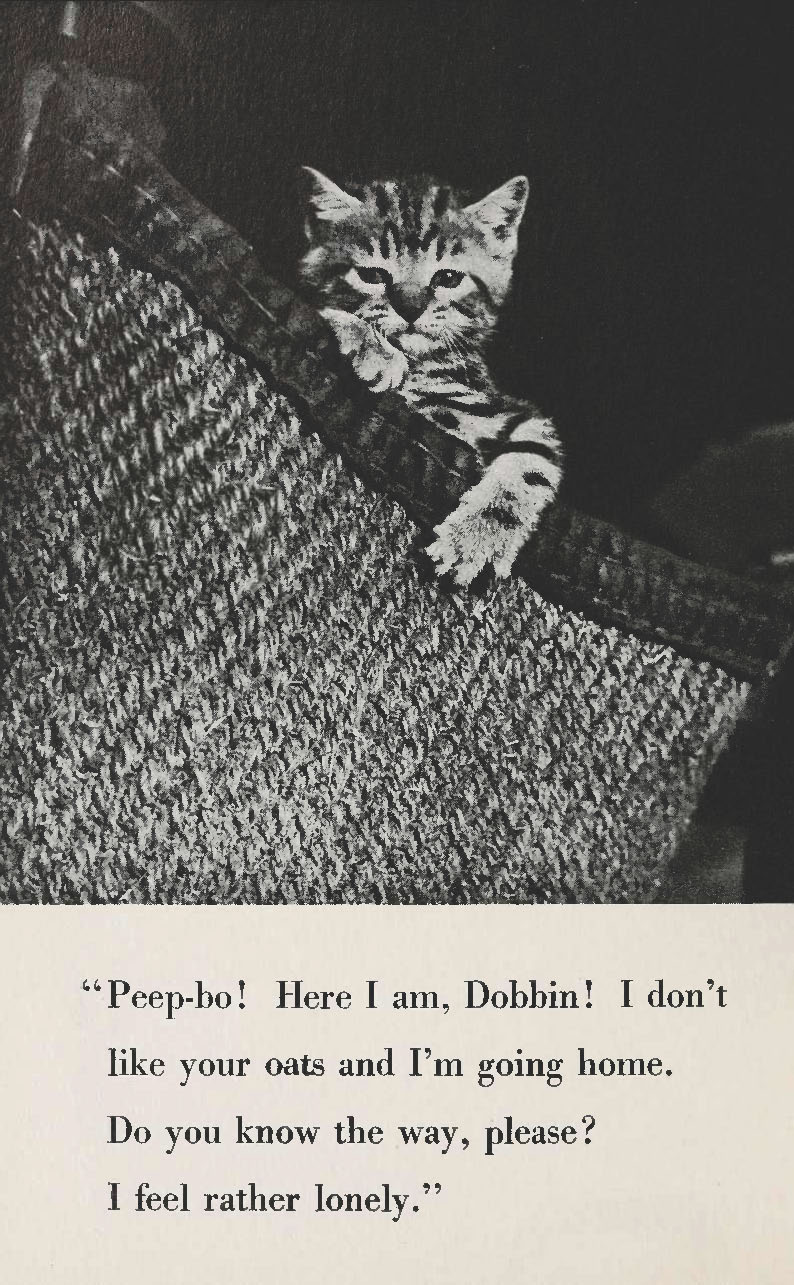
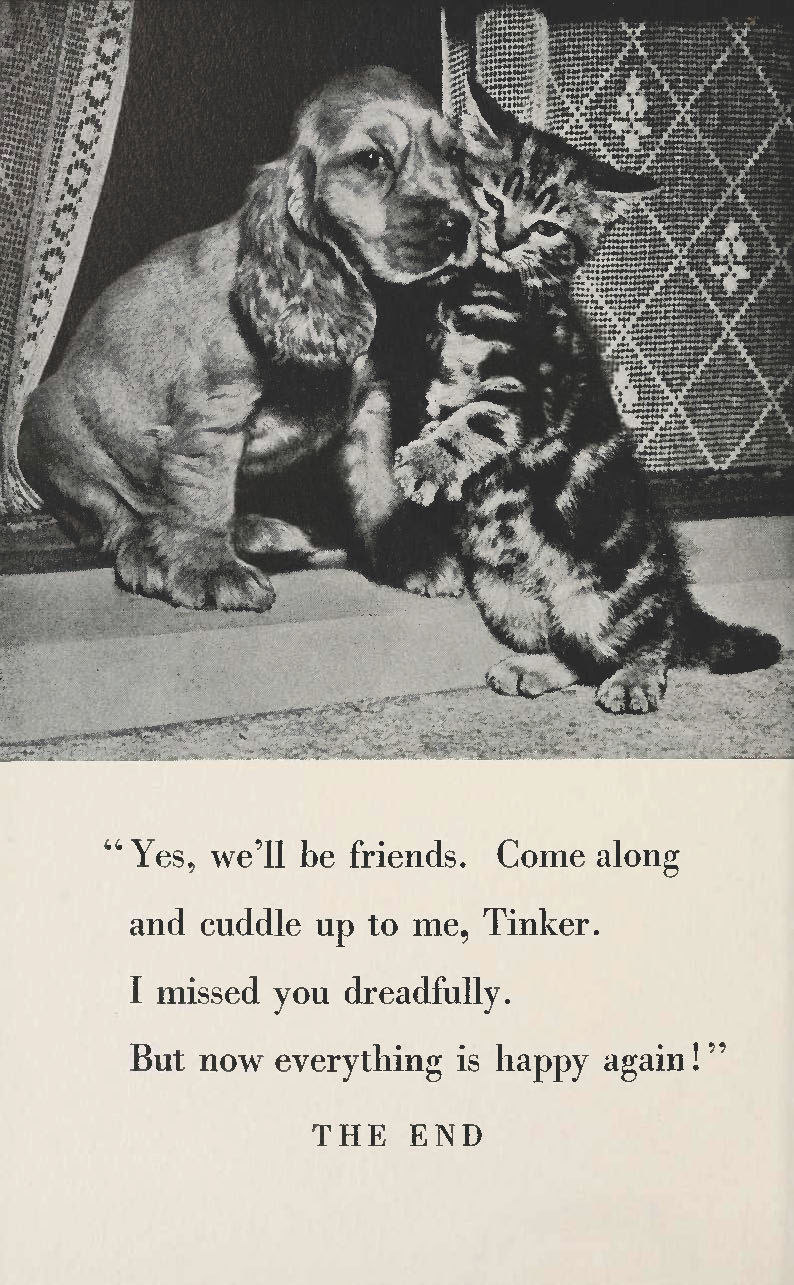
Here is the second book about the |









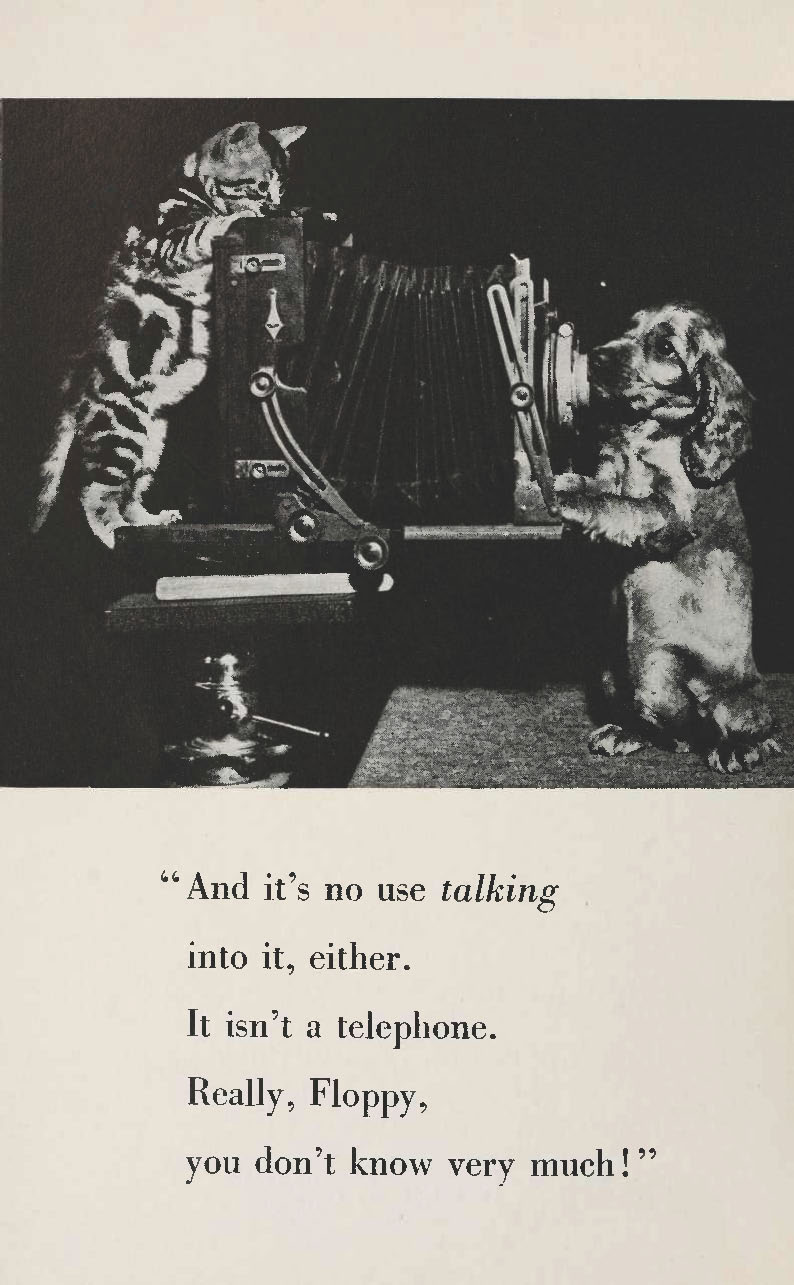


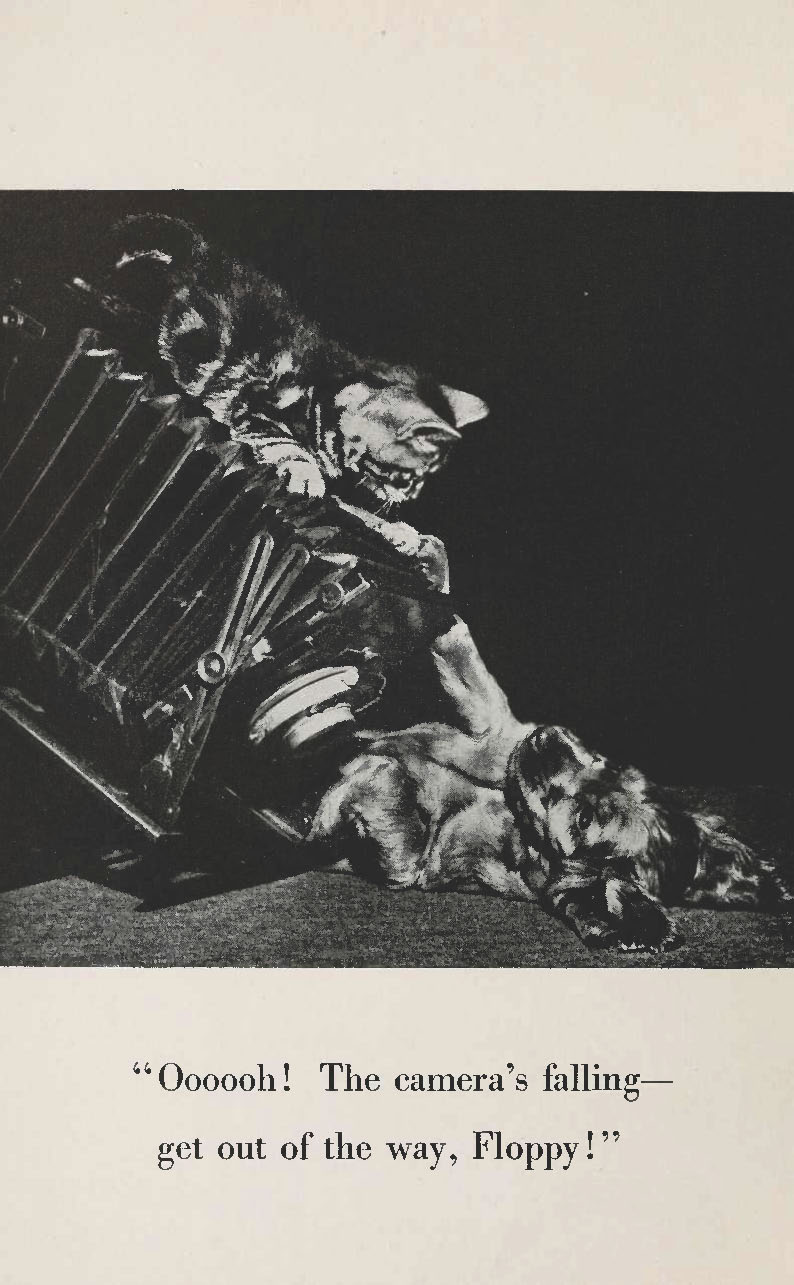


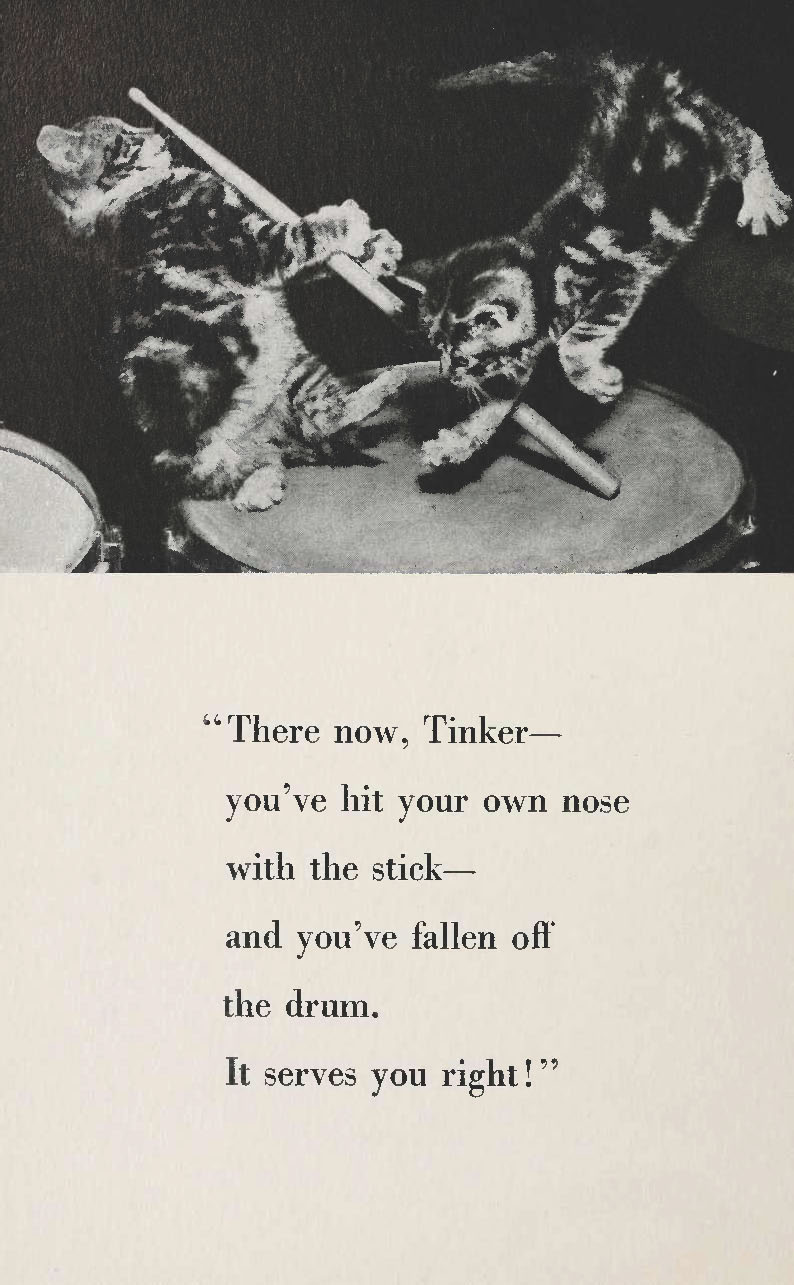

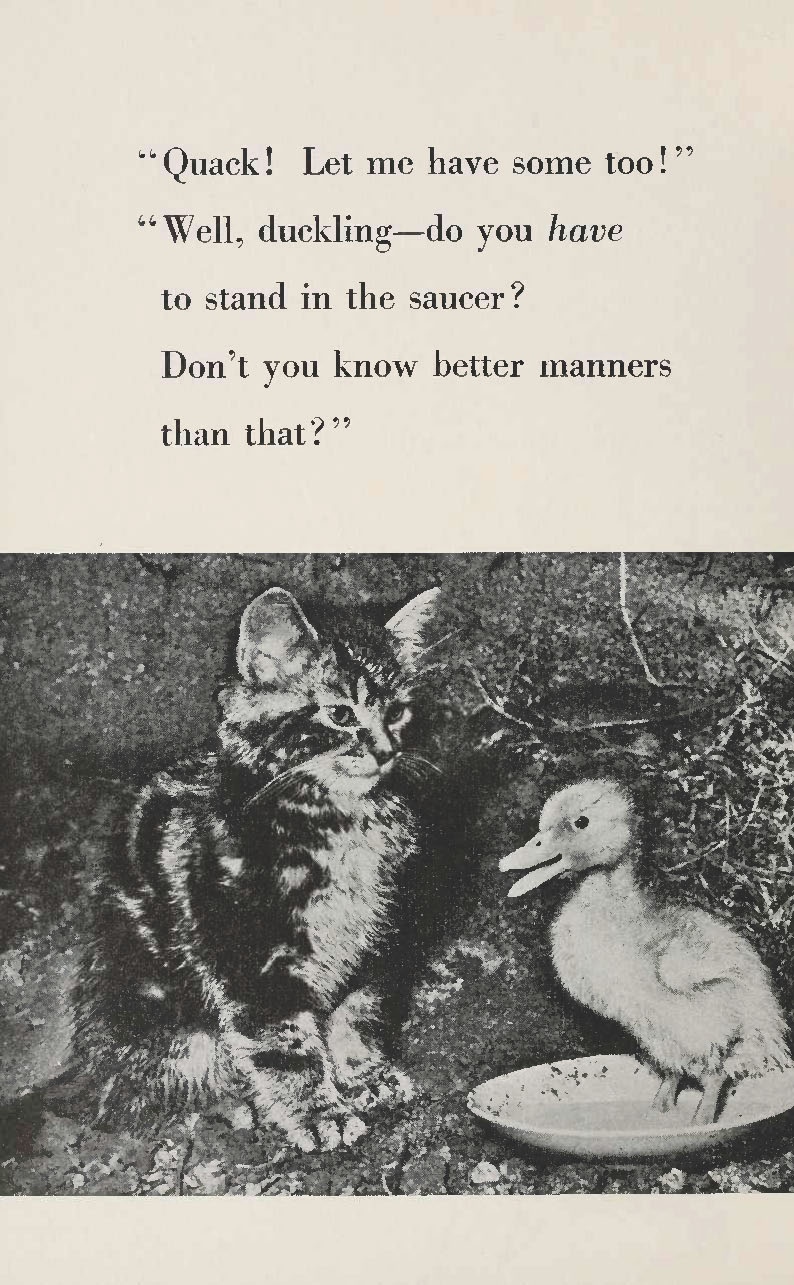




 |
➔ Internet Archive
   The Laughing Kitten, First Published in 1954 by Harvill Press |
Herman and Vermin
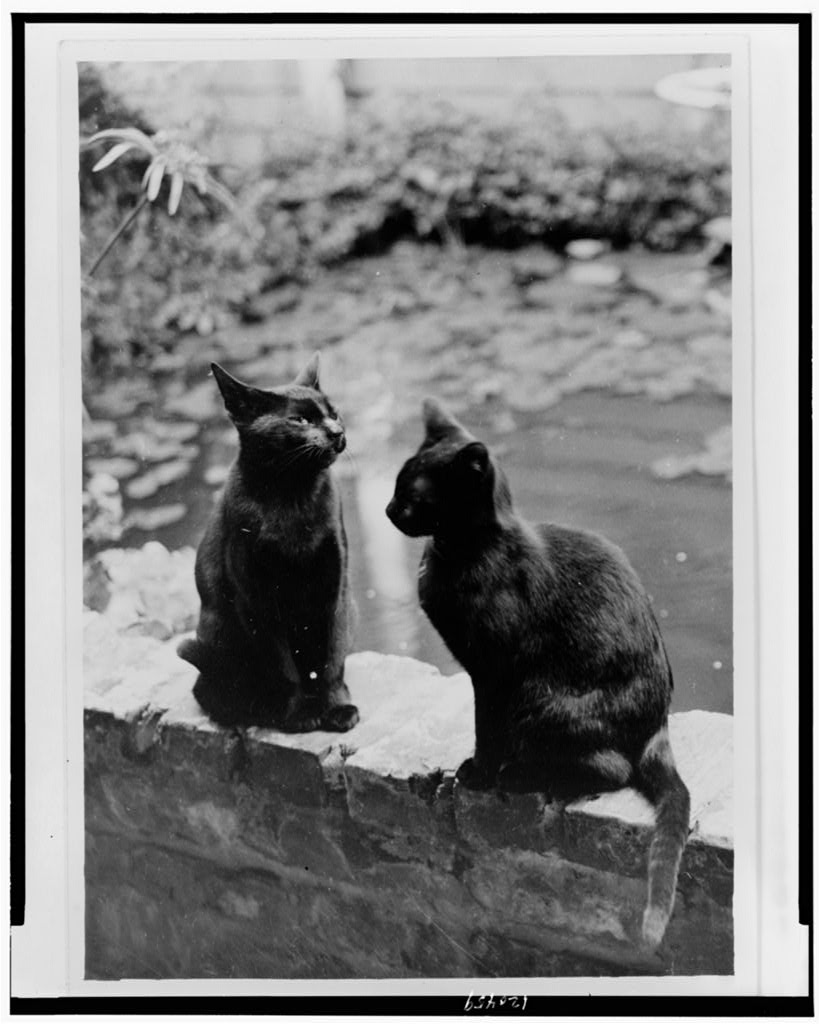 |
| Frances Benjamin Johnston’s cats seated on brick railing of New Orleans house, Louisiana (between 1920 and 1950) |
Frances Benjamin Johnston (1864-1952) was a photographer whose prodigious career spanned six decades and whose lens captured a vast array of topics. A woman of immense drive and energy, she is most commonly referred to as the first female photojournalist. However, she was also a charter member of the Photo-Secession, exhibiting her pictorialist work in a wide variety of salons and shows; she was a businesswoman who operated her own Washington, DC portrait studio and later, in New York City, a studio devoted to architectural photography; she was the recipient of awards and accolades and served as a mentor -particularly through her published essays and private correspondence -to countless women who aspired to her profession; and she was a peripatetic soul whose travels in the United States and abroad resulted in a tremendous body of work concentrating primarily on architecture and gardens (the fruit of her later years).
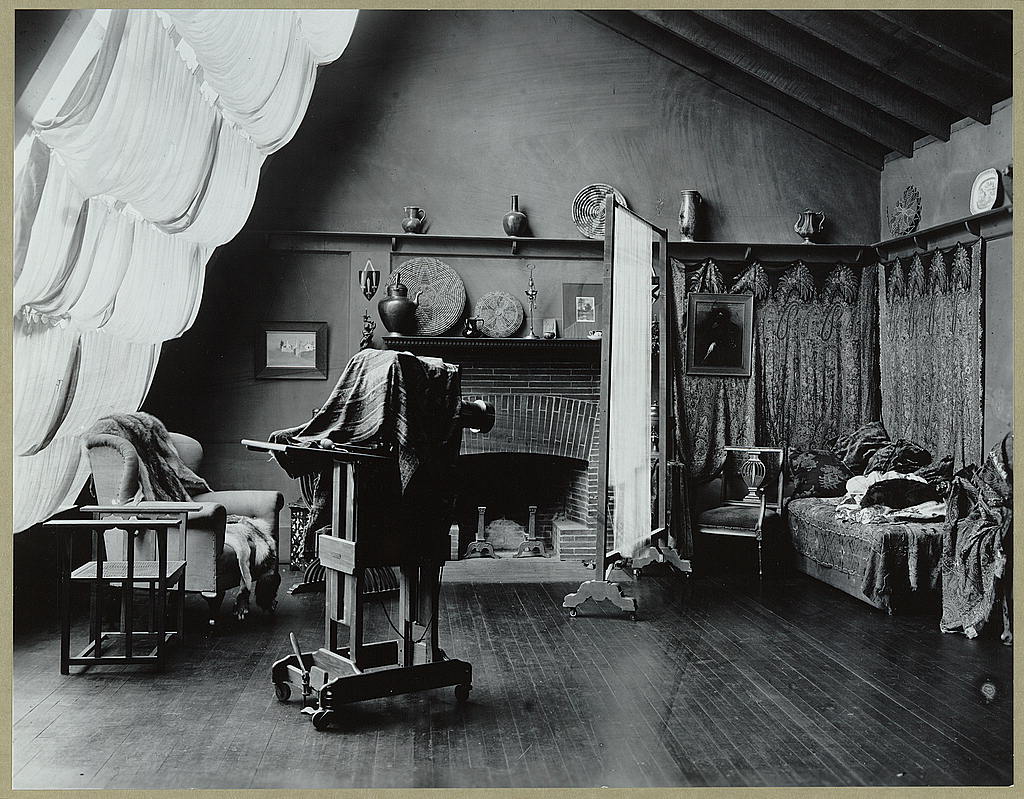 |
| Interior of Frances Benjamin Johnston’s studio at 1332 V St. NW, Washington, D.C |
 tout ceci est magnifique