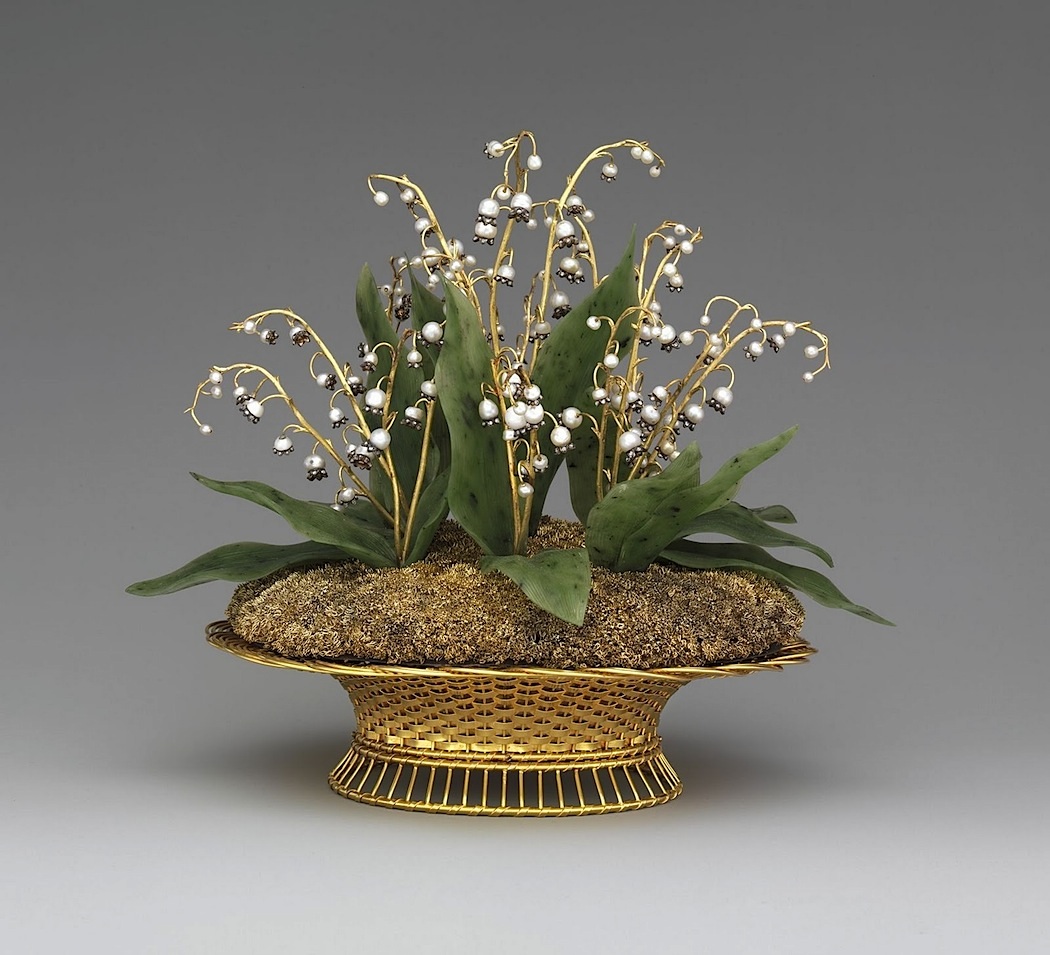
Lilies of the Valley Basket

August Wilhelm Holmström for the House of Fabergé, 1896
Born in Helsinki on October 2, 1829, Holmström was the son of a master bricklayer.  Apprenticed to the German jeweler Herold in St. Petersburg, he became a journeyman in 1850 and a master in 1857.  That same year he became principal jeweler for the Fabergé company when he bought the workshop of the master goldsmith Fredrick Johan Hammarström.  Birbaum says his workshop was among the first three in the House of Fabergé, the others being those of Reimer and Kollin.  Holmström worked exclusively for Fabergé.  Bainbridge says he made the gold miniature of the cruiser in Memory of the Azov that was the surprise in the 1891 Tsar Imperial Easter egg.  The 1892 Tsar Imperial Diamond Trellis Egg bears his mark.
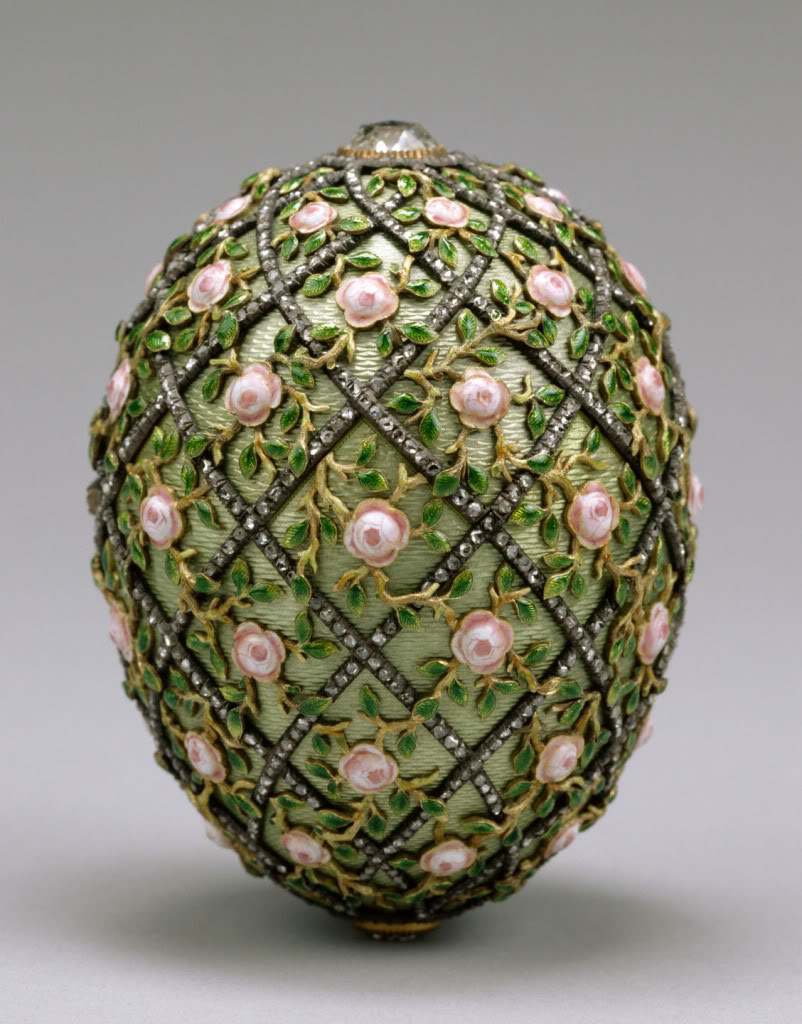
Imperial Diamond Trellis Egg
 Memory of the Azov Egg
It was in Holmström’s workshop that the famous Fabergé miniature copies of the Imperial regalia were executed.  These one- to ten-scale miniatures were exhibited at the 1900 Exhibition Internationale Universelle in Paris and are now kept in the special treasury of the Hermitage Museum called the Gold Room.  In his memoirs, Birbaum observes:

“The workshop was famous for its great precision and exquisite technique, such faultless gem-setting is not to be found even in the works by the best Paris jewelers.  It should be noted that even if some of Holmström’s works are artistically somewhat inferior to those of Parisians masters, they always surpass them in technique, durability and finish.”  (Fabergé and Skurlov, History of the House of  Fabergé, 1992)
The noted Lilies of the Valley Basket presented to Alexandra Fedorovna in 1896 and now in the Matilda Geddings Gray Foundation Collection in New Orleans, Louisiana, was made in Holmström’s workshop.  It is illustrated as item number 76 in Hill et al., Fabergé and the Russian Master Goldsmith (1989).
Holmström had eight children.  His daughter Fanny married Knut Oskar Pihl, manager of Fabergé’s Moscow jewelry shop; his daughter Hilma alina married Vasilii Zverschinskii, bookkeeper to the firm, and she worked for the firm as a designer; and his son Albert headed the workshop after August Holmström’s death in 1903.  Holmström was burried in St. Petersurg, not far from the grave of Mikhail Perkhin.  Bainbridge rates him “on the very top rung of the Fabergé ladder” (Peter Carf Fabergé, 1949)
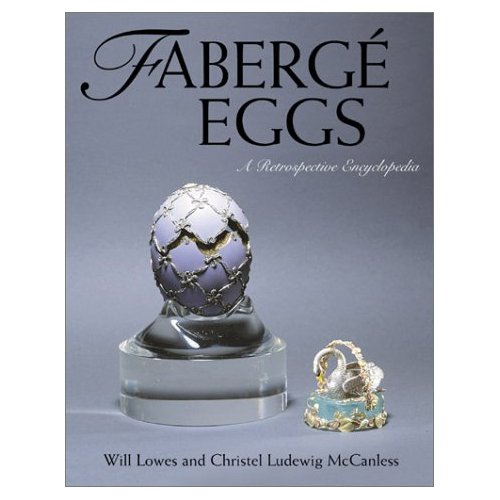
Will Lowes and Christel Ludewig McCanless   
Fabergé Eggs: A Retrospective Encyclopedia
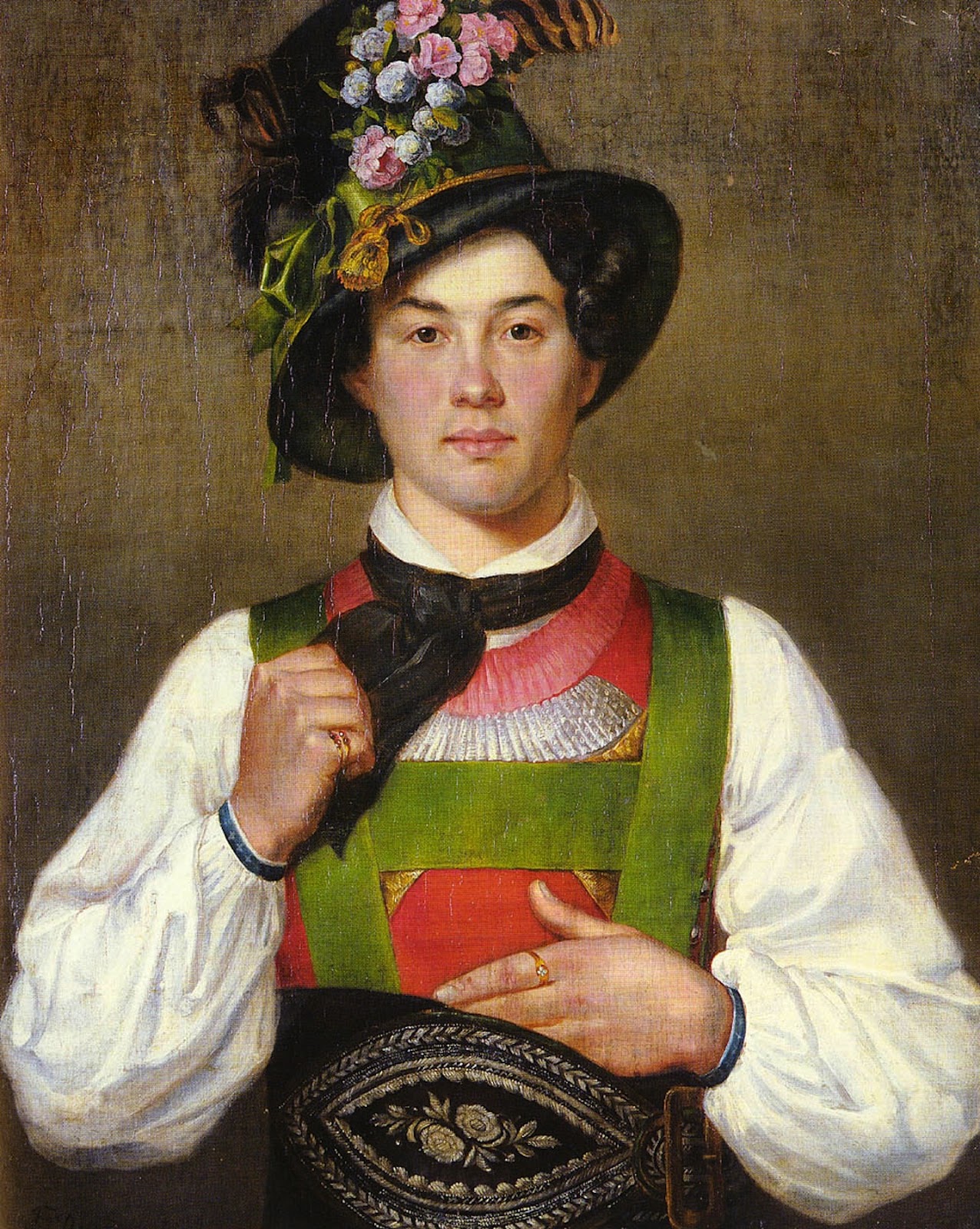
A Young Man In Tyrolean Costume

Franz von Defregger, 1872
PAINTING is perhaps somewhat of a rare accomplishment among Alpine peoples. Technical training, such as is required even by a beginner, is difficult to obtain; besides, paints, brushes, and canvas are expensive, — a serious, and sometimes a final consideration, among mountaineers.
As a matter of fact, the art impulse in the Alps generally turns to wood-carving. Every mountaineer has a knife in his pocket, and plenty of time on his hands, while he is tending the cattle in the uplands, or during long winter evenings. Nor is there any lack of wood to be had for the cutting.
It is doubtful, therefore, whether Defregger would ever have had a chance to paint those delightful pictures of Tyrolese life and history, had not his father been a man of some means.
The painter was born on April 30, 1835, on the family farm, called the Ederhof, in the parish of Dolsach, near Lienz, in the Pusterthal. Up to the age of fifteen, he herded his father’s cattle and horses on the mountain pastures. During spare moments he amused himself by drawing and carving animals, according to the abundance of models constantly before him.
Thus early did he begin to sharpen his powers of observation, and to acquire that prodigious memory for form, which has always distinguished him. His talent does not seem to have been inherited, but to have asserted itself spontaneously, under favouring conditions. He was thrown from infancy into close contact with the life of all outdoors, and beauties of outline and colour.
At all events, the boy’s artistic progress was not retarded by any sordid struggle for existence.
After his father’s death, Defregger sold the Ederhof, and, with the proceeds, sallied forth into the world, to become a painter. Surely no youth ever chose his life-work with less hesitation.
➔  William Denison McCrackan   The fair land Tyrol, (1905)

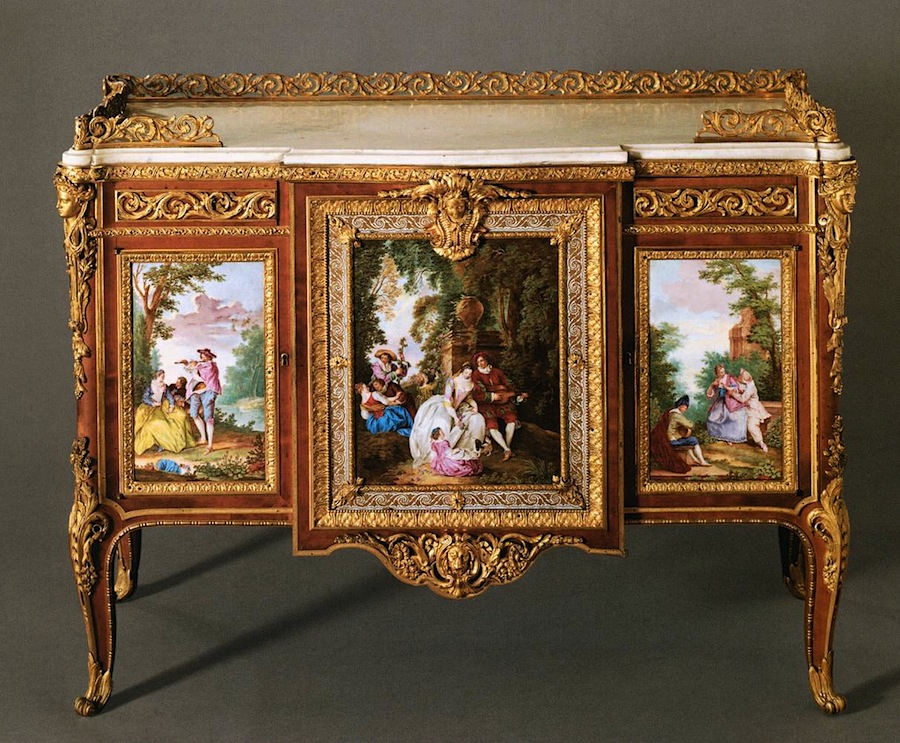
La commode de Mme. du Barry

Attributed to Martin Carlin, 1772 [Musee du Louvre, Paris]
Left plaque: after Nicolas Lancret ~ Par une Tendre Chansonnette  
Center plaque: after Jean-Baptiste Pater ~ L’Agréable Société 
Right plaque: after Nicolas Lancret ~ La Conversation Gallante
The apartments of the favorite at Versailles formed a series of boudoirs, each of which seemed to those who entered for the first time more elegant than another. The chimney-piece in the salon was adorned with a magnificent clock, “around which a world of porcelain figures disported themselves.” In the same room were two commodes of priceless lacquer, one relieved by figures in gold, the other decorated with fine porcelain plaques, which, we are told, had not their equals in Europe.  From the ceiling hung a lustre of rock-crystal, which had cost 16,000 livres, and in a a corner stood a beautiful piano, the work of the famous Clicot, the case of which was of rosewood, exquisitely inlaid and lavishly gilded. The cabinet contained a writing-table plated with porcelain, and an inkstand which was a masterpiece of the goldsmith’s art; while in the bedroom was a wonderful clock, which represented ” the Three Graces supporting the vase of Time,” and Love indicating the hour with his arrow. “The most exquisite objects of art, marvels of upholstery, bronzes, marbles, statuettes, abounded in this asylum of voluptuous pleasure. It was the last word of luxury.”! – Hugh Noel Williams Memoirs of Madame Du Barry, of the court of Louis XV, 1910

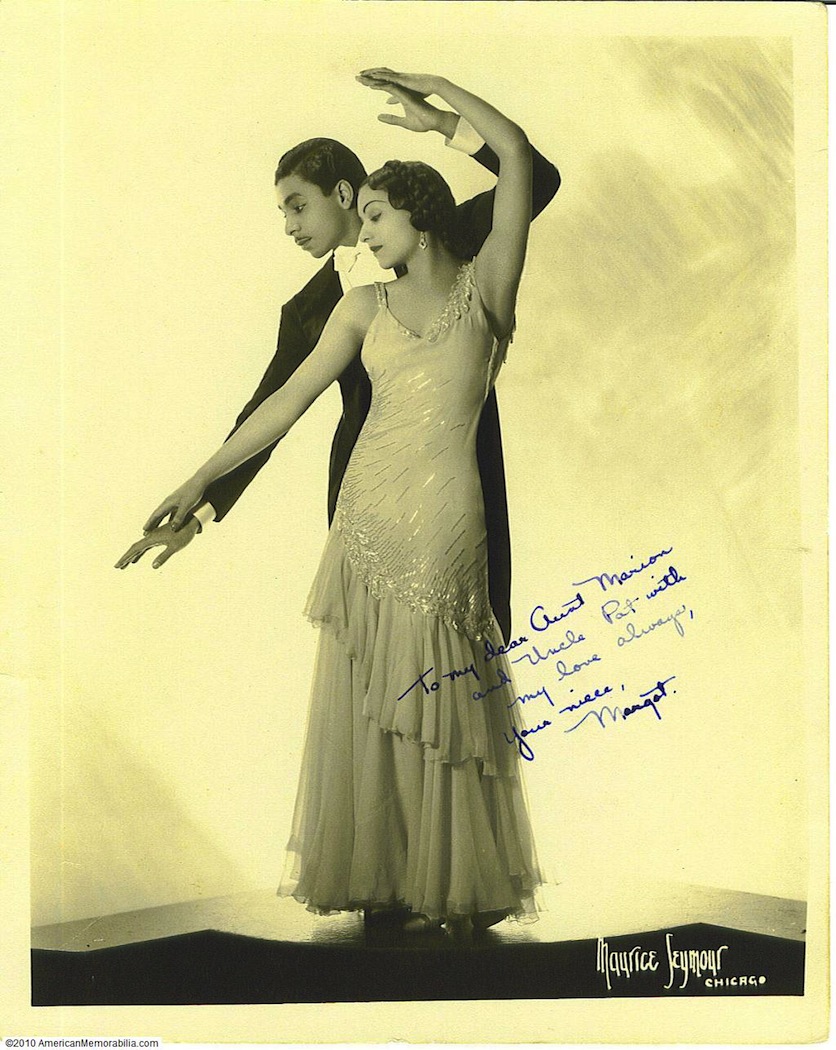
Norton & Margot In Dance Pose

Maurice Seymour ~ From Cotton Club Ballroom Dancer’s Collection, 1938 

American Memorabilia

Our nation has come a long way. Back in the 1930s African Americans faced an uphill battle to gain acceptance. Such was the case for famed ballroom dancers Margot Webb and Harold Norton. The duo was known to their adoring fans as Norton and Margot. They filled ballrooms on a regular basis dazzling crowds with their moves. Webb made her debut in 1933 and performed until 1947. During their years together, Norton Webb performed numerous times at the Cotton Club in Harlem, New York 1933-39. The two danced the Waltz, Tango and Bolero. It was at the Cotton Club where Webb met some of the headliners. Names such as Ella Fitzgerald, Cab Calloway, Lena Horne and countless other top acts of the time are featured in the following listings, secured from Webbs daughter. Their dance duos unbridled success even led them to perform in London, Paris and Germany before WWII.