 |
|
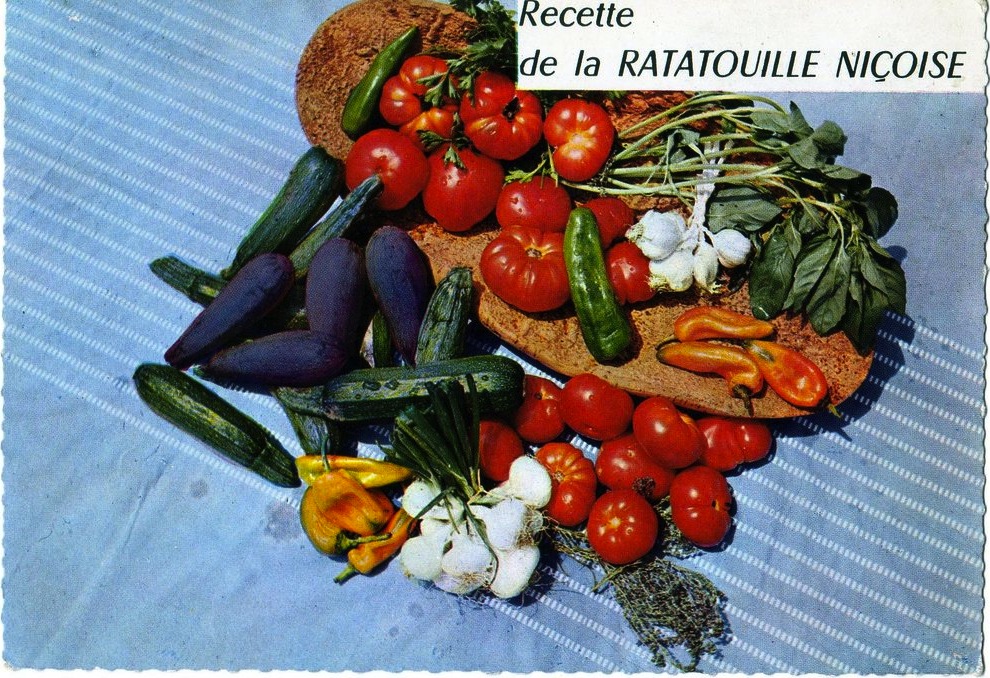
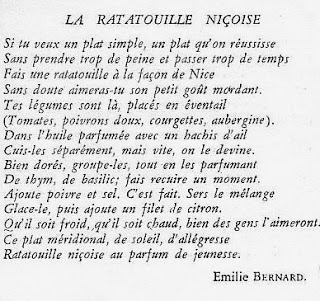
La Ratatouille Niçoise
Emilie Bernard
[Recette N° 4]
Éditions LYNA, Paris
|
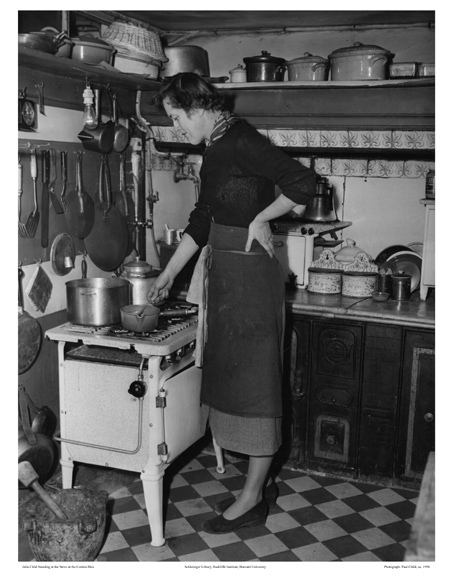 |
| Photograph by Paul Child ~ Julia Child at her apartment at 81 rue de l’universite in Paris, ca. 1950 [Collections of the Schlesinger Library] |
Julia Child’s Ratatouille
1 pound eggplant
1 pound zucchini
A 3-quart, porcelain or stainless-steel mixing bowl
1 teaspoon salt
A 10- to 12-inch enameled skillet
4 tablespoons olive oil, more if needed
1/2 pound (about 1 1/2 cups) thinly sliced yellow onions
2 (about 1 cup) sliced green bell peppers
2 to 3 tablespoons olive oil, if necessary
2 cloves mashed garlic
Salt and pepper to taste
1 pound firm, ripe, red tomatoes, peeled, seeded and juiced (makes 1 1/2 cups pulp)
Salt and pepper
A 2 1/2 quart fireproof casserole about 2 1/2 inches deep
3 tablespoons minced parsley
Salt and pepper
Peel the eggplant and cut into lengthwise slices 3/8 inch thick, about 3 inches long and 1 inch wide.
Scrub the zucchini, slice off the two ends and cut the zucchini into slices about the same size as the eggplant slices.
Place the vegetables in a bowl and toss with the salt. Let stand for 30 minutes. Drain. Dry each slice in a towel.
One layer at a time, saute the eggplant and then the zucchini in hot olive oil in the skillet for about a minute on each side to brown very lightly. Remove to a side dish.
In the same skillet, cook the onions and peppers slowly in olive oil for about 10 minutes, or until tender but not browned. Stir in the garlic and season to taste.
Slice the tomato pulp into 3/8-inch strips. Lay them over the onions and peppers. Season with salt and pepper. Cover the skillet and cook over low heat for 5 minutes, or until tomatoes have begun to render their juice. Uncover, baste the tomatoes with the juices, raise heat and boil for several minutes, until juice has almost entirely evaporated.
Place a third of the tomato mixture in the bottom of the casserole and sprinkle over it 1 tablespoon of the parsley. Arrange half of the eggplant and zucchini on top, then half the remaining tomatoes and parsley. Put in the rest of the eggplant and zucchini and finish with the remaining tomatoes and parsley.
Cover the casserole and simmer over low heat for 10 minutes. Uncover, tip casserole and baste with the rendered juices. Correct seasoning, if necessary. Raise heat slightly and cook uncovered for about 15 minutes more, basting several times, until juices have evaporated leaving a spoonful or two of flavored olive oil. Be careful of your heat; do not let the vegetables scorch in the bottom of the casserole.
Set aside uncovered. Reheat slowly at serving time or serve cold. Yields 6-8 servings.




















 tout ceci est magnifique